• 文献检索
  • 文档翻译
  • 深度研究
  • 学术资讯
  • Suppr Zotero 插件Zotero 插件
  • 邀请有礼
  • 套餐&价格
  • 历史记录
应用&插件
Suppr Zotero 插件Zotero 插件浏览器插件Mac 客户端Windows 客户端微信小程序
定价
高级版会员购买积分包购买API积分包
服务
文献检索文档翻译深度研究API 文档MCP 服务
关于我们
关于 Suppr公司介绍联系我们用户协议隐私条款
关注我们

Suppr 超能文献

核心技术专利:CN118964589B侵权必究
粤ICP备2023148730 号-1Suppr @ 2026

文献检索

告别复杂PubMed语法,用中文像聊天一样搜索,搜遍4000万医学文献。AI智能推荐,让科研检索更轻松。

立即免费搜索

文件翻译

保留排版,准确专业,支持PDF/Word/PPT等文件格式,支持 12+语言互译。

免费翻译文档

深度研究

AI帮你快速写综述,25分钟生成高质量综述,智能提取关键信息,辅助科研写作。

立即免费体验

基于上下文感知的边缘人工智能模型在无线传感器网络中的应用综述

Context-Aware Edge-Based AI Models for Wireless Sensor Networks-An Overview.

机构信息

Department of Computer Science, Blekinge Institute of Technology, SE-371 79 Karlskrona, Sweden.

Department of Computer Science, Sapienza University of Rome, 00185 Roma, Italy.

出版信息

Sensors (Basel). 2022 Jul 25;22(15):5544. doi: 10.3390/s22155544.

DOI:10.3390/s22155544
PMID:35898044
原文链接:https://pmc.ncbi.nlm.nih.gov/articles/PMC9371178/
Abstract

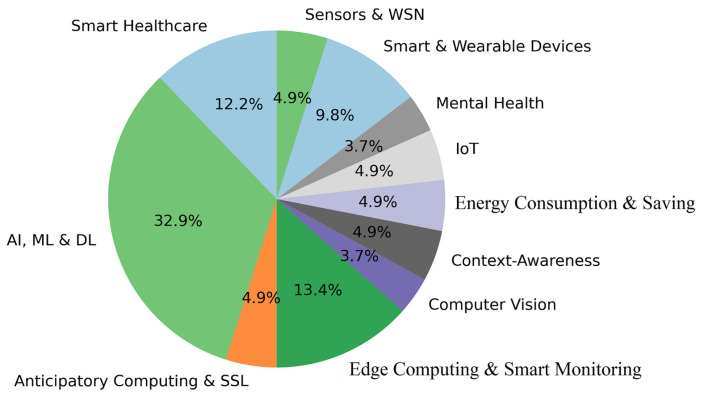
Recent advances in sensor technology are expected to lead to a greater use of wireless sensor networks (WSNs) in industry, logistics, healthcare, etc. On the other hand, advances in artificial intelligence (AI), machine learning (ML), and deep learning (DL) are becoming dominant solutions for processing large amounts of data from edge-synthesized heterogeneous sensors and drawing accurate conclusions with better understanding of the situation. Integration of the two areas WSN and AI has resulted in more accurate measurements, context-aware analysis and prediction useful for smart sensing applications. In this paper, a comprehensive overview of the latest developments in context-aware intelligent systems using sensor technology is provided. In addition, it also discusses the areas in which they are used, related challenges, motivations for adopting AI solutions, focusing on edge computing, i.e., sensor and AI techniques, along with analysis of existing research gaps. Another contribution of this study is the use of a semantic-aware approach to extract survey-relevant subjects. The latter specifically identifies eleven main research topics supported by the articles included in the work. These are analyzed from various angles to answer five main research questions. Finally, potential future research directions are also discussed.

摘要

传感器技术的最新进展有望促进无线传感器网络(WSN)在工业、物流、医疗保健等领域的更多应用。另一方面,人工智能(AI)、机器学习(ML)和深度学习(DL)的进步正在成为处理来自边缘合成异构传感器的大量数据并通过更好地了解情况得出准确结论的主要解决方案。这两个领域(WSN 和 AI)的融合实现了更精确的测量、情境感知分析和预测,这对智能传感应用非常有用。本文对使用传感器技术的情境感知智能系统的最新发展进行了全面概述。此外,还讨论了它们的应用领域、相关挑战、采用 AI 解决方案的动机,重点关注边缘计算,即传感器和 AI 技术,并对现有研究差距进行了分析。本研究的另一个贡献是使用语义感知方法来提取与调查相关的主题。后者特别确定了该研究中包含的文章支持的十一个主要研究主题。从多个角度对这些主题进行了分析,以回答五个主要研究问题。最后,还讨论了潜在的未来研究方向。
https://cdn.ncbi.nlm.nih.gov/pmc/blobs/b4e5/9371178/b66c93272cc0/sensors-22-05544-g027.jpg
https://cdn.ncbi.nlm.nih.gov/pmc/blobs/b4e5/9371178/925a5af329c5/sensors-22-05544-g001.jpg
https://cdn.ncbi.nlm.nih.gov/pmc/blobs/b4e5/9371178/573c4b926188/sensors-22-05544-g002.jpg
https://cdn.ncbi.nlm.nih.gov/pmc/blobs/b4e5/9371178/1cf9f91f9bd6/sensors-22-05544-g003.jpg
https://cdn.ncbi.nlm.nih.gov/pmc/blobs/b4e5/9371178/c7aa46698b1e/sensors-22-05544-g004.jpg
https://cdn.ncbi.nlm.nih.gov/pmc/blobs/b4e5/9371178/2b6f3ce9fcf9/sensors-22-05544-g005.jpg
https://cdn.ncbi.nlm.nih.gov/pmc/blobs/b4e5/9371178/9fa4d849bb10/sensors-22-05544-g006.jpg
https://cdn.ncbi.nlm.nih.gov/pmc/blobs/b4e5/9371178/41f5b37e4b9e/sensors-22-05544-g007.jpg
https://cdn.ncbi.nlm.nih.gov/pmc/blobs/b4e5/9371178/fc4a319e3c73/sensors-22-05544-g008.jpg
https://cdn.ncbi.nlm.nih.gov/pmc/blobs/b4e5/9371178/86e96e58c549/sensors-22-05544-g009.jpg
https://cdn.ncbi.nlm.nih.gov/pmc/blobs/b4e5/9371178/464ab83b8add/sensors-22-05544-g010.jpg
https://cdn.ncbi.nlm.nih.gov/pmc/blobs/b4e5/9371178/7ac16f3d25ed/sensors-22-05544-g011.jpg
https://cdn.ncbi.nlm.nih.gov/pmc/blobs/b4e5/9371178/423f47d6c4d5/sensors-22-05544-g012.jpg
https://cdn.ncbi.nlm.nih.gov/pmc/blobs/b4e5/9371178/e15b6f266f36/sensors-22-05544-g013.jpg
https://cdn.ncbi.nlm.nih.gov/pmc/blobs/b4e5/9371178/516e7c2aeeb7/sensors-22-05544-g014.jpg
https://cdn.ncbi.nlm.nih.gov/pmc/blobs/b4e5/9371178/d5c889093bdf/sensors-22-05544-g015.jpg
https://cdn.ncbi.nlm.nih.gov/pmc/blobs/b4e5/9371178/7acfd54ce959/sensors-22-05544-g016.jpg
https://cdn.ncbi.nlm.nih.gov/pmc/blobs/b4e5/9371178/af1eb11905e3/sensors-22-05544-g017.jpg
https://cdn.ncbi.nlm.nih.gov/pmc/blobs/b4e5/9371178/164a4d881010/sensors-22-05544-g018.jpg
https://cdn.ncbi.nlm.nih.gov/pmc/blobs/b4e5/9371178/4ffdde21bb77/sensors-22-05544-g019.jpg
https://cdn.ncbi.nlm.nih.gov/pmc/blobs/b4e5/9371178/566f7be08cdb/sensors-22-05544-g020.jpg
https://cdn.ncbi.nlm.nih.gov/pmc/blobs/b4e5/9371178/1e8c164a50e8/sensors-22-05544-g021.jpg
https://cdn.ncbi.nlm.nih.gov/pmc/blobs/b4e5/9371178/84b8da71cd81/sensors-22-05544-g022.jpg
https://cdn.ncbi.nlm.nih.gov/pmc/blobs/b4e5/9371178/a2fc6d6dabfe/sensors-22-05544-g023.jpg
https://cdn.ncbi.nlm.nih.gov/pmc/blobs/b4e5/9371178/fd68a79a047c/sensors-22-05544-g024.jpg
https://cdn.ncbi.nlm.nih.gov/pmc/blobs/b4e5/9371178/00256f5b5155/sensors-22-05544-g025.jpg
https://cdn.ncbi.nlm.nih.gov/pmc/blobs/b4e5/9371178/90fa7bd63c66/sensors-22-05544-g026.jpg
https://cdn.ncbi.nlm.nih.gov/pmc/blobs/b4e5/9371178/b66c93272cc0/sensors-22-05544-g027.jpg
https://cdn.ncbi.nlm.nih.gov/pmc/blobs/b4e5/9371178/925a5af329c5/sensors-22-05544-g001.jpg
https://cdn.ncbi.nlm.nih.gov/pmc/blobs/b4e5/9371178/573c4b926188/sensors-22-05544-g002.jpg
https://cdn.ncbi.nlm.nih.gov/pmc/blobs/b4e5/9371178/1cf9f91f9bd6/sensors-22-05544-g003.jpg
https://cdn.ncbi.nlm.nih.gov/pmc/blobs/b4e5/9371178/c7aa46698b1e/sensors-22-05544-g004.jpg
https://cdn.ncbi.nlm.nih.gov/pmc/blobs/b4e5/9371178/2b6f3ce9fcf9/sensors-22-05544-g005.jpg
https://cdn.ncbi.nlm.nih.gov/pmc/blobs/b4e5/9371178/9fa4d849bb10/sensors-22-05544-g006.jpg
https://cdn.ncbi.nlm.nih.gov/pmc/blobs/b4e5/9371178/41f5b37e4b9e/sensors-22-05544-g007.jpg
https://cdn.ncbi.nlm.nih.gov/pmc/blobs/b4e5/9371178/fc4a319e3c73/sensors-22-05544-g008.jpg
https://cdn.ncbi.nlm.nih.gov/pmc/blobs/b4e5/9371178/86e96e58c549/sensors-22-05544-g009.jpg
https://cdn.ncbi.nlm.nih.gov/pmc/blobs/b4e5/9371178/464ab83b8add/sensors-22-05544-g010.jpg
https://cdn.ncbi.nlm.nih.gov/pmc/blobs/b4e5/9371178/7ac16f3d25ed/sensors-22-05544-g011.jpg
https://cdn.ncbi.nlm.nih.gov/pmc/blobs/b4e5/9371178/423f47d6c4d5/sensors-22-05544-g012.jpg
https://cdn.ncbi.nlm.nih.gov/pmc/blobs/b4e5/9371178/e15b6f266f36/sensors-22-05544-g013.jpg
https://cdn.ncbi.nlm.nih.gov/pmc/blobs/b4e5/9371178/516e7c2aeeb7/sensors-22-05544-g014.jpg
https://cdn.ncbi.nlm.nih.gov/pmc/blobs/b4e5/9371178/d5c889093bdf/sensors-22-05544-g015.jpg
https://cdn.ncbi.nlm.nih.gov/pmc/blobs/b4e5/9371178/7acfd54ce959/sensors-22-05544-g016.jpg
https://cdn.ncbi.nlm.nih.gov/pmc/blobs/b4e5/9371178/af1eb11905e3/sensors-22-05544-g017.jpg
https://cdn.ncbi.nlm.nih.gov/pmc/blobs/b4e5/9371178/164a4d881010/sensors-22-05544-g018.jpg
https://cdn.ncbi.nlm.nih.gov/pmc/blobs/b4e5/9371178/4ffdde21bb77/sensors-22-05544-g019.jpg
https://cdn.ncbi.nlm.nih.gov/pmc/blobs/b4e5/9371178/566f7be08cdb/sensors-22-05544-g020.jpg
https://cdn.ncbi.nlm.nih.gov/pmc/blobs/b4e5/9371178/1e8c164a50e8/sensors-22-05544-g021.jpg
https://cdn.ncbi.nlm.nih.gov/pmc/blobs/b4e5/9371178/84b8da71cd81/sensors-22-05544-g022.jpg
https://cdn.ncbi.nlm.nih.gov/pmc/blobs/b4e5/9371178/a2fc6d6dabfe/sensors-22-05544-g023.jpg
https://cdn.ncbi.nlm.nih.gov/pmc/blobs/b4e5/9371178/fd68a79a047c/sensors-22-05544-g024.jpg
https://cdn.ncbi.nlm.nih.gov/pmc/blobs/b4e5/9371178/00256f5b5155/sensors-22-05544-g025.jpg
https://cdn.ncbi.nlm.nih.gov/pmc/blobs/b4e5/9371178/90fa7bd63c66/sensors-22-05544-g026.jpg
https://cdn.ncbi.nlm.nih.gov/pmc/blobs/b4e5/9371178/b66c93272cc0/sensors-22-05544-g027.jpg

相似文献

1
Context-Aware Edge-Based AI Models for Wireless Sensor Networks-An Overview.基于上下文感知的边缘人工智能模型在无线传感器网络中的应用综述
Sensors (Basel). 2022 Jul 25;22(15):5544. doi: 10.3390/s22155544.
2
At the Confluence of Artificial Intelligence and Edge Computing in IoT-Based Applications: A Review and New Perspectives.在基于物联网应用的人工智能和边缘计算的融合:综述与新视角。
Sensors (Basel). 2023 Feb 2;23(3):1639. doi: 10.3390/s23031639.
3
Application of Artificial Intelligence System Based on Wireless Sensor Network in Enterprise Management.基于无线传感器网络的人工智能系统在企业管理中的应用。
Comput Intell Neurosci. 2022 May 27;2022:2169521. doi: 10.1155/2022/2169521. eCollection 2022.
4
Machine Learning for Wireless Sensor Networks Security: An Overview of Challenges and Issues.机器学习在无线传感器网络安全中的应用:挑战与问题概述。
Sensors (Basel). 2022 Jun 23;22(13):4730. doi: 10.3390/s22134730.
5
A survey of body sensor networks.人体传感器网络调查。
Sensors (Basel). 2013 Apr 24;13(5):5406-47. doi: 10.3390/s130505406.
6
Artificial Intelligence Applications and Self-Learning 6G Networks for Smart Cities Digital Ecosystems: Taxonomy, Challenges, and Future Directions.人工智能应用和自学习 6G 网络在智慧城市数字生态系统中的应用:分类、挑战和未来方向。
Sensors (Basel). 2022 Aug 1;22(15):5750. doi: 10.3390/s22155750.
7
A review on recent studies utilizing artificial intelligence methods for solving routing challenges in wireless sensor networks.关于利用人工智能方法解决无线传感器网络路由挑战的近期研究综述。
PeerJ Comput Sci. 2022 Oct 19;8:e1089. doi: 10.7717/peerj-cs.1089. eCollection 2022.
8
Cognitive radio wireless sensor networks: applications, challenges and research trends.认知无线电无线传感器网络:应用、挑战和研究趋势。
Sensors (Basel). 2013 Aug 22;13(9):11196-228. doi: 10.3390/s130911196.
9
Integration of Context Awareness in Smart Service Provision System Based on Wireless Sensor Networks for Sustainable Cargo Transportation.基于无线传感器网络的可持续货物运输智能服务提供系统中的上下文感知集成。
Sensors (Basel). 2021 Jul 29;21(15):5140. doi: 10.3390/s21155140.
10
E-Cardiac Care: A Comprehensive Systematic Literature Review.电子心脏护理:全面系统性文献综述。
Sensors (Basel). 2022 Oct 21;22(20):8073. doi: 10.3390/s22208073.

引用本文的文献

1
Integrating Sensor Technologies with Conversational AI: Enhancing Context-Sensitive Interaction Through Real-Time Data Fusion.将传感器技术与对话式人工智能相结合:通过实时数据融合增强上下文感知交互。
Sensors (Basel). 2025 Jan 4;25(1):249. doi: 10.3390/s25010249.
2
Emerging Sensor Communication Network-Based AI/ML Driven Intelligent IoT.基于新兴传感器通信网络的人工智能/机器学习驱动的智能物联网
Sensors (Basel). 2023 Sep 12;23(18):7814. doi: 10.3390/s23187814.

本文引用的文献

1
Motion Capture Sensor-Based Emotion Recognition Using a Bi-Modular Sequential Neural Network.基于运动捕捉传感器的双模序贯神经网络情感识别。
Sensors (Basel). 2022 Jan 5;22(1):403. doi: 10.3390/s22010403.
2
Memory-Aware Active Learning in Mobile Sensing Systems.移动传感系统中的内存感知主动学习
IEEE Trans Mob Comput. 2022 Jan 1;21(1):1. doi: 10.1109/tmc.2020.3003936. Epub 2020 Jun 22.
3
Personalized Stress Monitoring using Wearable Sensors in Everyday Settings.基于可穿戴传感器的日常环境下的个性化压力监测
Annu Int Conf IEEE Eng Med Biol Soc. 2021 Nov;2021:7332-7335. doi: 10.1109/EMBC46164.2021.9630224.
4
Tourist Experiences Recommender System Based on Emotion Recognition with Wearable Data.基于可穿戴数据的情感识别的旅游体验推荐系统。
Sensors (Basel). 2021 Nov 25;21(23):7854. doi: 10.3390/s21237854.
5
Body Temperature Monitoring for Regular COVID-19 Prevention Based on Human Daily Activity Recognition.基于人体日常活动识别的常规 COVID-19 预防体温监测。
Sensors (Basel). 2021 Nov 12;21(22):7540. doi: 10.3390/s21227540.
6
Edge Structural Health Monitoring (E-SHM) Using Low-Power Wireless Sensing.使用低功耗无线传感的边缘结构健康监测(E-SHM)
Sensors (Basel). 2021 Oct 12;21(20):6760. doi: 10.3390/s21206760.
7
Detecting Subclinical Social Anxiety Using Physiological Data From a Wrist-Worn Wearable: Small-Scale Feasibility Study.利用腕戴式可穿戴设备的生理数据检测亚临床社交焦虑:小规模可行性研究。
JMIR Form Res. 2021 Oct 7;5(10):e32656. doi: 10.2196/32656.
8
Feature selection for proximity estimation in COVID-19 contact tracing apps based on Bluetooth Low Energy (BLE).基于低功耗蓝牙(BLE)的新冠病毒接触者追踪应用中用于距离估计的特征选择
Pervasive Mob Comput. 2021 Oct;77:101474. doi: 10.1016/j.pmcj.2021.101474. Epub 2021 Sep 24.
9
Analysis of Single Board Architectures Integrating Sensors Technologies.分析集成传感器技术的单板架构。
Sensors (Basel). 2021 Sep 21;21(18):6303. doi: 10.3390/s21186303.
10
Detection of Health-Related Events and Behaviours from Wearable Sensor Lifestyle Data Using Symbolic Intelligence: A Proof-of-Concept Application in the Care of Multiple Sclerosis.利用符号智能从可穿戴传感器生活方式数据中检测与健康相关的事件和行为:在多发性硬化症护理中的概念验证应用。
Sensors (Basel). 2021 Sep 17;21(18):6230. doi: 10.3390/s21186230.