School of Life Sciences, University of Warwick, Coventry CV4 7AL, UK.
Biochem J. 2013 Aug 1;453(3):435-45. doi: 10.1042/BJ20130133.
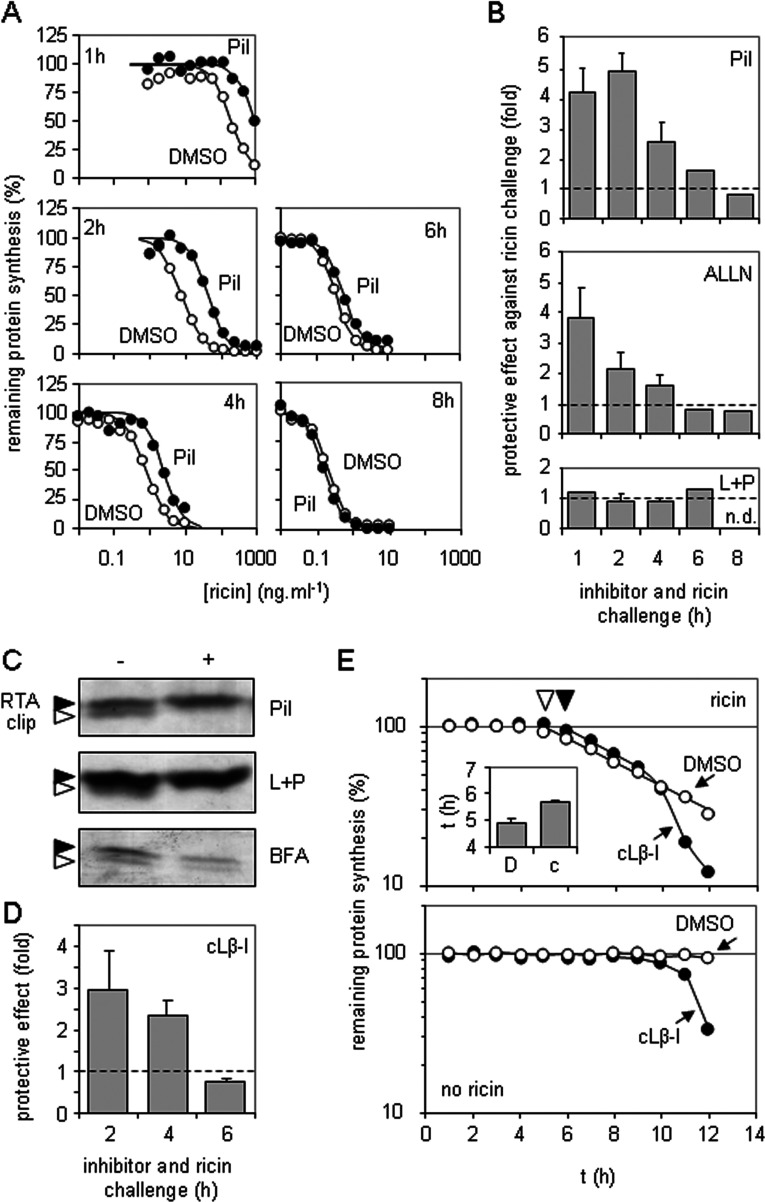
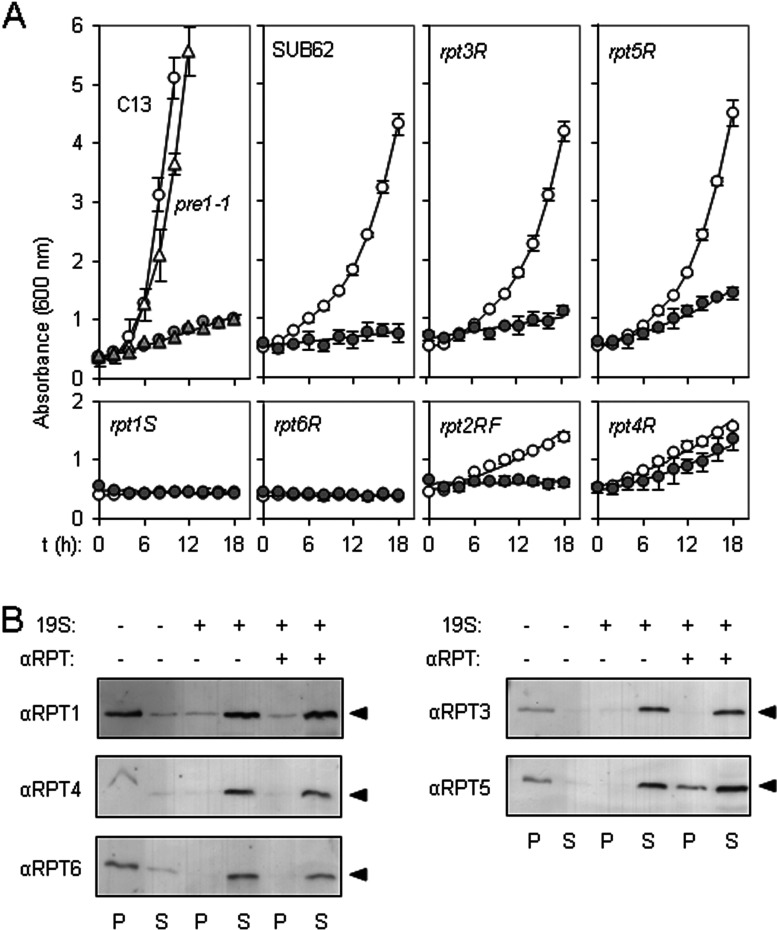
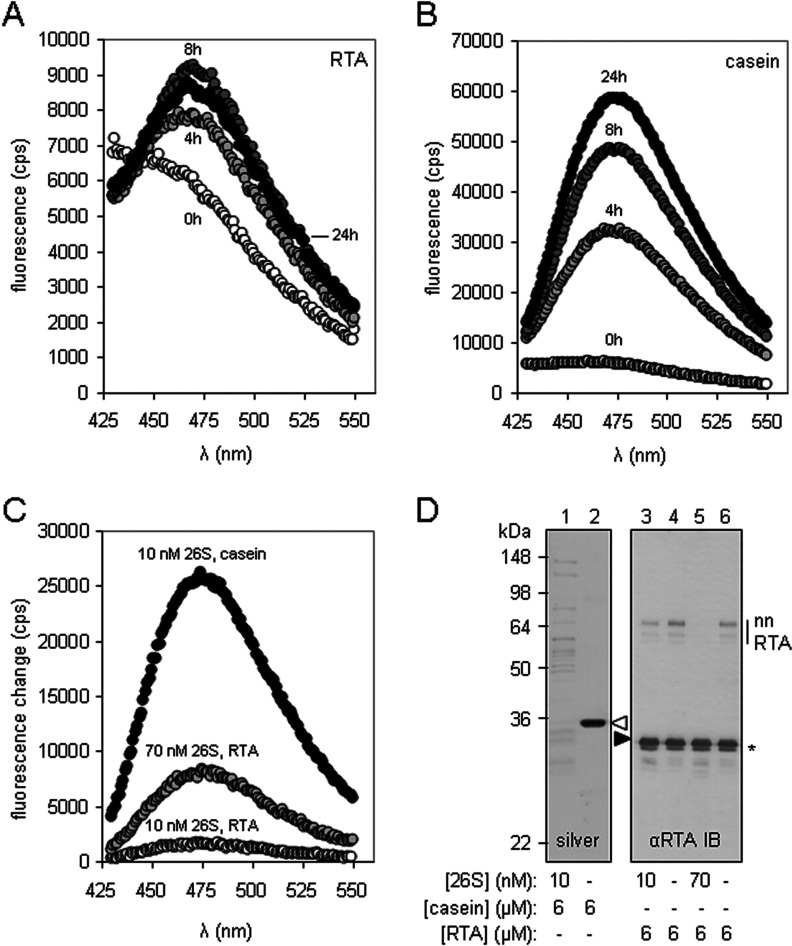
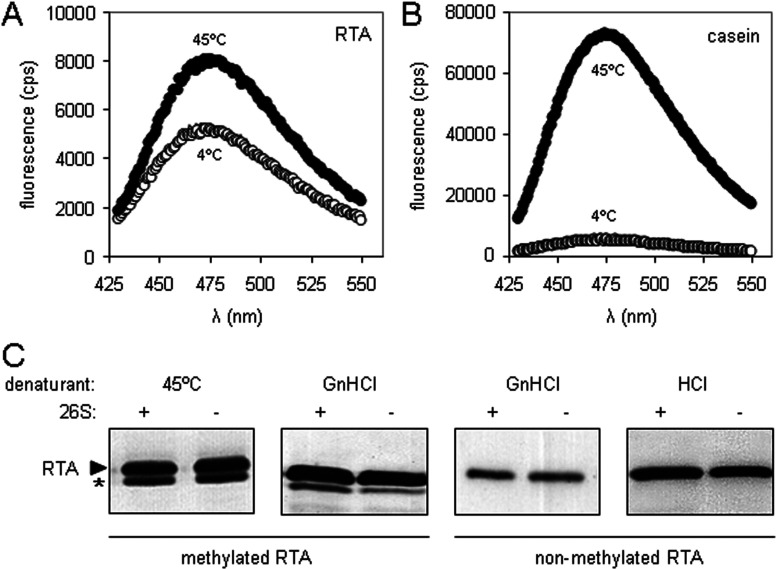
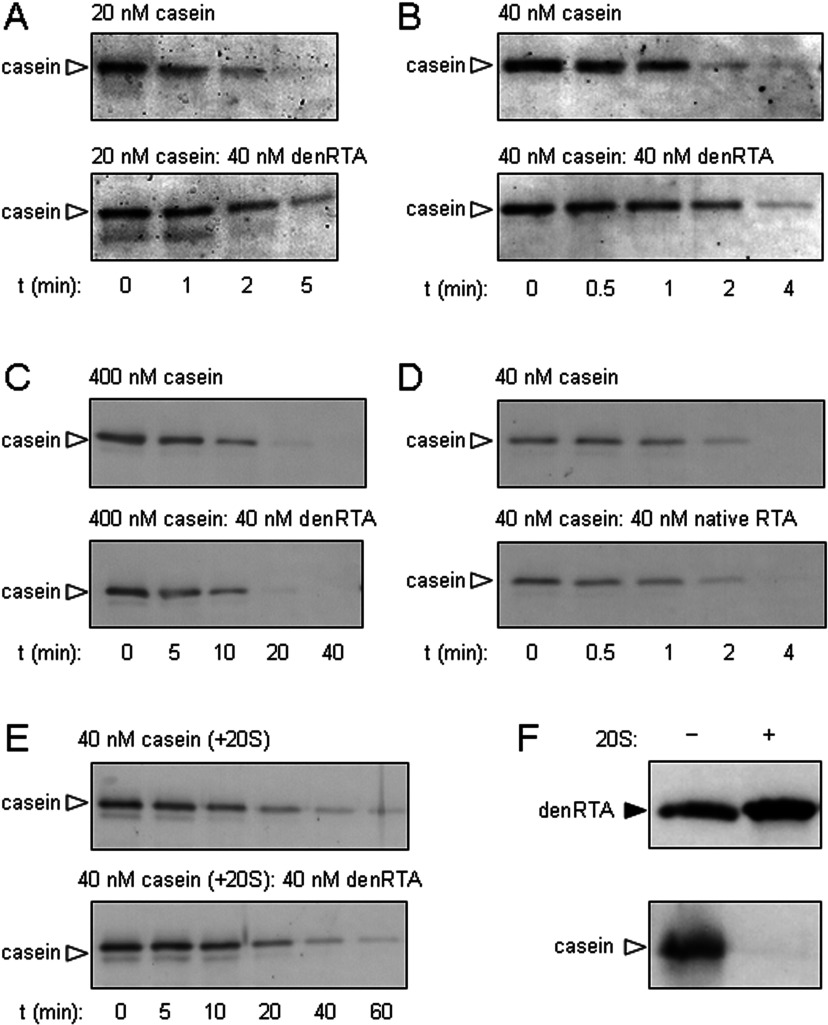
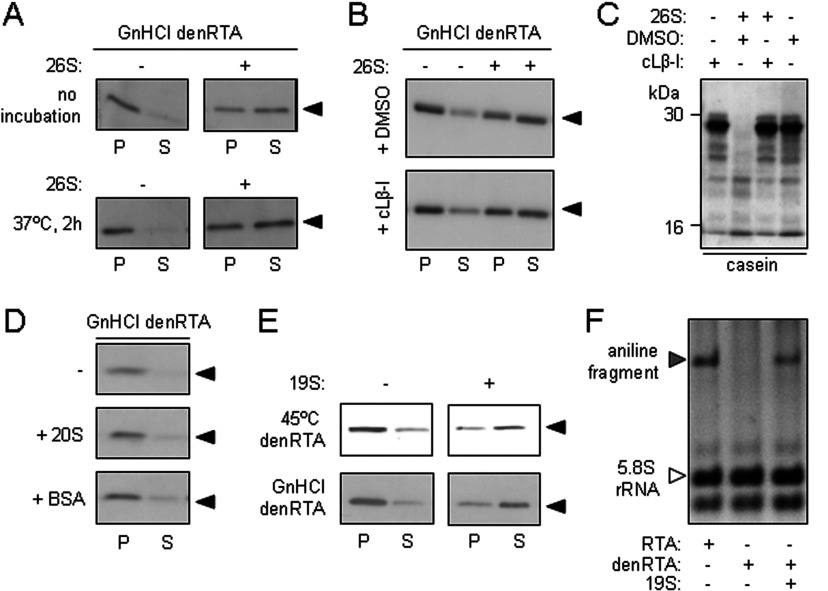
The plant cytotoxin ricin enters mammalian cells by receptor-mediated endocytosis, undergoing retrograde transport to the ER (endoplasmic reticulum) where its catalytic A chain (RTA) is reductively separated from the holotoxin to enter the cytosol and inactivate ribosomes. The currently accepted model is that the bulk of ER-dislocated RTA is degraded by proteasomes. We show in the present study that the proteasome has a more complex role in ricin intoxication than previously recognized, that the previously reported increase in sensitivity of mammalian cells to ricin in the presence of proteasome inhibitors simply reflects toxicity of the inhibitors themselves, and that RTA is a very poor substrate for proteasomal degradation. Denatured RTA and casein compete for a binding site on the regulatory particle of the 26S proteasome, but their fates differ. Casein is degraded, but the mammalian 26S proteasome AAA (ATPase associated with various cellular activities)-ATPase subunit RPT5 acts as a chaperone that prevents aggregation of denatured RTA and stimulates recovery of catalytic RTA activity in vitro. Furthermore, in vivo, the ATPase activity of Rpt5p is required for maximal toxicity of RTA dislocated from the Saccharomyces cerevisiae ER. The results of the present study implicate RPT5/Rpt5p in the triage of substrates in which either activation (folding) or inactivation (degradation) pathways may be initiated.
植物细胞毒素蓖麻毒素通过受体介导的内吞作用进入哺乳动物细胞,经历逆行运输到内质网 (ER),在那里其催化 A 链 (RTA) 被还原分离,从完整毒素进入细胞质并使核糖体失活。目前公认的模型是,大量 ER 移位的 RTA 被蛋白酶体降解。我们在本研究中表明,蛋白酶体在蓖麻毒素中毒中的作用比以前认识的更为复杂,以前报道的在蛋白酶体抑制剂存在下哺乳动物细胞对蓖麻毒素敏感性增加只是反映了抑制剂本身的毒性,并且 RTA 是蛋白酶体降解的非常差的底物。变性的 RTA 和酪蛋白竞争 26S 蛋白酶体调节颗粒上的结合位点,但它们的命运不同。酪蛋白被降解,但哺乳动物 26S 蛋白酶体 AAA(与各种细胞活动相关的 ATP 酶)-ATP 酶亚基 RPT5 充当伴侣,防止变性 RTA 的聚集,并在体外刺激恢复催化 RTA 活性。此外,在体内,从酿酒酵母 ER 移位的 RTA 的最大毒性需要 Rpt5p 的 ATP 酶活性。本研究的结果表明 RPT5/Rpt5p 参与了底物的分类,其中可能启动激活(折叠)或失活(降解)途径。