• 文献检索
  • 文档翻译
  • 深度研究
  • 学术资讯
  • Suppr Zotero 插件Zotero 插件
  • 邀请有礼
  • 套餐&价格
  • 历史记录
应用&插件
Suppr Zotero 插件Zotero 插件浏览器插件Mac 客户端Windows 客户端微信小程序
定价
高级版会员购买积分包购买API积分包
服务
文献检索文档翻译深度研究API 文档MCP 服务
关于我们
关于 Suppr公司介绍联系我们用户协议隐私条款
关注我们

Suppr 超能文献

核心技术专利:CN118964589B侵权必究
粤ICP备2023148730 号-1Suppr @ 2026

文献检索

告别复杂PubMed语法,用中文像聊天一样搜索,搜遍4000万医学文献。AI智能推荐,让科研检索更轻松。

立即免费搜索

文件翻译

保留排版,准确专业,支持PDF/Word/PPT等文件格式,支持 12+语言互译。

免费翻译文档

深度研究

AI帮你快速写综述,25分钟生成高质量综述,智能提取关键信息,辅助科研写作。

立即免费体验

2004年与2008年台湾地区恙虫病及四个主要族群的比较:运用地理加权回归分析

Scrub typhus and comparisons of four main ethnic communities in taiwan in 2004 versus 2008 using geographically weighted regression.

作者信息

Tsai Pui-Jen

机构信息

The Center for General Education, Aletheia University, New Taipei, Taiwan.

出版信息

Glob J Health Sci. 2013 Feb 15;5(3):101-14. doi: 10.5539/gjhs.v5n3p101.

DOI:10.5539/gjhs.v5n3p101
PMID:23618480
原文链接:https://pmc.ncbi.nlm.nih.gov/articles/PMC4776805/
Abstract

PURPOSE

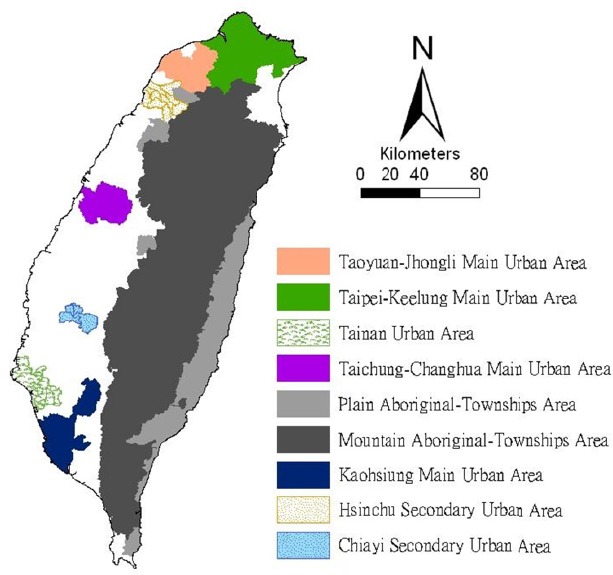
On the main island of Taiwan, a higher risk of scrub typhus infection has been reported in endemic clusters in Southeastern Taiwan and in mountainous township areas. However, research on health care problems associated with scrub typhus in Taiwanese ethnic peoples is limited. This study employs spatial analysis of areal data to determine spatial features related to scrub typhus and the four main Taiwanese ethnicities: Hoklo, Hakka, Mainlander, and aboriginal communities, respectively.

METHODS

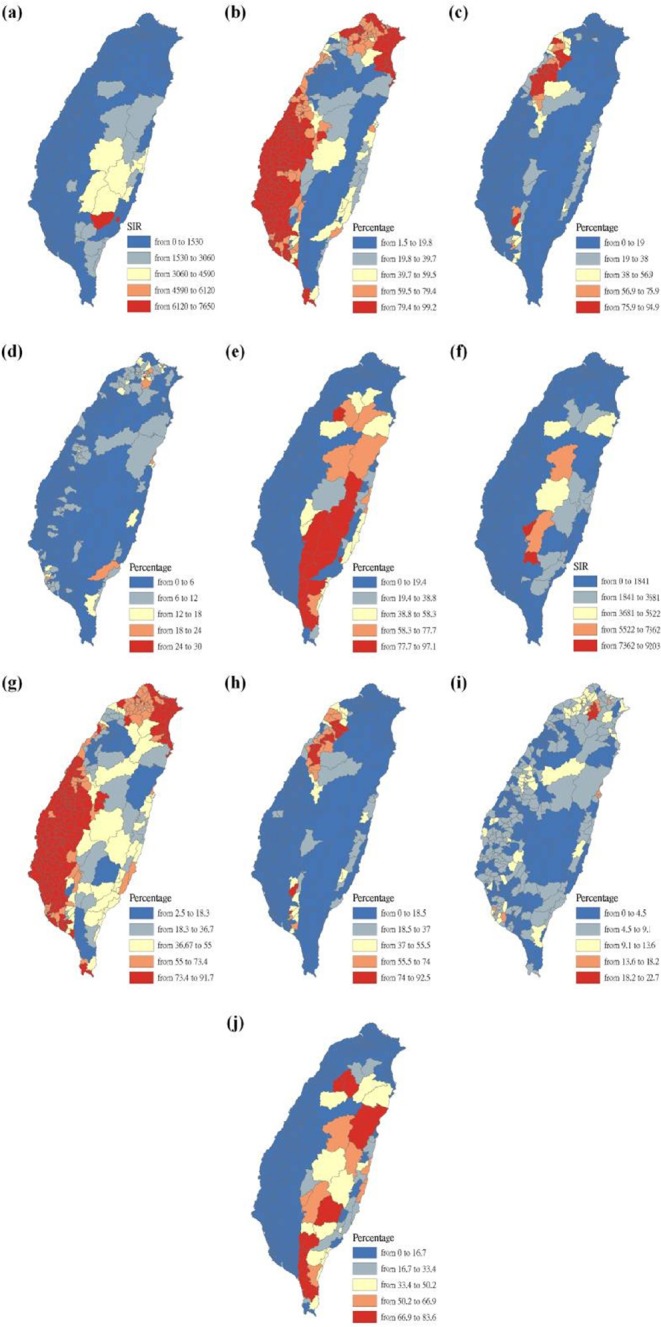
We used a GWR spatial method to analyze the local regressed relationships between scrub typhus incidence and ethnic community percentage in 349 townships in Taiwan, and the subsequent spatial regressed resultants and local parameter estimates were compared between two periods of 2004 and 2008 by kappa statistics.

RESULTS

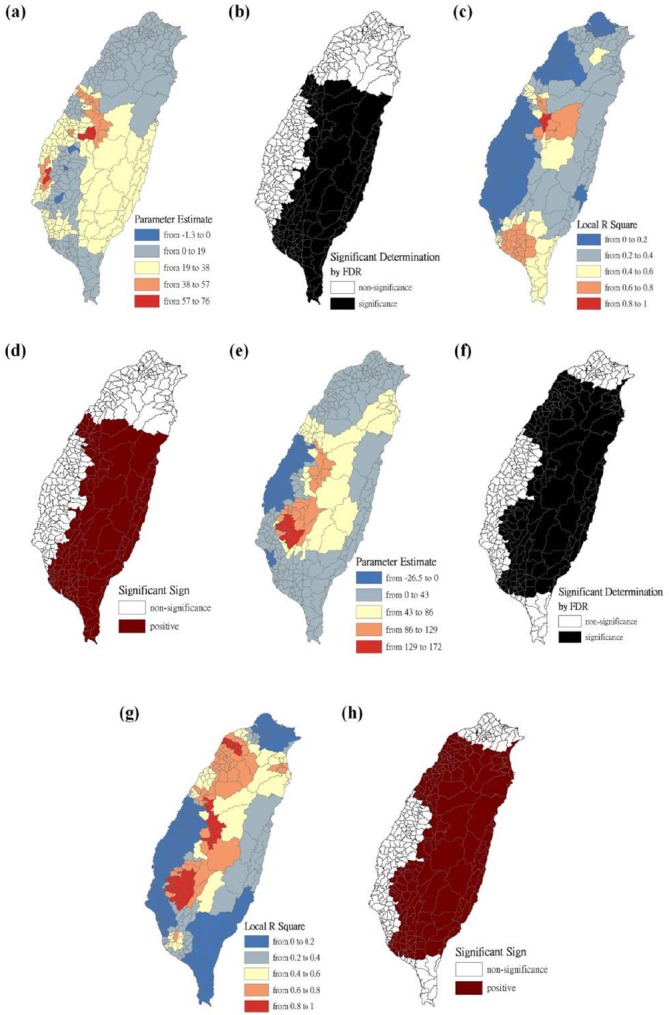
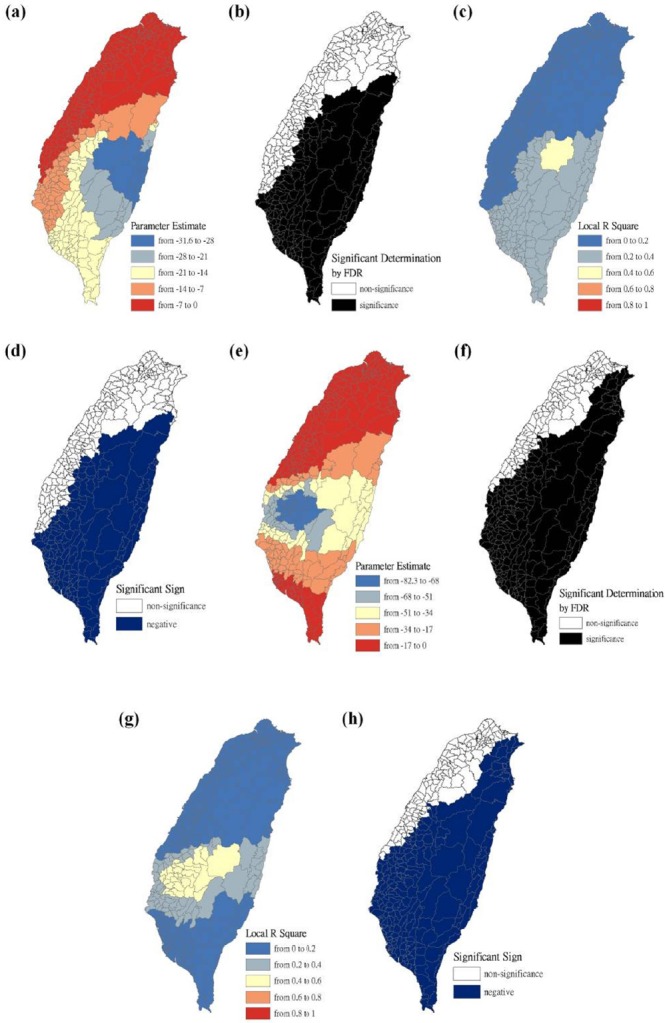
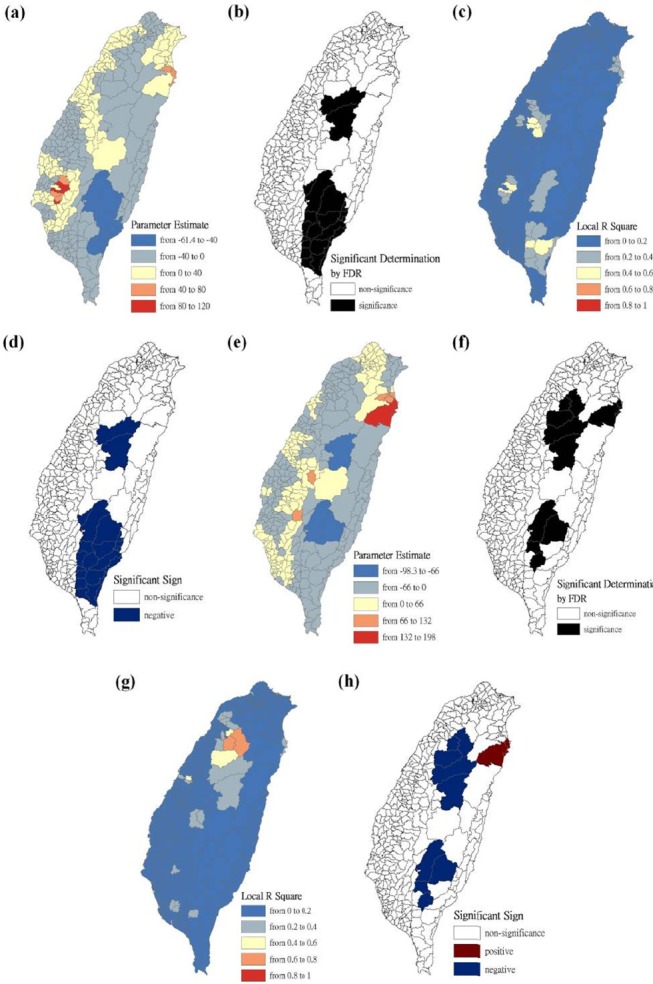
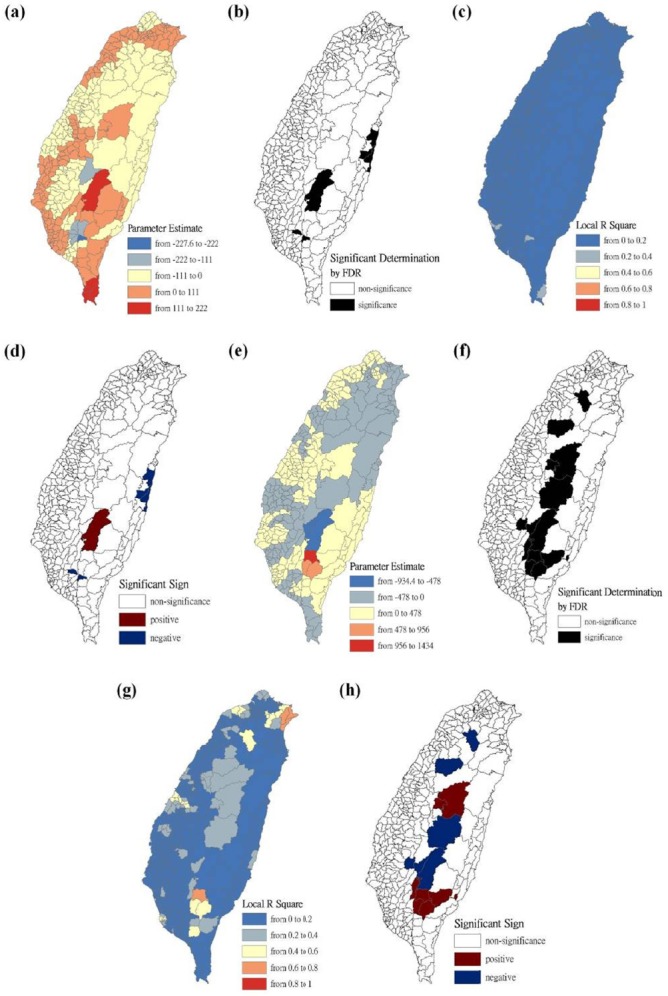
In the GWR models, the spatial regressed relationships of scrub typhus incidences and the Hoklo communities showed significant and negative parameter estimates in numerous locations, showing clusters in Southeastern and Southwestern Taiwan, and areas of the central and southern mountainous townships. Both Hakka and Mainlander communities in the mountainous townships showed less-regressed clusters with scrub typhus prevalence. However, clusters of Aboriginal populations were positively correlated with scrub typhus in highly infected mountainous areas and in Southeastern Taiwan. The kappa value results and the comparisons of local parameter estimates in the 349 townships in Taiwan between 2004 and 2008 indicated that the incidence of scrub typhus in the Hoklo communities was substantial, in the Hakka communities was fair, in the Mainlander communities was slight, and in the aboriginal communities was moderate, respectively.

CONCLUSION

The aboriginal communities have been closely associated with higher risks of scrub typhus in the mountainous townships and in the southeastern portion of Taiwan.

摘要

目的

在台湾主岛,台湾东南部的地方性疫源地集群以及山区乡镇地区已报告有较高的恙虫病感染风险。然而,关于台湾原住民中与恙虫病相关的医疗保健问题的研究有限。本研究采用区域数据的空间分析方法,分别确定与恙虫病以及台湾四大主要族群(闽南人、客家人、外省人、原住民社区)相关的空间特征。

方法

我们使用地理加权回归(GWR)空间方法分析台湾349个乡镇恙虫病发病率与族群社区百分比之间的局部回归关系,并通过kappa统计量比较2004年和2008年两个时期的后续空间回归结果及局部参数估计值。

结果

在GWR模型中,恙虫病发病率与闽南人社区的空间回归关系在许多地点显示出显著的负参数估计值,在台湾东南部和西南部以及中部和南部山区乡镇地区呈现聚集现象。山区乡镇的客家人和外省人社区与恙虫病患病率的回归聚集较少。然而,在感染严重的山区和台湾东南部,原住民群体的聚集与恙虫病呈正相关。2004年至2008年台湾349个乡镇的kappa值结果及局部参数估计值比较表明,闽南人社区恙虫病发病率高,客家人社区发病率中等,外省人社区发病率低,原住民社区发病率中等。

结论

在山区乡镇和台湾东南部,原住民社区与较高的恙虫病风险密切相关。

https://cdn.ncbi.nlm.nih.gov/pmc/blobs/bd5b/4776805/f98006a7598d/GJHS-5-101-g012.jpg
https://cdn.ncbi.nlm.nih.gov/pmc/blobs/bd5b/4776805/012a3b017d2b/GJHS-5-101-g001.jpg
https://cdn.ncbi.nlm.nih.gov/pmc/blobs/bd5b/4776805/e75674c3e6f1/GJHS-5-101-g008.jpg
https://cdn.ncbi.nlm.nih.gov/pmc/blobs/bd5b/4776805/31b70f3e14d4/GJHS-5-101-g009.jpg
https://cdn.ncbi.nlm.nih.gov/pmc/blobs/bd5b/4776805/4334c9c74843/GJHS-5-101-g010.jpg
https://cdn.ncbi.nlm.nih.gov/pmc/blobs/bd5b/4776805/d0bdfb826a97/GJHS-5-101-g011.jpg
https://cdn.ncbi.nlm.nih.gov/pmc/blobs/bd5b/4776805/f98006a7598d/GJHS-5-101-g012.jpg
https://cdn.ncbi.nlm.nih.gov/pmc/blobs/bd5b/4776805/012a3b017d2b/GJHS-5-101-g001.jpg
https://cdn.ncbi.nlm.nih.gov/pmc/blobs/bd5b/4776805/e75674c3e6f1/GJHS-5-101-g008.jpg
https://cdn.ncbi.nlm.nih.gov/pmc/blobs/bd5b/4776805/31b70f3e14d4/GJHS-5-101-g009.jpg
https://cdn.ncbi.nlm.nih.gov/pmc/blobs/bd5b/4776805/4334c9c74843/GJHS-5-101-g010.jpg
https://cdn.ncbi.nlm.nih.gov/pmc/blobs/bd5b/4776805/d0bdfb826a97/GJHS-5-101-g011.jpg
https://cdn.ncbi.nlm.nih.gov/pmc/blobs/bd5b/4776805/f98006a7598d/GJHS-5-101-g012.jpg

相似文献

1
Scrub typhus and comparisons of four main ethnic communities in taiwan in 2004 versus 2008 using geographically weighted regression.2004年与2008年台湾地区恙虫病及四个主要族群的比较:运用地理加权回归分析
Glob J Health Sci. 2013 Feb 15;5(3):101-14. doi: 10.5539/gjhs.v5n3p101.
2
Scrub typhus islands in the Taiwan area and the association between scrub typhus disease and forest land use and farmer population density: geographically weighted regression.台湾地区恙虫病岛屿与恙虫病发病和林地利用及农民人口密度的关系:地理加权回归。
BMC Infect Dis. 2013 Apr 29;13:191. doi: 10.1186/1471-2334-13-191.
3
Bayesian spatial modelling and the significance of agricultural land use to scrub typhus infection in Taiwan.贝叶斯空间建模与台湾地区农业用地利用对恙虫病感染的意义。
Geospat Health. 2013 Nov;8(1):229-39. doi: 10.4081/gh.2013.69.
4
Spatial analysis of scrub typhus infection and its association with environmental and socioeconomic factors in Taiwan.台湾恙虫病感染的空间分析及其与环境和社会经济因素的关系。
Acta Trop. 2011 Oct-Nov;120(1-2):52-8. doi: 10.1016/j.actatropica.2011.05.018. Epub 2011 Jun 14.
5
[Spatial analysis of autumn-winter type scrub typhus in Shandong province, 2006-2014].[2006 - 2014年山东省秋冬型恙虫病的空间分析]
Zhonghua Liu Xing Bing Xue Za Zhi. 2016 May;37(5):682-5. doi: 10.3760/cma.j.issn.0254-6450.2016.05.019.
6
Role of Aedes aegypti (Linnaeus) and Aedes albopictus (Skuse) in local dengue epidemics in Taiwan.埃及伊蚊(林奈)和白纹伊蚊(斯库斯)在台湾当地登革热流行中的作用。
BMC Infect Dis. 2016 Nov 9;16(1):662. doi: 10.1186/s12879-016-2002-4.
7
Surveillance of potential hosts and vectors of scrub typhus in Taiwan.台湾恙虫病潜在宿主及病媒的监测。
Parasit Vectors. 2015 Dec 1;8:611. doi: 10.1186/s13071-015-1221-7.
8
Epidemiology and risk factors of scrub typhus in Taiwan: A nationwide database study from 1996 to 2014.台湾恙虫病的流行病学和危险因素:1996 年至 2014 年全国数据库研究。
Zoonoses Public Health. 2021 Dec;68(8):876-883. doi: 10.1111/zph.12876. Epub 2021 Jul 5.
9
The difference in clinical characteristics between acute Q fever and scrub typhus in southern Taiwan.台湾南部地区急性Q热与恙虫病临床特征的差异
Int J Infect Dis. 2009 May;13(3):387-93. doi: 10.1016/j.ijid.2008.07.020. Epub 2008 Nov 1.
10
Scrub typhus in Jiangsu Province, China: epidemiologic features and spatial risk analysis.中国江苏省恙虫病:流行病学特征和空间风险分析。
BMC Infect Dis. 2018 Aug 6;18(1):372. doi: 10.1186/s12879-018-3271-x.

引用本文的文献

1
Characterization of small-to-medium head-and-face dimensions for developing respirator fit test panels and evaluating fit of filtering facepiece respirators with different faceseal design.用于开发呼吸器适合性测试面板以及评估具有不同面罩密封设计的过滤式面罩呼吸器适合性的中小头面部尺寸特征
PLoS One. 2017 Nov 27;12(11):e0188638. doi: 10.1371/journal.pone.0188638. eCollection 2017.
2
The Spatial Distribution of Hepatitis C Virus Infections and Associated Determinants--An Application of a Geographically Weighted Poisson Regression for Evidence-Based Screening Interventions in Hotspots.丙型肝炎病毒感染的空间分布及相关决定因素——地理加权泊松回归在热点地区循证筛查干预中的应用
PLoS One. 2015 Sep 9;10(9):e0135656. doi: 10.1371/journal.pone.0135656. eCollection 2015.
3

本文引用的文献

1
Spatial analysis of scrub typhus infection and its association with environmental and socioeconomic factors in Taiwan.台湾恙虫病感染的空间分析及其与环境和社会经济因素的关系。
Acta Trop. 2011 Oct-Nov;120(1-2):52-8. doi: 10.1016/j.actatropica.2011.05.018. Epub 2011 Jun 14.
2
Identification of potential hosts and vectors of scrub typhus and tick-borne spotted fever group rickettsiae in eastern Taiwan.台湾东部恙虫病和蜱传斑点热群立克次体潜在宿主及传播媒介的鉴定
Med Vet Entomol. 2011 Jun;25(2):169-77. doi: 10.1111/j.1365-2915.2010.00941.x. Epub 2011 Jan 12.
3
Seasonal and environmental determinants of leptospirosis and scrub typhus in small mammals captured at a U.S. military training site (Dagmar North), Republic of Korea, 2001-2004.
Spatio-temporal variation of PM2.5 concentrations and their relationship with geographic and socioeconomic factors in China.中国PM2.5浓度的时空变化及其与地理和社会经济因素的关系。
Int J Environ Res Public Health. 2013 Dec 20;11(1):173-86. doi: 10.3390/ijerph110100173.
2001 - 2004年在大韩民国美国军事训练基地(达格玛北部)捕获的小型哺乳动物中钩端螺旋体病和恙虫病的季节性及环境决定因素
Mil Med. 2009 Oct;174(10):1061-7. doi: 10.7205/milmed-d-00-3809.
4
Scrub typhus in children in a teaching hospital in eastern Taiwan, 2000-2005.2000 - 2005年台湾东部一家教学医院儿童恙虫病情况
Southeast Asian J Trop Med Public Health. 2009 Jul;40(4):789-94.
5
Epidemiology and clinical aspects of rickettsioses in Thailand.泰国立克次体病的流行病学与临床特征
Ann N Y Acad Sci. 2009 May;1166:172-9. doi: 10.1111/j.1749-6632.2009.04514.x.
6
Clinical characteristics of the autumn-winter type scrub typhus cases in south of Shandong province, northern China.中国北方山东省南部秋冬型恙虫病病例的临床特征
BMC Infect Dis. 2009 Jun 4;9:82. doi: 10.1186/1471-2334-9-82.
7
Epidemiology of scrub typhus in eastern Taiwan, 2000-2004.2000 - 2004年台湾东部恙虫病流行病学
Jpn J Infect Dis. 2006 Aug;59(4):235-8.
8
Drug-resistant scrub typhus: Paradigm and paradox.耐药性恙虫病:范例与悖论
Parasitol Today. 1997 Apr;13(4):131-2. doi: 10.1016/s0169-4758(97)01020-x.
9
Scrub typhus in Japan: epidemiology and clinical features of cases reported in 1998.日本恙虫病:1998年报告病例的流行病学及临床特征
Am J Trop Med Hyg. 2002 Aug;67(2):162-5. doi: 10.4269/ajtmh.2002.67.162.
10
The ecology of chigger-borne rickettsiosis (scrub typhus).恙虫病立克次体病(丛林斑疹伤寒)的生态学
J Med Entomol. 1974 Jul 15;11(3):237-303. doi: 10.1093/jmedent/11.3.237.