Nutritional Lipids, DSM Nutritional Products, Columbia, Maryland, United States of America.
PLoS One. 2013 Apr 23;8(4):e61790. doi: 10.1371/journal.pone.0061790. Print 2013.
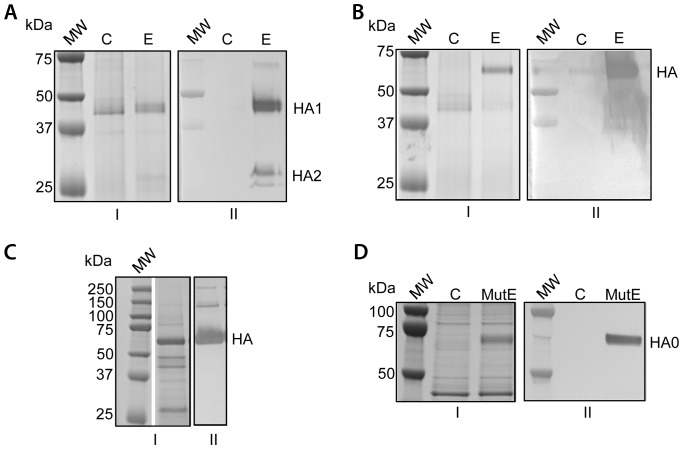
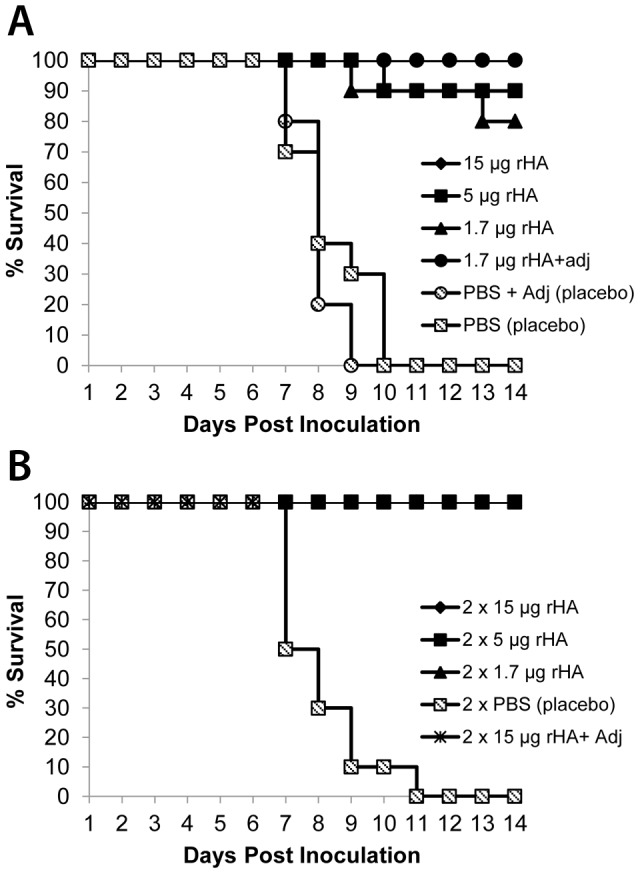
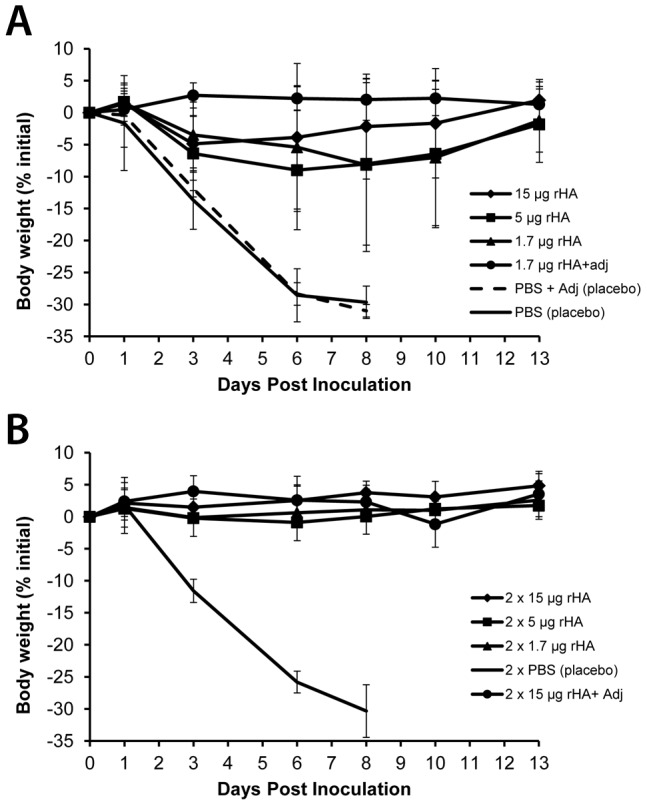
For the rapid production of influenza vaccine antigens in unlimited quantities, a transition from conventional egg-based production to cell-based and recombinant systems is required. The need for higher-yield, lower-cost, and faster production processes is critical to provide adequate supplies of influenza vaccine to counter global pandemic threats. In this study, recombinant hemagglutinin proteins of influenza virus were expressed in the microalga Schizochytrium sp., an established, fermentable organism grown in large scale for the manufacture of polyunsaturated fatty acids for animal and human health applications. Schizochytrium was capable of exporting the full-length membrane-bound proteins in a secreted form suitable for vaccine formulation. One recombinant hemagglutinin (rHA) protein derived from A/Puerto Rico/8/34 (H1N1) influenza virus was evaluated as a vaccine in a murine challenge model. Protective immunity from lethal challenge with homologous virus was elicited by a single dose of 1.7, 5 or 15 µg rHA with or without adjuvant at survival rates between 80-100%. Full protection (100%) was established at all dose levels with or without adjuvant when mice were given a second vaccination. These data demonstrate the potential of Schizochytrium sp. as a platform for the production of recombinant antigens useful for vaccination against influenza.
为了快速大量生产流感疫苗抗原,需要从传统的基于鸡蛋的生产向基于细胞和重组系统的生产方式转变。为了提供足够的流感疫苗供应以应对全球大流行的威胁,需要更高产量、更低成本和更快的生产工艺。在这项研究中,流感病毒的重组血凝素蛋白在微藻裂殖壶菌中表达,裂殖壶菌是一种已建立的、可发酵的生物,可大规模生长,用于制造多不饱和脂肪酸,用于动物和人类健康应用。裂殖壶菌能够以适合疫苗配方的分泌形式输出全长膜结合蛋白。来自 A/Puerto Rico/8/34(H1N1)流感病毒的一种重组血凝素(rHA)蛋白作为疫苗在小鼠攻毒模型中进行了评估。用 1.7、5 或 15µg rHA 进行单次免疫,无论是否有佐剂,都能诱导对同源病毒致死性攻毒的保护性免疫,存活率在 80-100%之间。在所有剂量水平下,无论是否有佐剂,当小鼠接受第二次接种时,均可实现 100%的完全保护。这些数据表明裂殖壶菌可作为生产用于流感疫苗接种的重组抗原的平台。