Department of Microbiology and Plant Pathology, University of Pretoria, Pretoria, South Africa.
Emerg Infect Dis. 2013 Apr;19(4):529-33. doi: 10.3201/eid1904.120185.
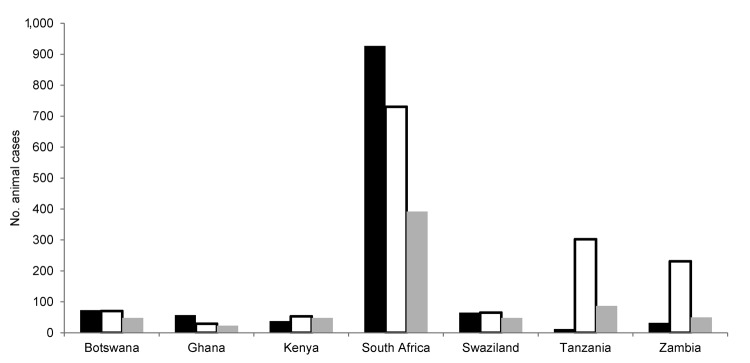
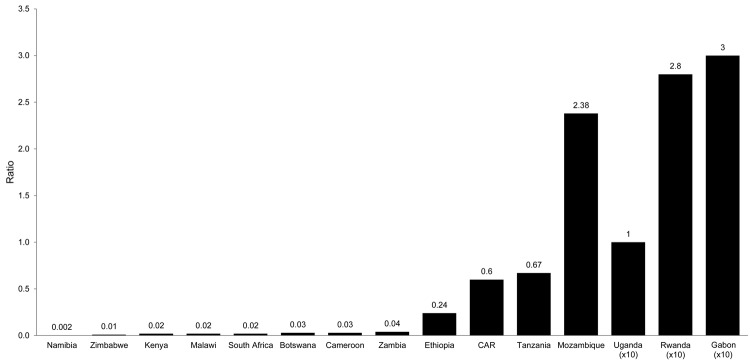
Human rabies is an ancient disease but in modern times has primarily been associated with dog rabies-endemic countries of Asia and Africa. From an African perspective, the inevitable and tragic consequences of rabies require serious reflection of the factors that continue to drive its neglect. Established as a major disease only after multiple introductions during the colonial era, rabies continues to spread into new reservoirs and territories in Africa. However, analysis of reported data identified major discrepancies that are indicators of poor surveillance, reporting, and cooperation among national, international, and global authorities. Ultimately, the absence of reliable and sustained data compromises the priority given to the control of rabies. Appropriate actions and changes, in accordance to the One Health philosophy and including aspects such as synchronized, shared, and unified global rabies data reporting, will not only be necessary, but also should be feasible.
人类狂犬病是一种古老的疾病,但在现代主要与亚洲和非洲的狂犬病流行国家有关。从非洲的角度来看,狂犬病不可避免和悲惨的后果需要认真反思那些持续导致其被忽视的因素。狂犬病在殖民时期经历多次传入后才被确定为主要疾病,它继续在非洲传播到新的宿主和地区。然而,对报告数据的分析发现了主要差异,这表明监测、报告和国家、国际和全球各级主管部门之间的合作存在不足。最终,缺乏可靠和持续的数据,影响了对狂犬病控制的重视。根据“同一健康”理念采取适当的行动和改变,包括同步、共享和统一的全球狂犬病数据报告等方面,不仅是必要的,而且应该是可行的。