Department of Laboratory Medicine, University of Minnesota Medical School, University of Minnesota Hospital, Minneapolis, Minnesota 55455, USA.
Emerg Infect Dis. 2013 Apr;19(4):551-8. doi: 10.3201/eid1904.121572.
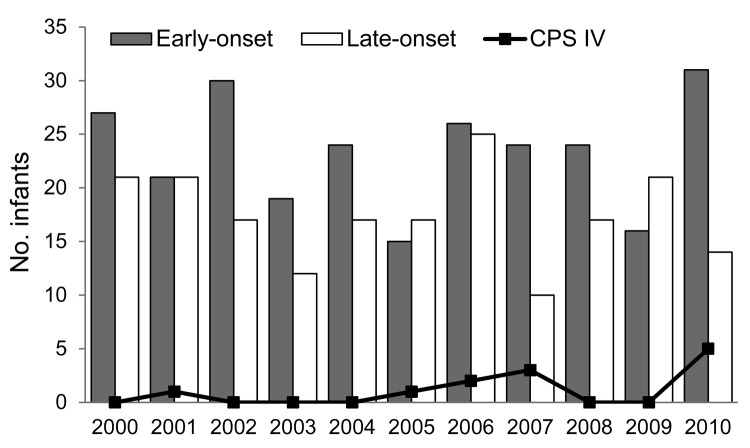
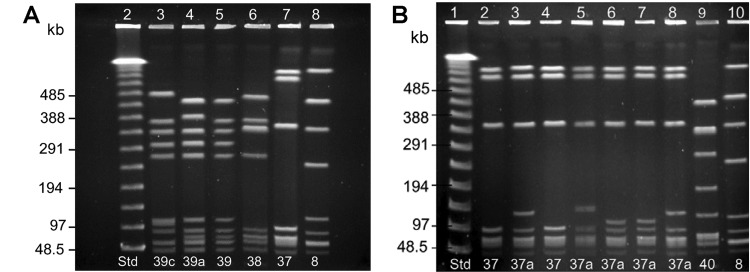
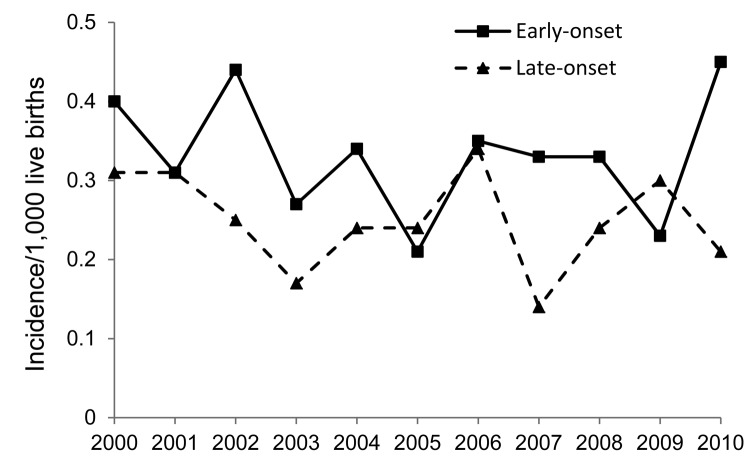
Group B Streptococcus (GBS) is a major cause of invasive disease in neonates in the United States. Surveillance of invasive GBS disease in Minnesota, USA, during 2000-2010 yielded 449 isolates from 449 infants; 257 had early-onset (EO) disease (by age 6 days) and 192 late-onset (LO) disease (180 at age 7-89 days, 12 at age 90-180 days). Isolates were characterized by capsular polysaccharide serotype and surface-protein profile; types III and Ia predominated. However, because previously uncommon serotype IV constitutes 5/31 EO isolates in 2010, twelve type IV isolates collected during 2000-2010 were studied further. By pulsed-field gel electrophoresis, they were classified into 3 profiles; by multilocus sequence typing, representative isolates included new sequence type 468. Resistance to clindamycin or erythromycin was detected in 4/5 serotype IV isolates. Emergence of serotype IV GBS in Minnesota highlights the need for serotype prevalence monitoring to detect trends that could affect prevention strategies.
B 群链球菌(GBS)是美国新生儿侵袭性疾病的主要病因。2000-2010 年在美国明尼苏达州对侵袭性 GBS 疾病进行监测,从 449 名婴儿中分离出 449 株分离株;257 株为早发性(EO)疾病(6 天龄内),192 株为晚发性(LO)疾病(180 天龄内 180 天,90-180 天龄内 12 天)。分离株的特征为荚膜多糖血清型和表面蛋白谱;III 型和 Ia 型为主。然而,由于以前少见的血清型 IV 构成 2010 年 5/31 例 EO 分离株,因此进一步研究了 2000-2010 年期间收集的 12 株 IV 型分离株。通过脉冲场凝胶电泳,它们被分为 3 种谱型;通过多位点序列分型,代表性分离株包括新的血清型 468。5 株血清型 IV 分离株中有 4 株对克林霉素或红霉素耐药。明尼苏达州出现血清型 IV GBS 凸显了监测血清型流行率的必要性,以发现可能影响预防策略的趋势。