Department of Neonatal Intensive Care Unit, University of Chinese Academy of Science-Shenzhen Hospital, Shenzhen, Guangdong, China.
Department of Laboratory Medicine, Shenzhen People's Hospital, Second Clinical Medical College of Jinan University, Key Laboratory of Pathogenic Microorganism and Bacterial Resistance Surveillance in Shenzhen, Shenzhen, Guangdong, China.
BMC Microbiol. 2019 Aug 8;19(1):185. doi: 10.1186/s12866-019-1551-2.
Group B Streptococcus (GBS) is a leading cause of early-onset disease (EOD) and late-onset disease (LOD) in infants. We sought to investigate the antibiotic susceptibility profiles, resistance genes, virulence-related genes, serotype distribution and genotypic characteristics of GBS recovered from infected or colonized neonates and pregnant women in a tertiary teaching hospital in Shenzhen, China, from 2008 to 2015.
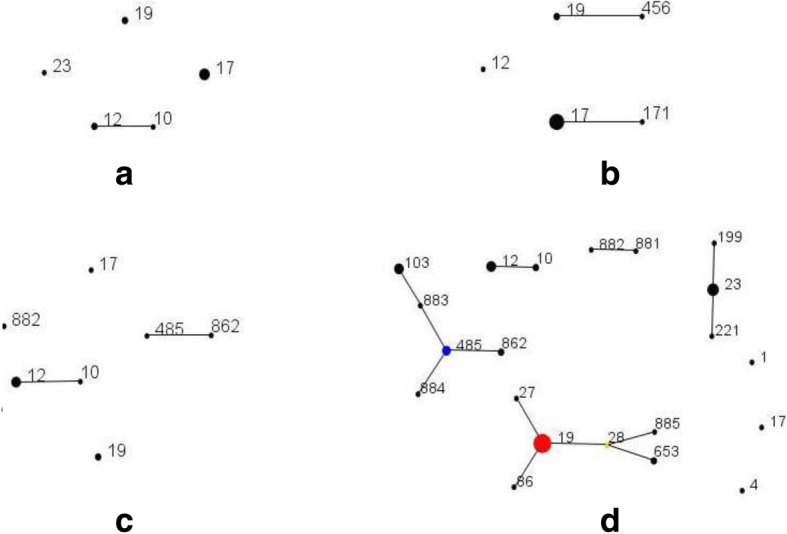
High resistance rates of erythromycin (66.7-100%) were detected among early-onset GBS (EOGBS), late-onset GBS (LOGBS), neonatal colonizing GBS (NCGBS) and maternal colonizing GBS (MCGBS). 89.5-100% of four groups of GBS isolates showed resistance to tetracycline. More than 90 % of erythromycin resistant isolates of EOGBS (8/8, 100%), LOGBS (16/17, 94.1%) and NCGBS (10/11, 90.9%) harbored ermB, while only 9.1-17.6% harbored mefA/E. By contrast, 55.8% (24/43) and 62.8% (27/43) of erythromycin resistant MCGBS isolates carried ermB and mefA/E genes, respectively. The tetO gene was more common in tetracycline resistant EOGBS (10/11, 90.9%), LOGBS (17/17, 100%) and NCGBS (10/11, 90.9%), compared to tetracycline resistant MCGBS (12/51, 23.5%). Additionally, the tetM gene accounted for 90.9% (10/11), 76.5% (13/17), 45.5% (5/11) and 80.4% (41/51) of four groups of isolates, respectively. Serotype III was the most predominant in EOGBS (8/12, 66.7%) and LOGBS (15/17, 88.2%), while serotype Ib accounted for 50.0% (6/12) of NCGBS, and serotype Ia and III accounted for 45.6% (26/57) and 33.3% (19/57) of MCGBS, respectively. Sequence type 17 (ST17) was the most common in EOGBS (6/12, 50%) and LOGBS (12/17, 70.6%), while ST12 was predominant in NCGBS (5/12, 41.7%), and five STs (ST19, ST23, ST12, ST103 and ST485) accounted for 66.7% (38/57) of the MCGBS. All serotype III-ST17 isolates recovered from neonates were associated with invasive infections.
This study shows the meaningful differences in molecular mechanisms of resistance to erythromycin and tetracycline, and the prevalence of serotypes and STs among GBS recovered from neonates and pregnant women. ST17 is predominant in neonatal invasive GBS, but rare in NCGBS and MCGBS.
B 群链球菌(GBS)是导致婴儿早发性疾病(EOD)和晚发性疾病(LOD)的主要原因。我们旨在调查从中国深圳一家三级教学医院的感染或定植的新生儿和孕妇中分离出的 GBS 的抗生素敏感性谱、耐药基因、毒力相关基因、血清型分布和基因型特征。
早发性 GBS(EOGBS)、晚发性 GBS(LOGBS)、新生儿定植 GBS(NCGBS)和孕产妇定植 GBS(MCGBS)中红霉素的耐药率均较高(66.7-100%)。四组 GBS 分离株对四环素的耐药率均为 89.5-100%。EOGBS(8/8,100%)、LOGBS(16/17,94.1%)和 NCGBS(10/11,90.9%)的红霉素耐药分离株均携带 ermB,而 mefA/E 基因的携带率为 90.9-100%。相比之下,红霉素耐药的 MCGBS 分离株中 ermB 和 mefA/E 基因的携带率分别为 9.1-17.6%和 55.8%(24/43)和 62.8%(27/43)。在四环素耐药的 EOGBS(10/11,90.9%)、LOGBS(17/17,100%)和 NCGBS(10/11,90.9%)中,tetO 基因比四环素耐药的 MCGBS(12/51,23.5%)更常见。此外,tetM 基因分别占四组分离株的 90.9%(10/11)、76.5%(13/17)、45.5%(5/11)和 80.4%(41/51)。血清型 III 在 EOGBS(8/12,66.7%)和 LOGBS(15/17,88.2%)中最为常见,而血清型 Ib 占 NCGBS 的 50.0%(6/12),血清型 Ia 和 III 分别占 MCGBS 的 45.6%(26/57)和 33.3%(19/57)。ST17 是 EOGBS(6/12,50%)和 LOGBS(12/17,70.6%)中最常见的血清型,而 ST12 则在 NCGBS 中占优势(5/12,41.7%),5 种 STs(ST19、ST23、ST12、ST103 和 ST485)占 MCGBS 的 66.7%(38/57)。从新生儿分离出的所有血清型 III-ST17 菌株均与侵袭性感染有关。
本研究表明了红霉素和四环素耐药的分子机制以及从新生儿和孕妇中分离出的 GBS 的血清型和 ST 之间存在显著差异。ST17 在新生儿侵袭性 GBS 中占优势,但在 NCGBS 和 MCGBS 中罕见。