University College, London, UK.
J R Soc Interface. 2013 May 1;10(84):20130279. doi: 10.1098/rsif.2013.0279. Print 2013 Jul 6.
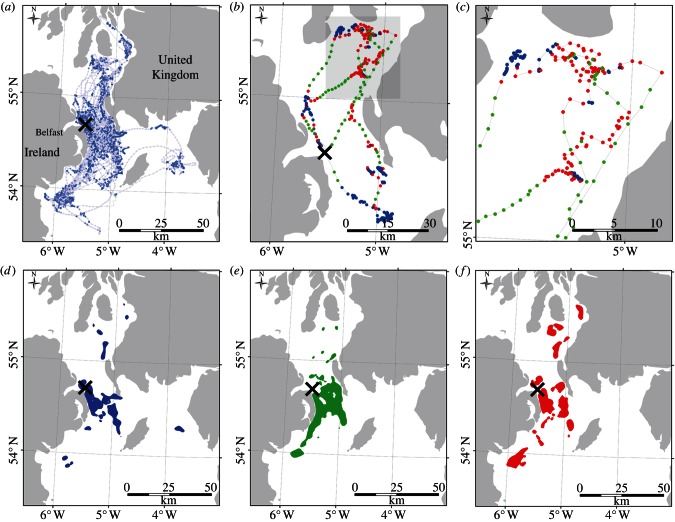
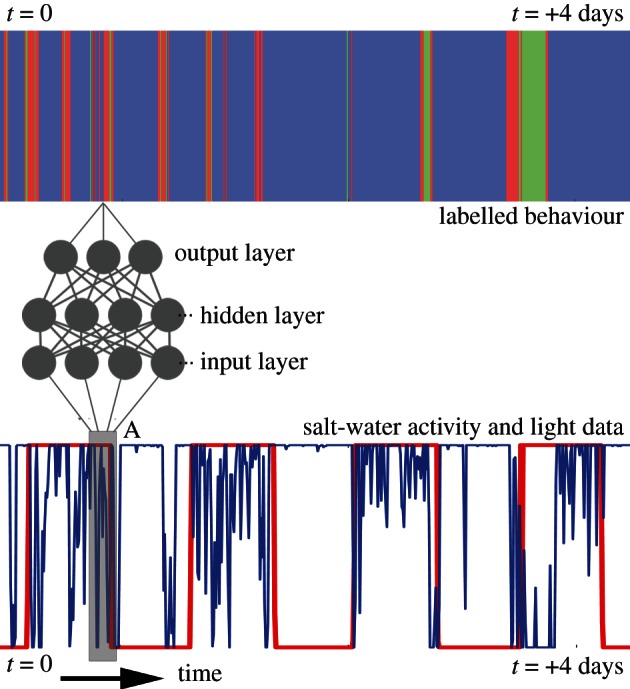
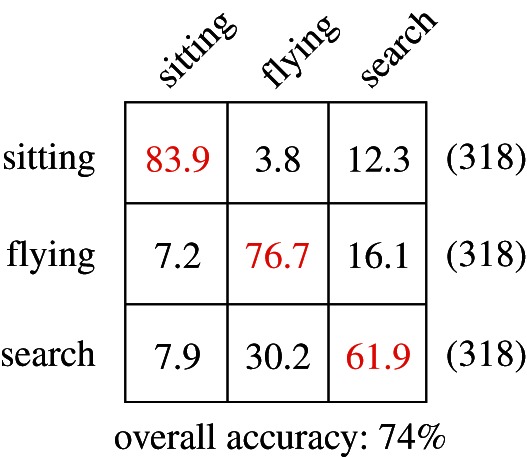
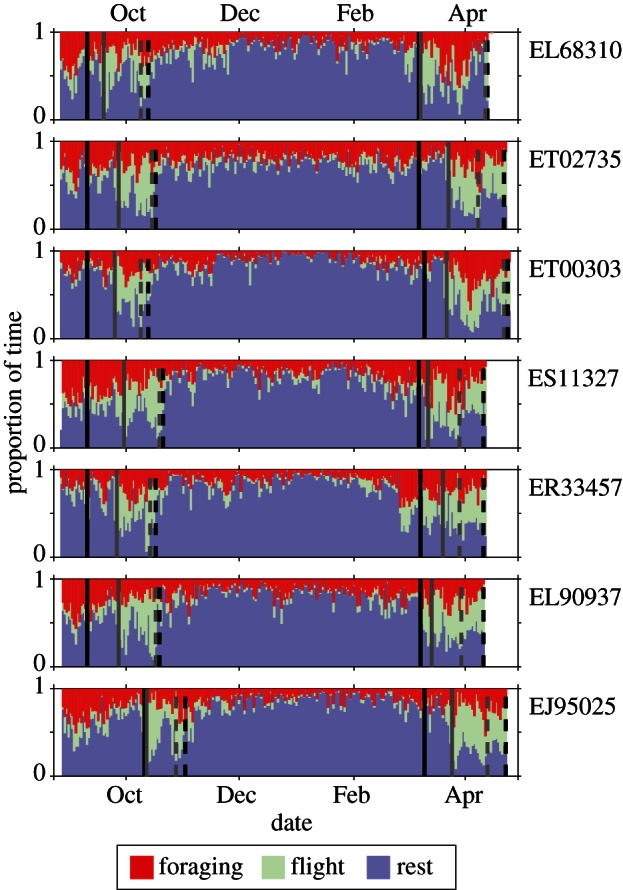
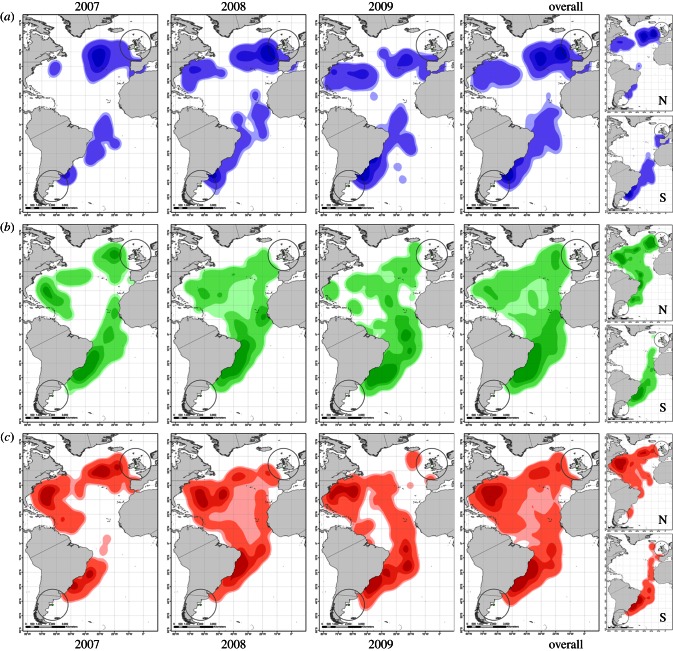
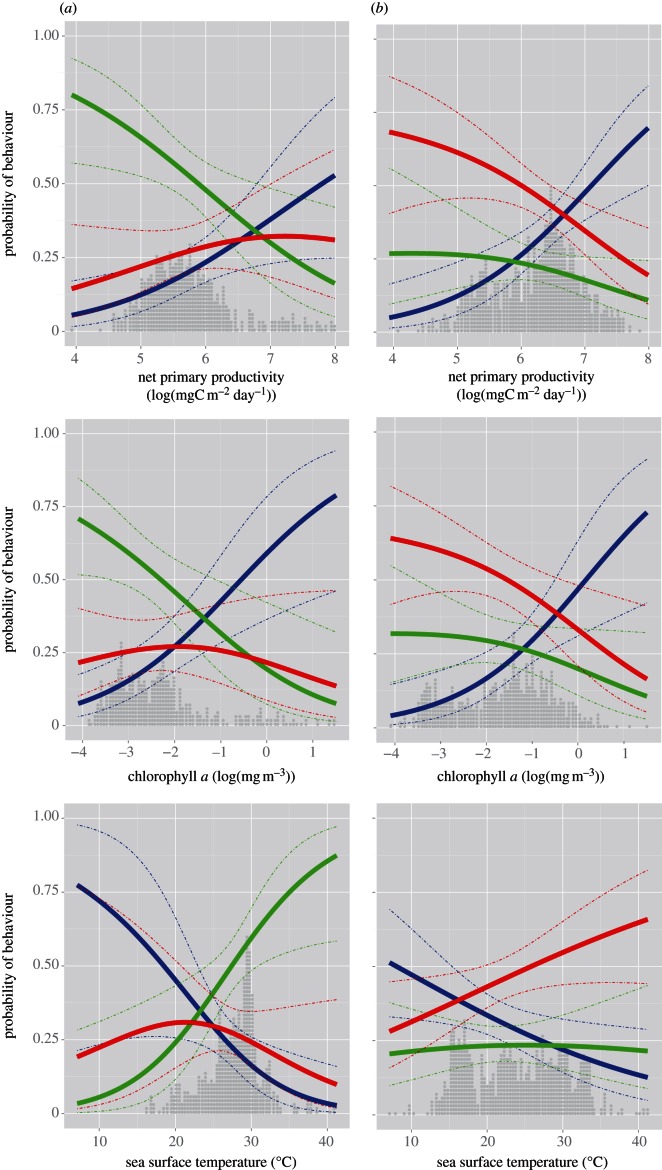
Understanding the behaviour of animals in the wild is fundamental to conservation efforts. Advances in bio-logging technologies have offered insights into the behaviour of animals during foraging, migration and social interaction. However, broader application of these systems has been limited by device mass, cost and longevity. Here, we use information from multiple logger types to predict individual behaviour in a highly pelagic, migratory seabird, the Manx Shearwater (Puffinus puffinus). Using behavioural states resolved from GPS tracking of foraging during the breeding season, we demonstrate that individual behaviours can be accurately predicted during multi-year migrations from low cost, lightweight, salt-water immersion devices. This reveals a complex pattern of migratory stopovers: some involving high proportions of foraging, and others of rest behaviour. We use this technique to examine three consecutive years of global migrations, revealing the prominence of foraging behaviour during migration and the importance of highly productive waters during migratory stopover.
了解野生动物的行为对于保护工作至关重要。生物标记技术的进步为动物在觅食、迁徙和社会互动过程中的行为提供了深入的了解。然而,这些系统的更广泛应用受到设备质量、成本和寿命的限制。在这里,我们使用来自多种记录器类型的信息来预测高度洄游的迁徙海鸟——马恩岛剪水鹱(Puffinus puffinus)的个体行为。通过对繁殖季节觅食过程中的 GPS 追踪来确定行为状态,我们证明了在多年的迁徙过程中,可以从低成本、重量轻、耐盐水的设备中准确预测个体行为。这揭示了迁徙中途停留的复杂模式:有些涉及到高比例的觅食,而有些则是休息行为。我们使用这种技术来研究连续三年的全球迁徙,揭示了迁徙过程中觅食行为的突出性以及迁徙中途停留期间高生产力水域的重要性。