Monterey Bay Aquarium Research Institute (MBARI), Moss Landing, CA 95039, USA.
ISME J. 2013 Sep;7(9):1764-74. doi: 10.1038/ismej.2013.70. Epub 2013 May 2.
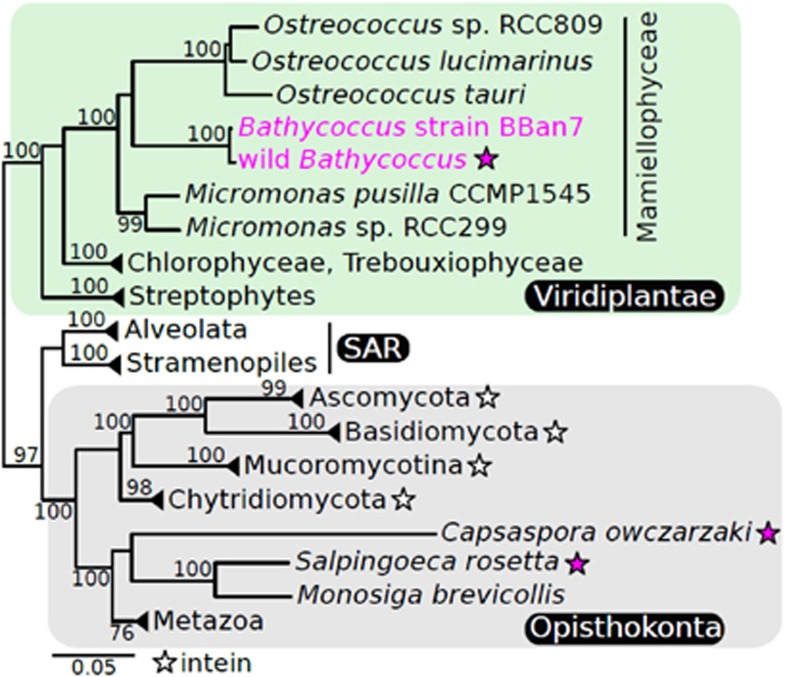
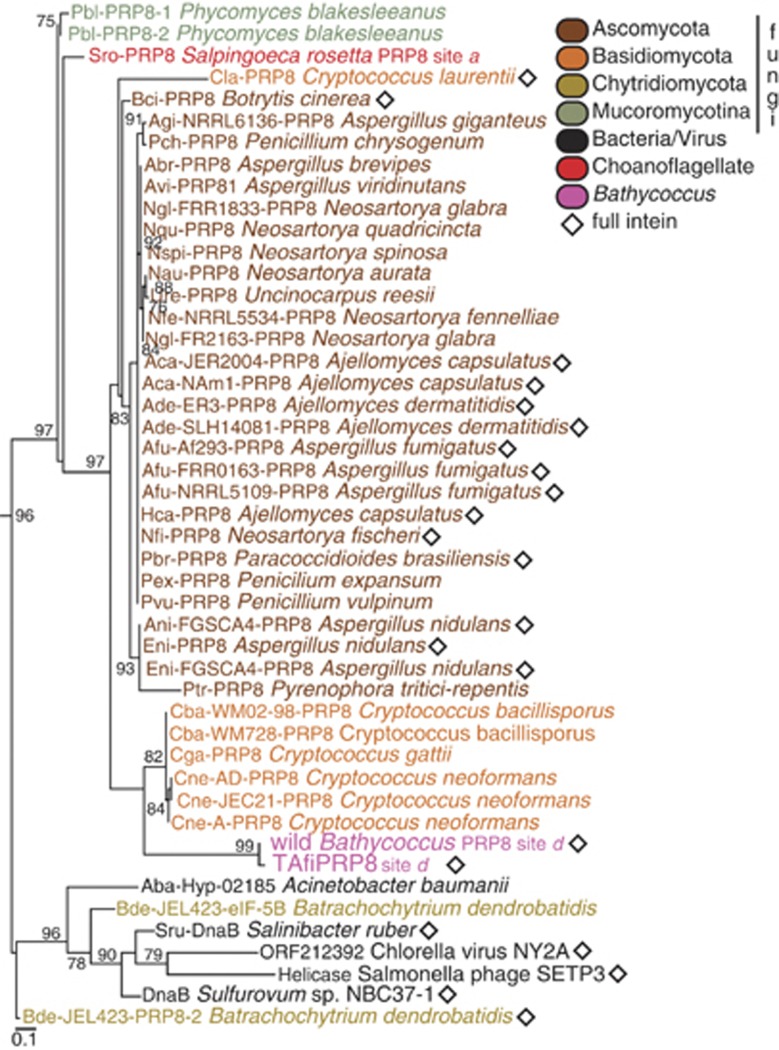
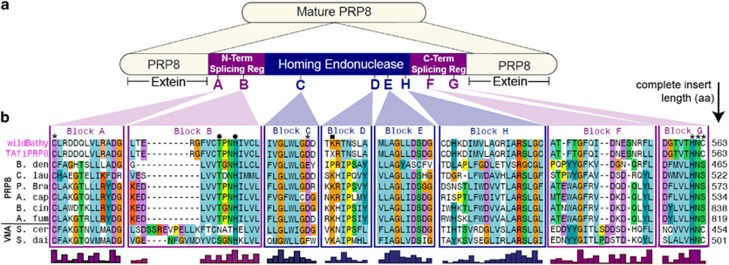
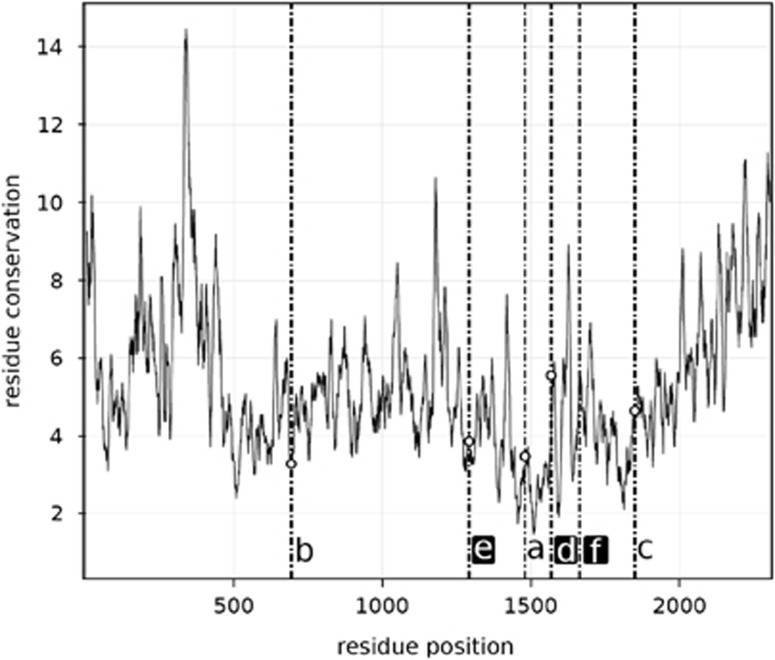
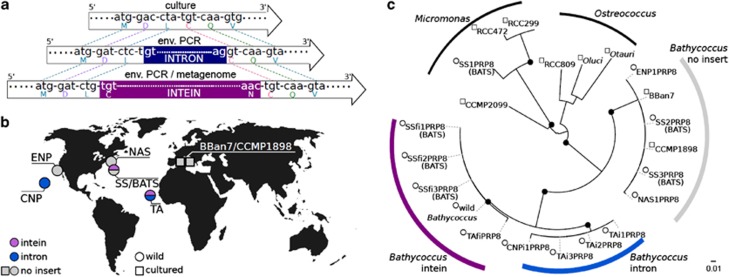
Inteins are rare, translated genetic parasites mainly found in bacteria and archaea, while spliceosomal introns are distinctly eukaryotic features abundant in most nuclear genomes. Using targeted metagenomics, we discovered an intein in an Atlantic population of the photosynthetic eukaryote, Bathycoccus, harbored by the essential spliceosomal protein PRP8 (processing factor 8 protein). Although previously thought exclusive to fungi, we also identified PRP8 inteins in parasitic (Capsaspora) and predatory (Salpingoeca) protists. Most new PRP8 inteins were at novel insertion sites that, surprisingly, were not in the most conserved regions of the gene. Evolutionarily, Dikarya fungal inteins at PRP8 insertion site a appeared more related to the Bathycoccus intein at a unique insertion site, than to other fungal and opisthokont inteins. Strikingly, independent analyses of Pacific and Atlantic samples revealed an intron at the same codon as the Bathycoccus PRP8 intein. The two elements are mutually exclusive and neither was found in cultured Bathycoccus or other picoprasinophyte genomes. Thus, wild Bathycoccus contain one of few non-fungal eukaryotic inteins known and a rare polymorphic intron. Our data indicate at least two Bathycoccus ecotypes exist, associated respectively with oceanic or mesotrophic environments. We hypothesize that intein propagation is facilitated by marine viruses; and, while intron gain is still poorly understood, presence of a spliceosomal intron where a locus lacks an intein raises the possibility of new, intein-primed mechanisms for intron gain. The discovery of nucleus-encoded inteins and associated sequence polymorphisms in uncultivated marine eukaryotes highlights their diversity and reveals potential sexual boundaries between populations indistinguishable by common marker genes.
内共生体是罕见的、翻译的遗传寄生虫,主要存在于细菌和古菌中,而剪接体内含子则是明显的真核特征,存在于大多数核基因组中。通过靶向宏基因组学,我们在光合真核生物 Bathycoccus 的大西洋种群中发现了一个内含子,该内含子存在于必需的剪接体蛋白 PRP8(加工因子 8 蛋白)中。虽然以前认为它是真菌所特有的,但我们也在寄生(Capsaspora)和捕食(Salpingoeca)原生动物中鉴定出了 PRP8 内含子。大多数新的 PRP8 内含子位于新的插入位点,令人惊讶的是,这些插入位点不在基因最保守的区域。从进化的角度来看,Dikarya 真菌 PRP8 插入位点 a 的内含子与在独特插入位点的 Bathycoccus 内含子更为相关,而与其他真菌和后生动物内含子则不太相关。引人注目的是,对太平洋和大西洋样本的独立分析揭示了一个内含子位于与 Bathycoccus PRP8 内含子相同的密码子处。这两个元件是互斥的,在培养的 Bathycoccus 或其他 Picoprasinophyte 基因组中都没有发现。因此,野生 Bathycoccus 含有少数已知的非真菌真核内含子之一和一个罕见的多态内含子。我们的数据表明,至少存在两种 Bathycoccus 生态型,分别与海洋或中营养环境相关。我们假设内含子的传播是由海洋病毒促进的;虽然内含子的获得仍然知之甚少,但在一个没有内含子的基因座存在剪接体内含子,增加了新的、内含子引发的内含子获得机制的可能性。未培养海洋真核生物中细胞核编码的内含子和相关序列多态性的发现,突出了它们的多样性,并揭示了种群之间潜在的性边界,这些边界无法通过常见的标记基因区分。