Department of Clinical Analysis, Faculty of Pharmaceutical Sciences of Araraquara, University of São Paulo State (UNESP), Araraquara, Brazil.
PLoS One. 2013 Apr 25;8(4):e62200. doi: 10.1371/journal.pone.0062200. Print 2013.
Diffuse astrocytomas are the most common type of primary brain cancer in adults. They present a wide variation in differentiation and aggressiveness, being classified into three grades: low-grade diffuse astrocytoma (grade II), anaplastic astrocytoma (grade III) and glioblastoma multiforme (grade IV), the most frequent and the major lethal type. Recent studies have highlighted the molecular heterogeneity of astrocytomas and demonstrated that large-scale analysis of gene expression could help in their classification and treatment. In this context, we previously demonstrated that HJURP, a novel protein involved in the repair of DNA double-strand breaks, is highly overexpressed in glioblastoma.
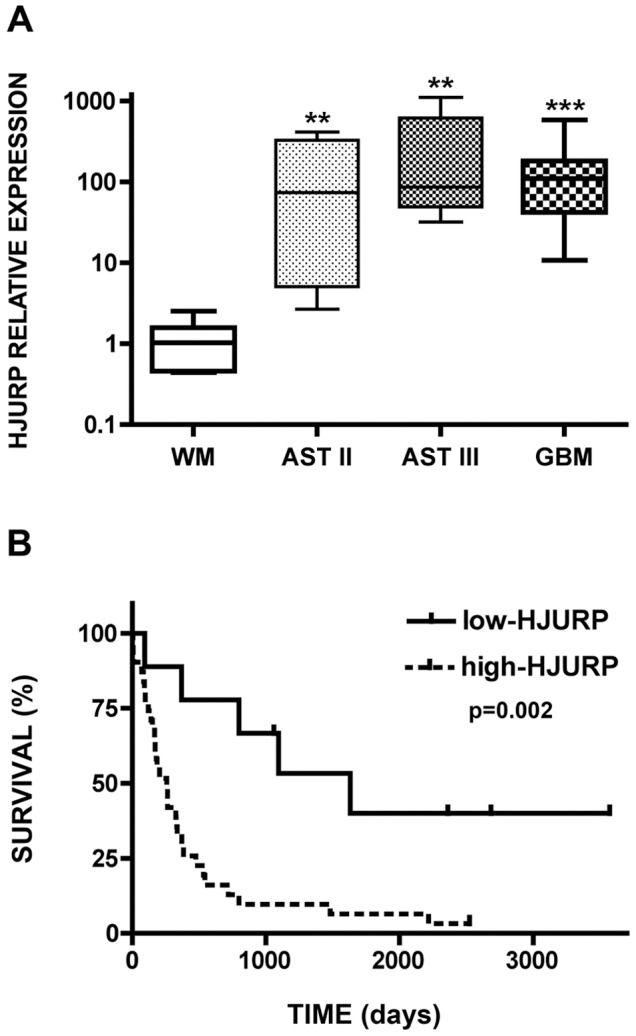
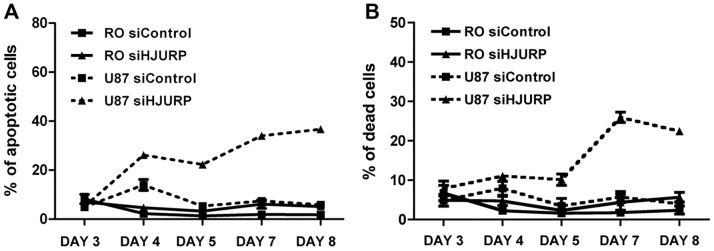
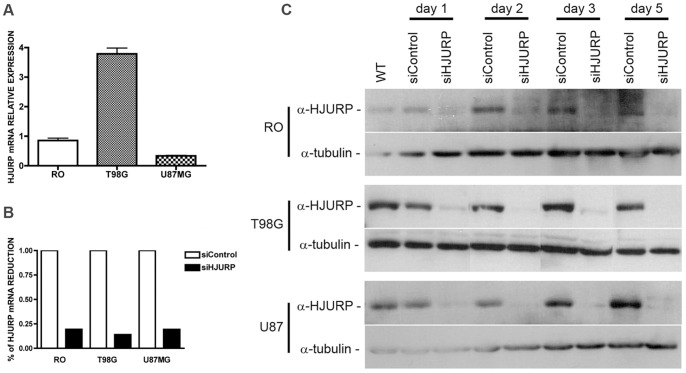
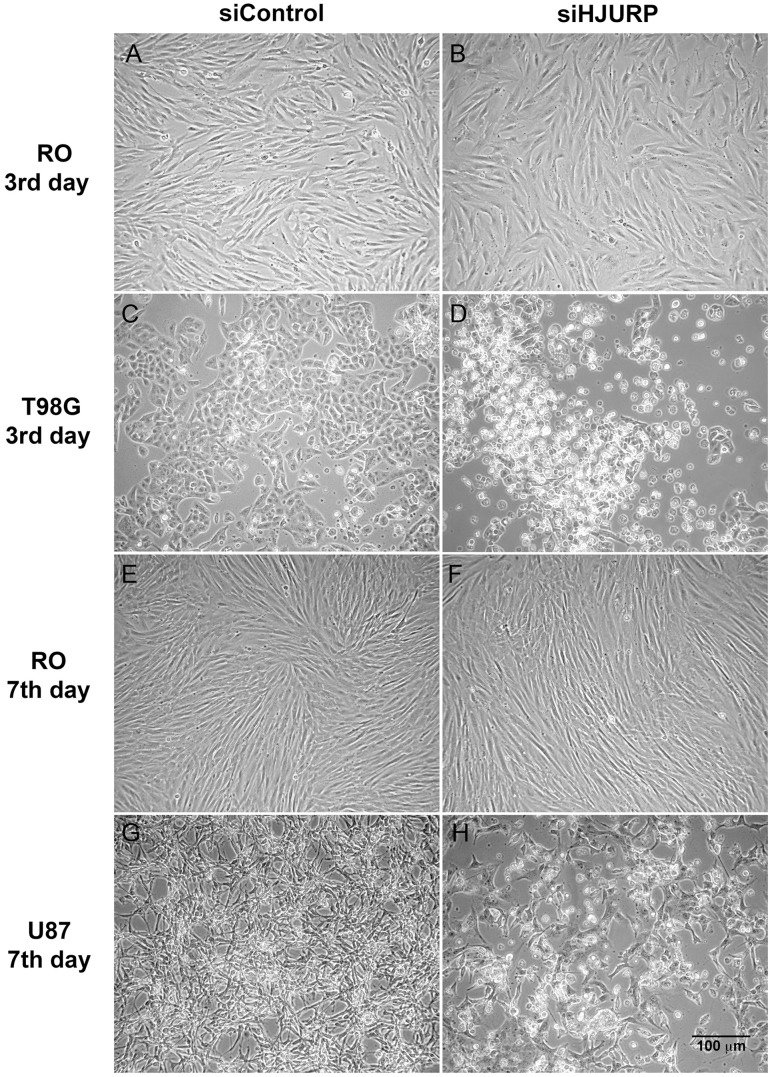
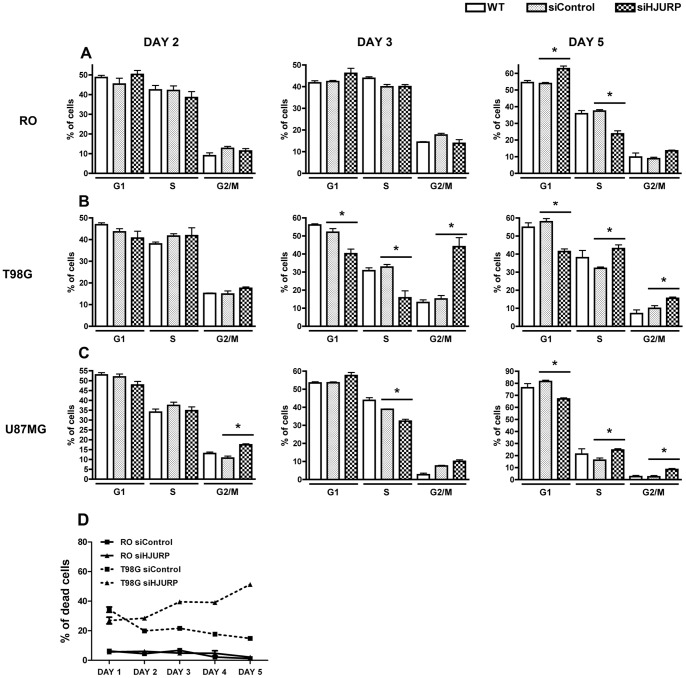
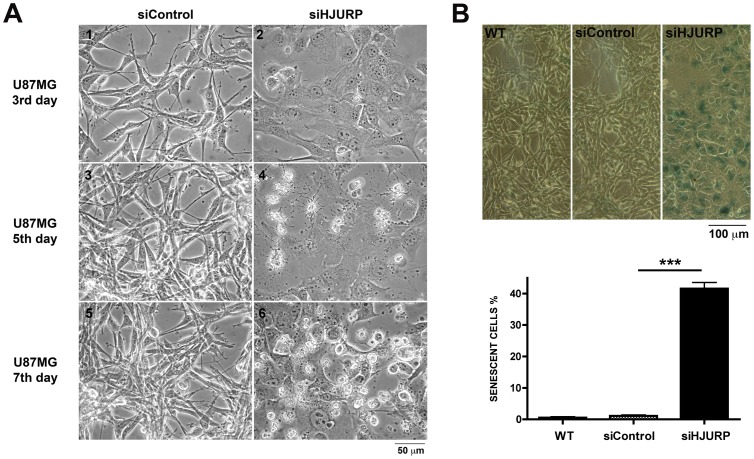
METHODOLOGY/PRINCIPAL FINDINGS: Here we show that HJURP is remarkably overexpressed in a cohort composed of 40 patients with different grade astrocytomas. We also observed that tumors presenting the higher expression levels of HJURP are associated with poor survival prognosis, indicating HJURP overexpression as an independent prognostic factor of death risk for astrocytoma patients. More importantly, we found that HJURP knockdown strongly affects the maintenance of glioblastoma cells in a selective manner. Glioblastoma cells showed remarkable cell cycle arrest and premature senescence that culminated in elevated levels of cell death, differently from non-tumoral cells that were minimally affected.
These data suggest that HJURP has an important role in the maintenance of extremely proliferative cells of high-grade gliomas and point to HJURP as a potential therapeutic target for the development of novel treatments for glioma patients.
弥漫性星形细胞瘤是成人原发性脑癌中最常见的类型。它们在分化和侵袭性方面存在广泛的差异,分为三个等级:低级别弥漫性星形细胞瘤(二级)、间变性星形细胞瘤(三级)和胶质母细胞瘤(四级),其中四级是最常见和主要致命的类型。最近的研究强调了星形细胞瘤的分子异质性,并表明大规模的基因表达分析可以帮助对其进行分类和治疗。在这种情况下,我们之前证明了参与 DNA 双链断裂修复的新型蛋白 HJURP 在胶质母细胞瘤中高度过表达。
方法/主要发现:在这里,我们表明 HJURP 在由 40 名不同等级星形细胞瘤患者组成的队列中显著过表达。我们还观察到,表达 HJURP 水平较高的肿瘤与较差的生存预后相关,表明 HJURP 过表达是星形细胞瘤患者死亡风险的独立预后因素。更重要的是,我们发现 HJURP 敲低以选择性的方式强烈影响胶质母细胞瘤细胞的维持。胶质母细胞瘤细胞表现出明显的细胞周期停滞和过早衰老,最终导致细胞死亡水平升高,而非肿瘤细胞则受到最小影响。
这些数据表明 HJURP 在维持高级别神经胶质瘤中极度增殖细胞方面具有重要作用,并指出 HJURP 可能成为开发胶质母细胞瘤患者新治疗方法的潜在治疗靶点。