National Institute of Nutrition and Seafood Research (NIFES) , Bergen , Norway ; Department of Biology, High Technology Centre, University of Bergen , Bergen , Norway.
PeerJ. 2013 Feb 19;1:e20. doi: 10.7717/peerj.20. Print 2013.
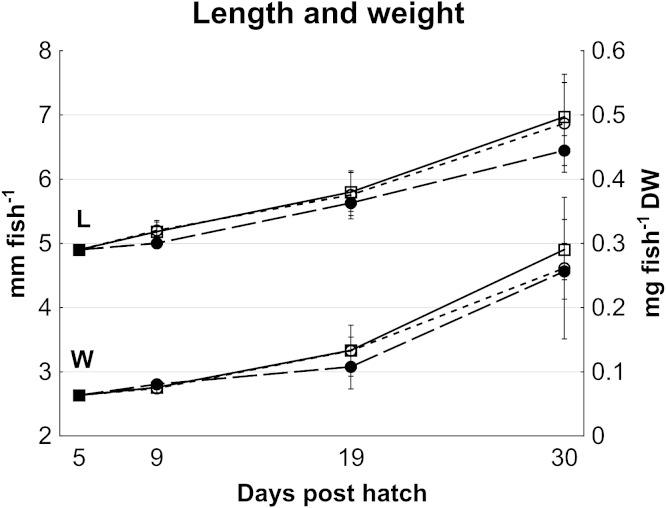
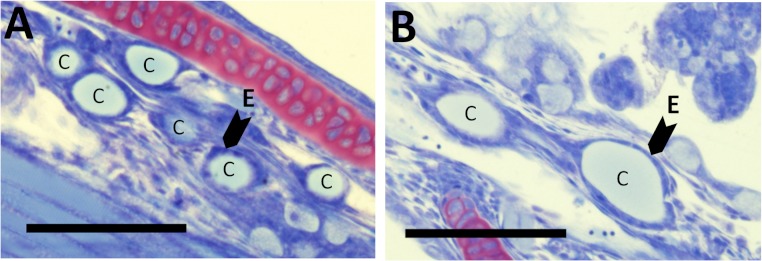
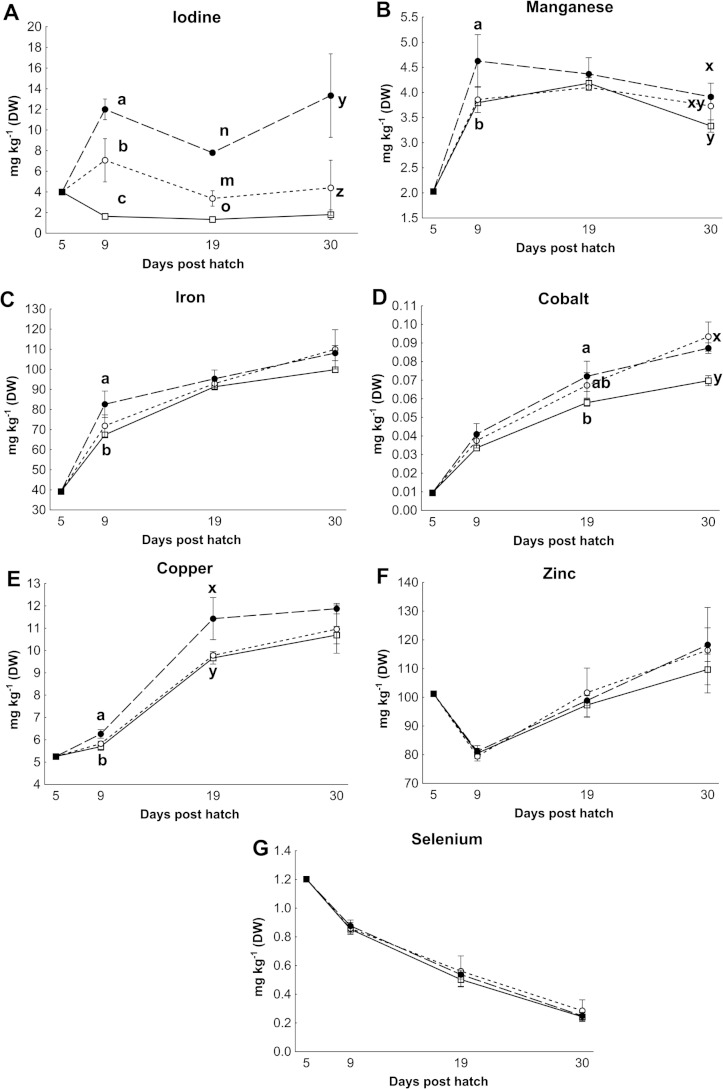
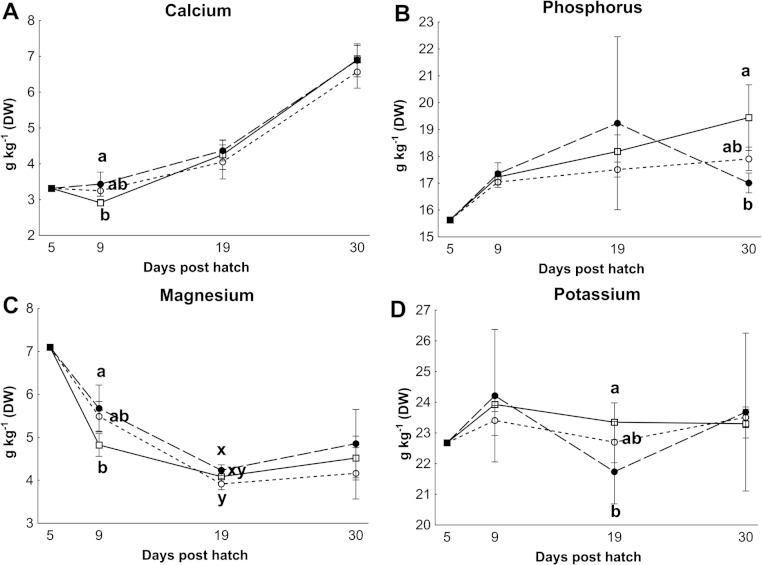
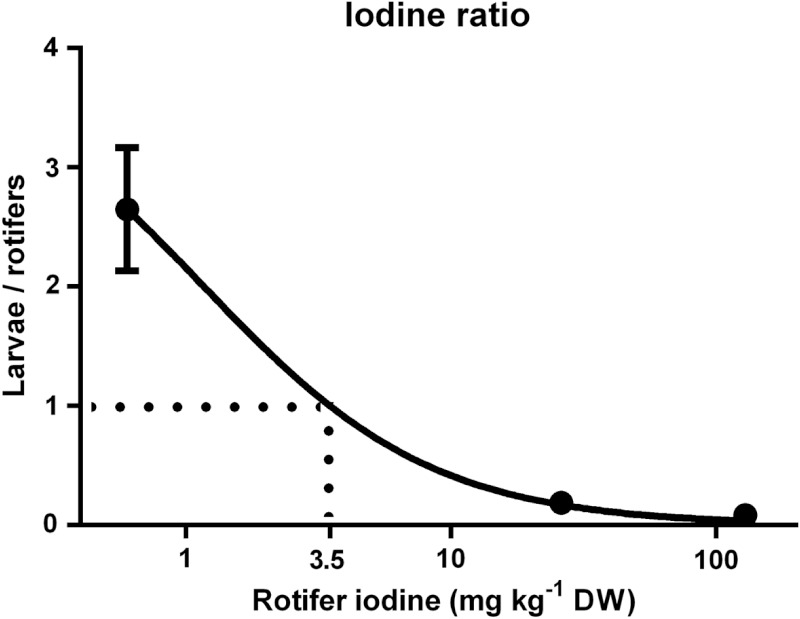
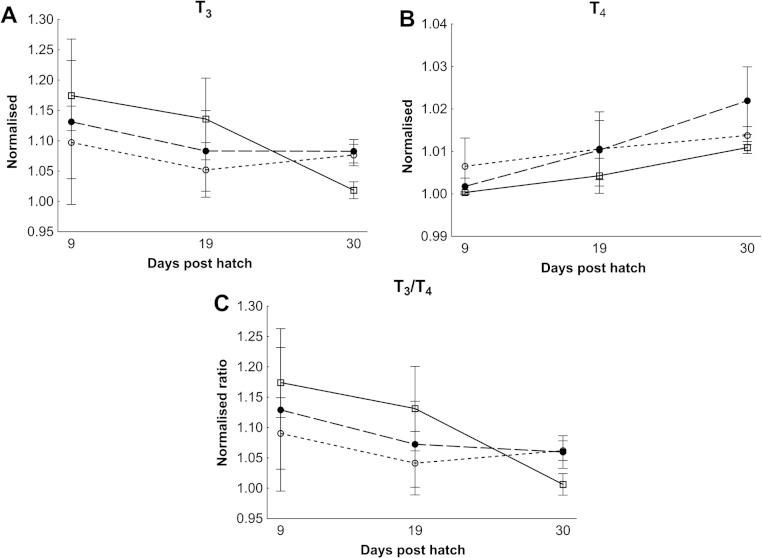
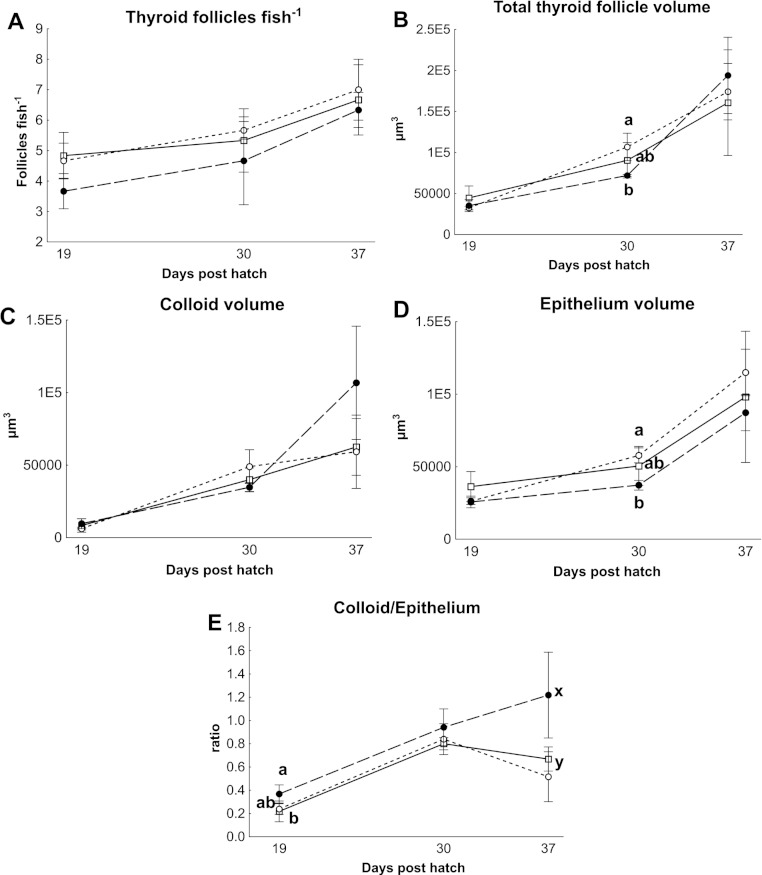
Copepods as feed promote better growth and development in marine fish larvae than rotifers. However, unlike rotifers, copepods contain several minerals such as iodine (I), at potentially toxic levels. Iodine is an essential trace element and both under and over supply of I can inhibit the production of the I containing thyroid hormones. It is unknown whether marine fish larvae require copepod levels of I or if mechanisms are present that prevent I toxicity. In this study, larval Atlantic cod (Gadus morhua) were fed rotifers enriched to intermediate (26 mg I kg(-1) dry weight; MI group) or copepod (129 mg I kg(-1) DW; HI group) I levels and compared to cod larvae fed control rotifers (0.6 mg I kg(-1) DW). Larval I concentrations were increased by 3 (MI) and 7 (HI) fold compared to controls during the rotifer feeding period. No differences in growth were observed, but the HI diet increased thyroid follicle colloid to epithelium ratios, and affected the essential element concentrations of larvae compared to the other groups. The thyroid follicle morphology in the HI larvae is typical of colloid goitre, a condition resulting from excessive I intake, even though whole body I levels were below those found previously in copepod fed cod larvae. This is the first observation of dietary induced I toxicity in fish, and suggests I toxicity may be determined to a greater extent by bioavailability and nutrient interactions than by total body I concentrations in fish larvae. Rotifers with 0.6 mg I kg(-1) DW appeared sufficient to prevent gross signs of I deficiency in cod larvae reared with continuous water exchange, while modelling of cod larvae versus rotifer I levels suggests that optimum I levels in rotifers for cod larvae is 3.5 mg I kg(-1) DW.
桡足类作为饲料比轮虫更能促进海洋鱼类幼体的生长和发育。然而,与轮虫不同的是,桡足类含有几种矿物质,如碘(I),其含量可能达到有毒水平。碘是一种必需的微量元素,碘的供应不足或过量都会抑制含碘甲状腺激素的产生。目前尚不清楚海洋鱼类幼体是否需要桡足类的碘水平,或者是否存在防止碘中毒的机制。在这项研究中,大西洋鳕鱼(Gadus morhua)幼体分别投喂添加了中等水平碘(26mg I kg(-1)干重;MI 组)或桡足类水平碘(129mg I kg(-1) DW;HI 组)的轮虫,以及投喂对照组轮虫(0.6mg I kg(-1) DW)的鳕鱼幼体。与对照组相比,在投喂轮虫期间,MI 组和 HI 组幼体的碘浓度分别增加了 3 倍和 7 倍。未观察到生长差异,但与其他组相比,HI 组饮食增加了甲状腺滤泡胶体与上皮的比值,并影响了幼体的必需元素浓度。HI 组幼体的甲状腺滤泡形态是胶体甲状腺肿的典型特征,即使全身碘水平低于先前在投喂桡足类的鳕鱼幼体中发现的水平,这种情况也是由于摄入过多的碘所致。这是首次在鱼类中观察到饮食诱导的碘中毒,这表明碘中毒可能在更大程度上取决于生物利用度和营养物质相互作用,而不是鱼类幼体的总体内碘浓度。添加 0.6mg I kg(-1) DW 的轮虫似乎足以防止在连续换水条件下饲养的鳕鱼幼体出现明显的碘缺乏症状,而鳕鱼幼体与轮虫碘水平的建模表明,轮虫中最适合鳕鱼幼体的碘水平为 3.5mg I kg(-1) DW。