MRC Laboratory of Molecular Biology, Neurobiology, Cambridge, UK.
J Neurochem. 2013 Jul;126(2):223-33. doi: 10.1111/jnc.12284. Epub 2013 May 20.
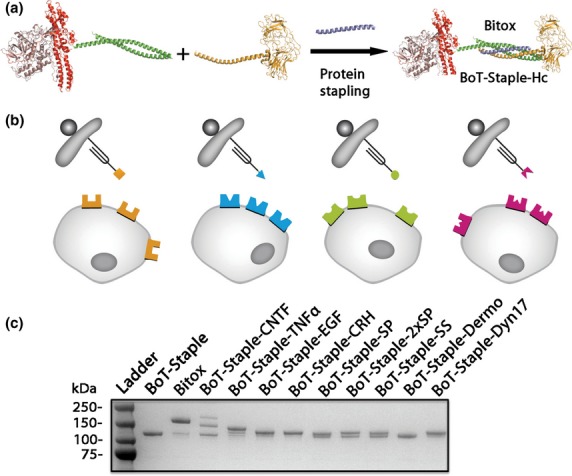
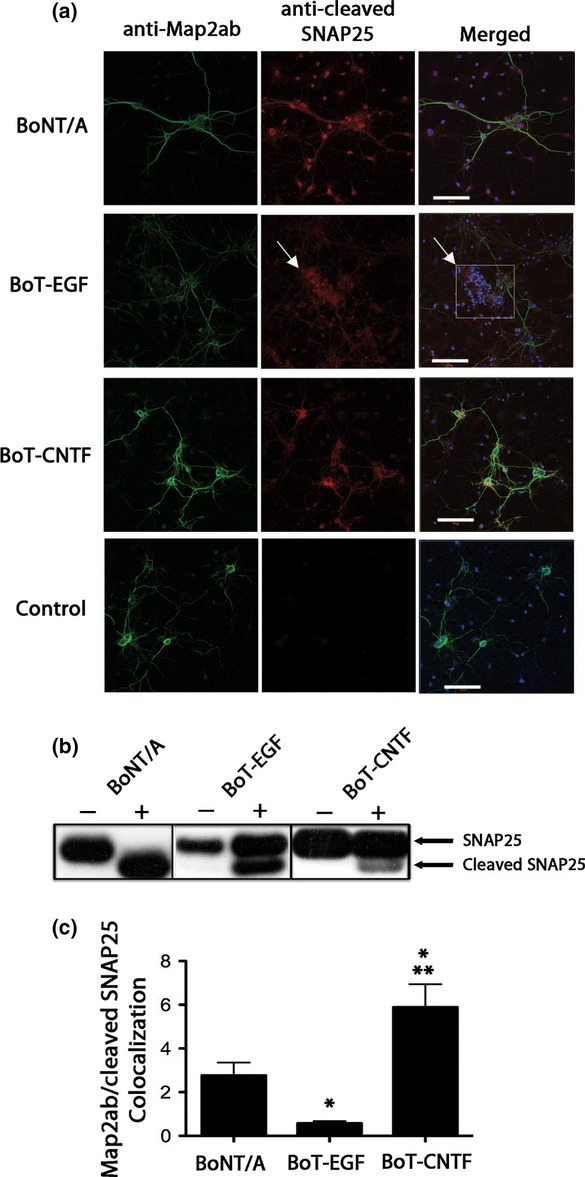
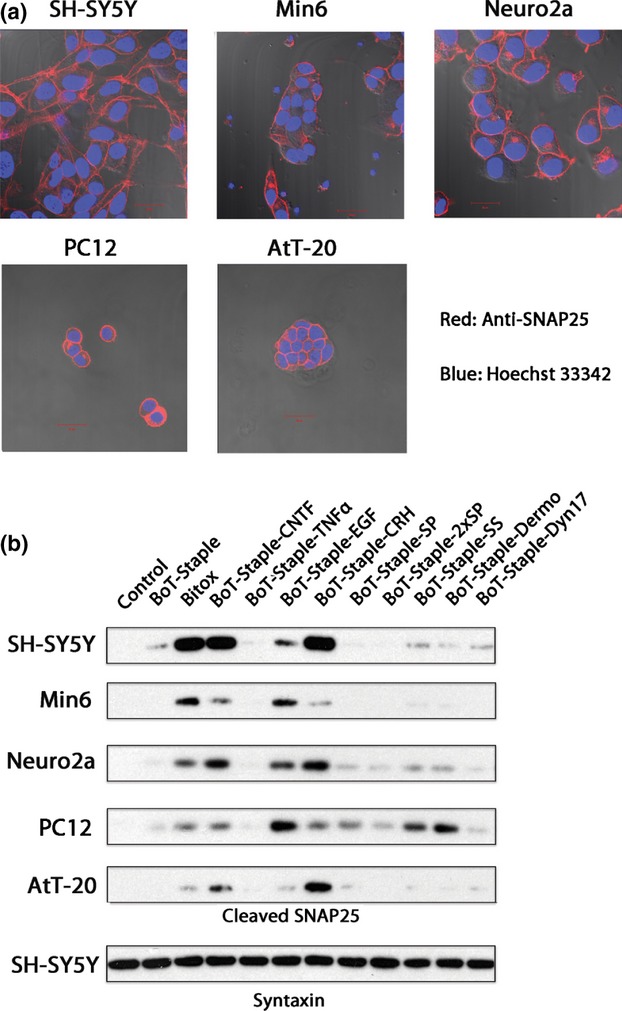
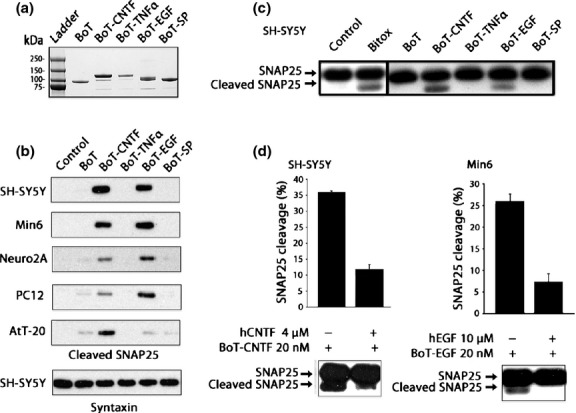
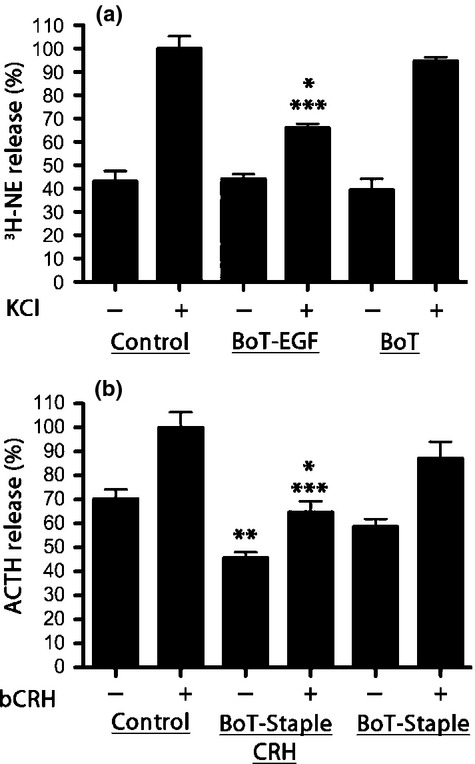
Precise cellular targeting of macromolecular cargos has important biotechnological and medical implications. Using a recently established 'protein stapling' method, we linked the proteolytic domain of botulinum neurotoxin type A (BoNT/A) to a selection of ligands to target neuroendocrine tumor cells. The botulinum proteolytic domain was chosen because of its well-known potency to block the release of neurotransmitters and hormones. Among nine tested stapled ligands, the epidermal growth factor was able to deliver the botulinum enzyme into pheochromocytoma PC12 and insulinoma Min6 cells; ciliary neurotrophic factor was effective on neuroblastoma SH-SY5Y and Neuro2A cells, whereas corticotropin-releasing hormone was active on pituitary AtT-20 cells and the two neuroblastoma cell lines. In neuronal cultures, the epidermal growth factor- and ciliary neurotrophic factor-directed botulinum enzyme targeted distinct subsets of neurons whereas the whole native neurotoxin targeted the cortical neurons indiscriminately. At nanomolar concentrations, the retargeted botulinum molecules were able to inhibit stimulated release of hormones from tested cell lines suggesting their application for treatments of neuroendocrine disorders.
精确的靶向大分子货物对生物技术和医学具有重要意义。利用最近建立的“蛋白质交联”方法,我们将肉毒杆菌神经毒素 A 型(BoNT/A)的蛋白水解结构域与一系列配体连接起来,以靶向神经内分泌肿瘤细胞。之所以选择肉毒杆菌蛋白酶结构域,是因为它具有众所周知的阻断神经递质和激素释放的能力。在测试的 9 种交联配体中,表皮生长因子能够将肉毒杆菌酶递送至嗜铬细胞瘤 PC12 和胰岛素瘤 Min6 细胞;睫状神经营养因子对神经母细胞瘤 SH-SY5Y 和 Neuro2A 细胞有效,而促肾上腺皮质激素释放激素对垂体 AtT-20 细胞和两种神经母细胞瘤细胞系有效。在神经元培养物中,表皮生长因子和睫状神经营养因子靶向的 BoNT/A 酶针对不同的神经元亚群,而整个天然神经毒素则不加区别地靶向皮质神经元。在纳摩尔浓度下,重定向的肉毒杆菌酶能够抑制测试细胞系中激素的刺激释放,表明它们可用于治疗神经内分泌疾病。