Department of Medical Biotechnology and Laboratory Sciences, College of Medicine, Chang Gung University, Tao-Yuan, Taiwan.
Cell Death Dis. 2013 May 2;4(5):e616. doi: 10.1038/cddis.2013.132.
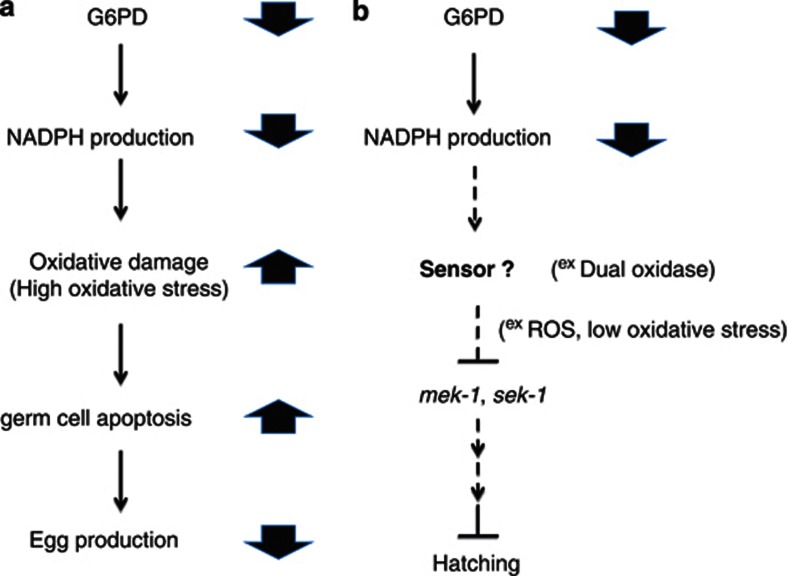
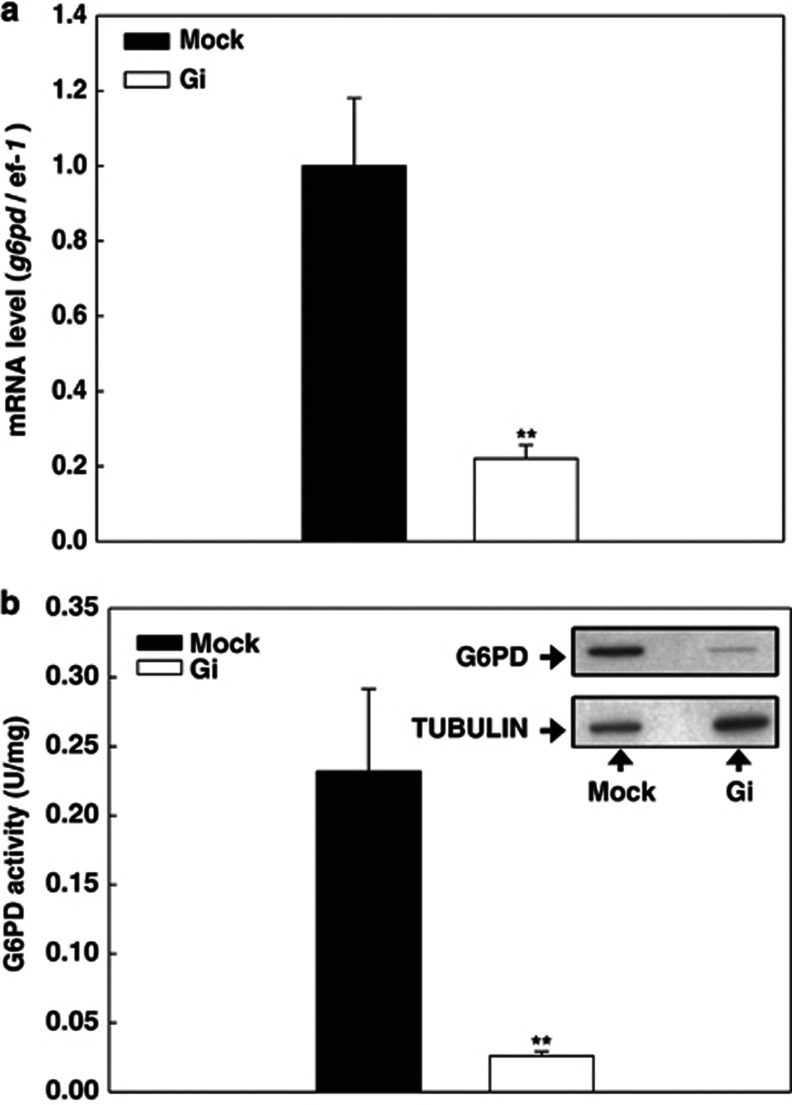
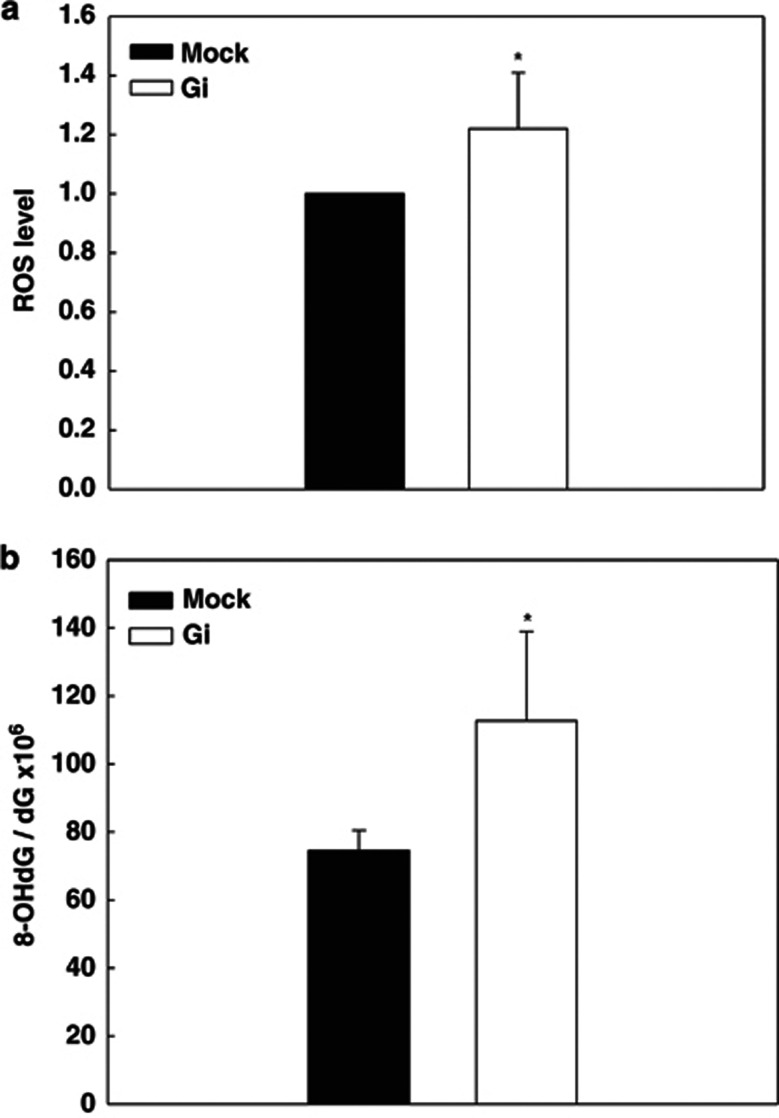
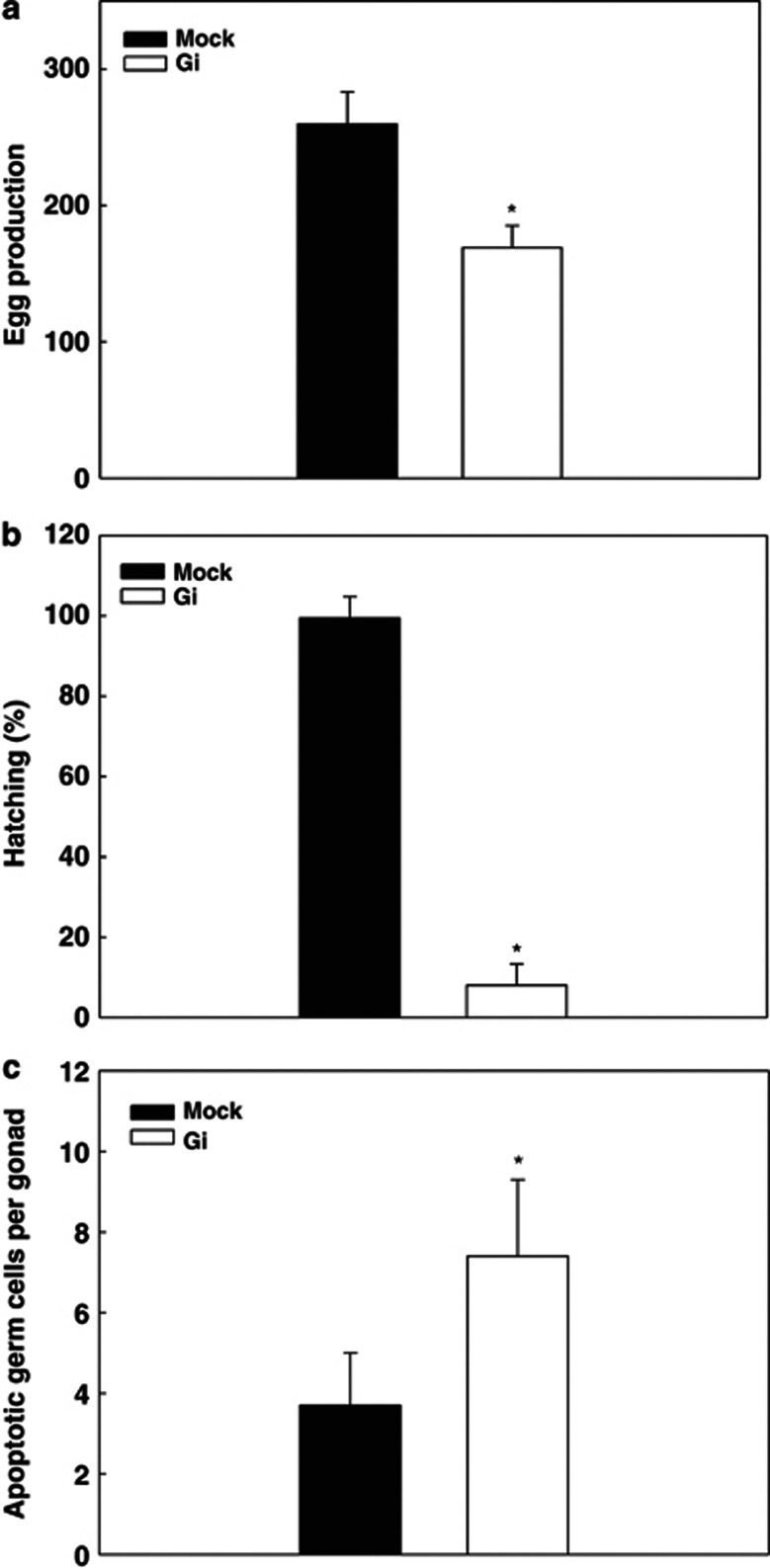
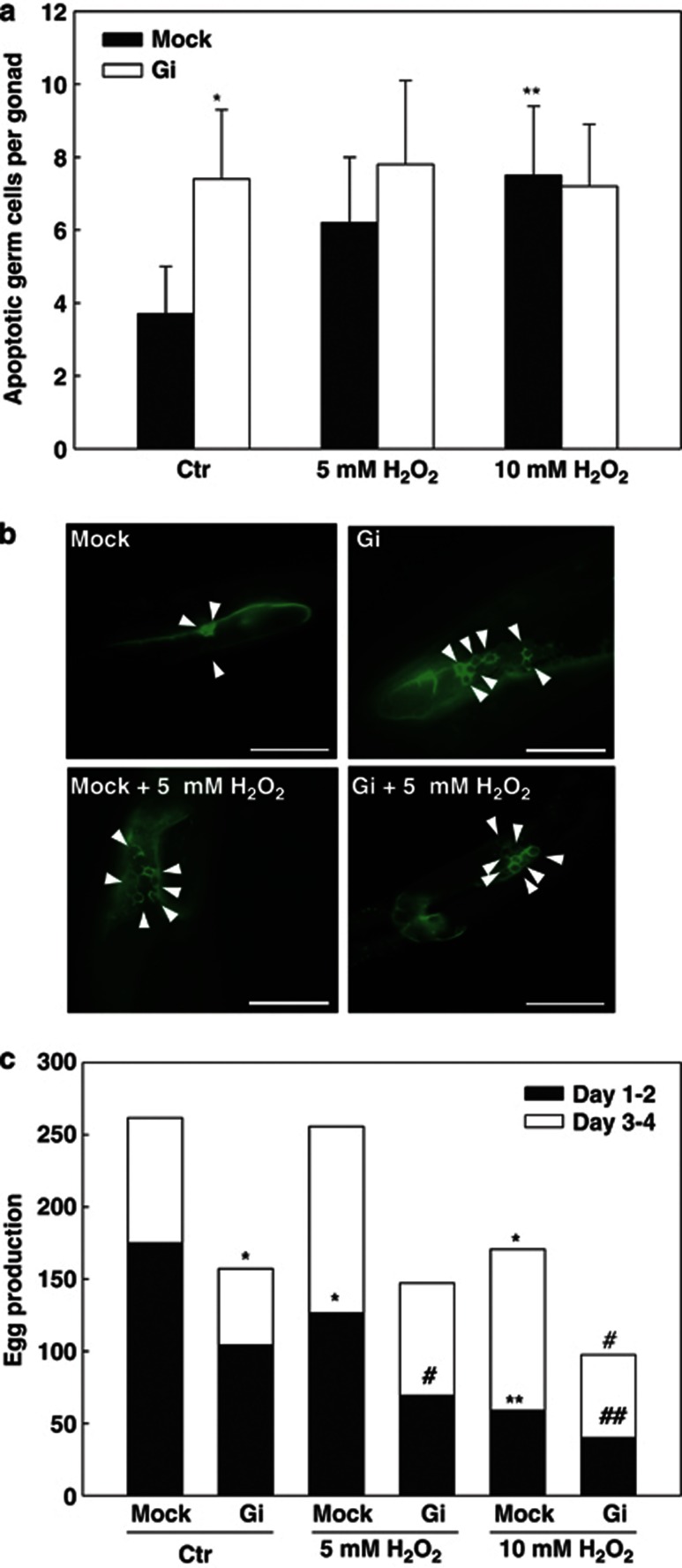
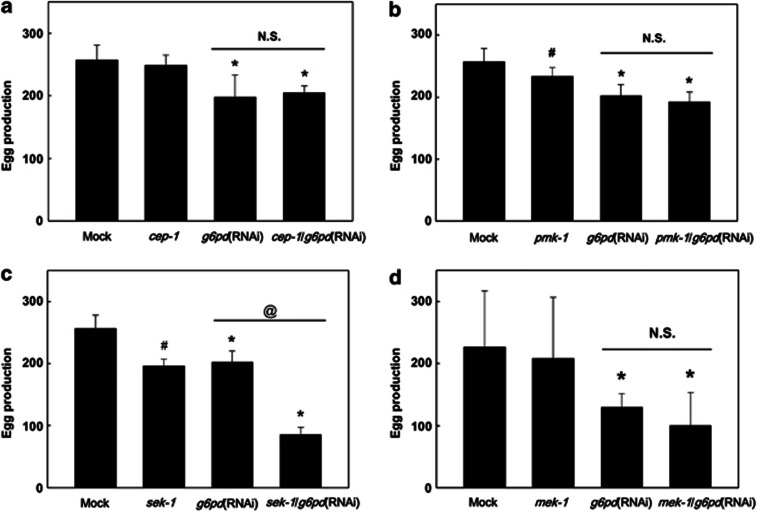
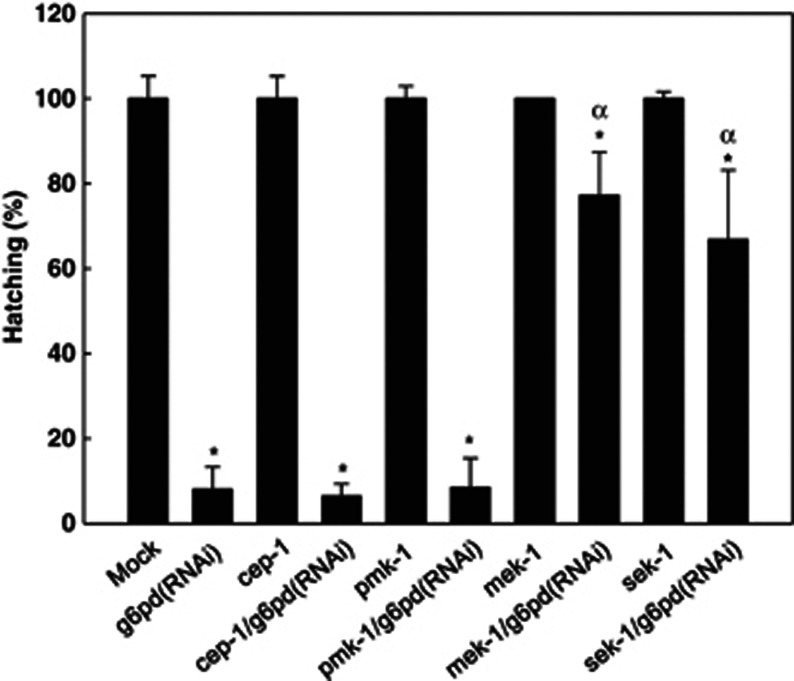
Glucose 6-phosphate dehydrogenase (G6PD) deficiency, known as favism, is classically manifested by hemolytic anemia in human. More recently, it has been shown that mild G6PD deficiency moderately affects cardiac function, whereas severe G6PD deficiency leads to embryonic lethality in mice. How G6PD deficiency affects organisms has not been fully elucidated due to the lack of a suitable animal model. In this study, G6PD-deficient Caenorhabditis elegans was established by RNA interference (RNAi) knockdown to delineate the role of G6PD in animal physiology. Upon G6PD RNAi knockdown, G6PD activity was significantly hampered in C. elegans in parallel with increased oxidative stress and DNA oxidative damage. Phenotypically, G6PD-knockdown enhanced germ cell apoptosis (2-fold increase), reduced egg production (65% of mock), and hatching (10% of mock). To determine whether oxidative stress is associated with G6PD knockdown-induced reproduction defects, C. elegans was challenged with a short-term hydrogen peroxide (H2O2). The early phase egg production of both mock and G6PD-knockdown C. elegans were significantly affected by H2O2. However, H2O2-induced germ cell apoptosis was more dramatic in mock than that in G6PD-deficient C. elegans. To investigate the signaling pathways involved in defective oogenesis and embryogenesis caused by G6PD knockdown, mutants of p53 and mitogen-activated protein kinase (MAPK) pathways were examined. Despite the upregulation of CEP-1 (p53), cep-1 mutation did not affect egg production and hatching in G6PD-deficient C. elegans. Neither pmk-1 nor mek-1 mutation significantly affected egg production, whereas sek-1 mutation further decreased egg production in G6PD-deficient C. elegans. Intriguingly, loss of function of sek-1 or mek-1 dramatically rescued defective hatching (8.3- and 9.6-fold increase, respectively) induced by G6PD knockdown. Taken together, these findings show that G6PD knockdown reduces egg production and hatching in C. elegans, which are possibly associated with enhanced oxidative stress and altered MAPK pathways, respectively.
葡萄糖-6-磷酸脱氢酶(G6PD)缺乏症,又称蚕豆病,其典型表现为人的溶血性贫血。最近的研究表明,轻度 G6PD 缺乏症会适度影响心脏功能,而严重的 G6PD 缺乏症则会导致小鼠胚胎致死。由于缺乏合适的动物模型,G6PD 缺乏症如何影响生物体尚未完全阐明。在这项研究中,通过 RNA 干扰(RNAi)敲低建立了 G6PD 缺乏的秀丽隐杆线虫,以阐明 G6PD 在动物生理学中的作用。在 G6PD RNAi 敲低后,秀丽隐杆线虫的 G6PD 活性显著受阻,同时伴有氧化应激和 DNA 氧化损伤增加。表型上,G6PD 敲低增强了生殖细胞凋亡(增加 2 倍),减少了产卵(模拟物的 65%)和孵化(模拟物的 10%)。为了确定氧化应激是否与 G6PD 敲低诱导的生殖缺陷有关,用短暂的过氧化氢(H2O2)处理秀丽隐杆线虫。H2O2 显著影响了模拟物和 G6PD 敲低的秀丽隐杆线虫的早期产卵。然而,H2O2 诱导的生殖细胞凋亡在模拟物中比在 G6PD 缺乏的秀丽隐杆线虫中更为剧烈。为了研究 G6PD 敲低引起的卵发生和胚胎发生缺陷所涉及的信号通路,检查了 p53 和丝裂原活化蛋白激酶(MAPK)通路的突变体。尽管 CEP-1(p53)上调,但 cep-1 突变对 G6PD 缺乏的秀丽隐杆线虫的产卵和孵化没有影响。pmk-1 或 mek-1 突变均未显著影响产卵,而 sek-1 突变则进一步减少了 G6PD 缺乏的秀丽隐杆线虫的产卵。有趣的是,sek-1 或 mek-1 的功能丧失显著挽救了 G6PD 敲低诱导的孵化缺陷(分别增加 8.3 倍和 9.6 倍)。综上所述,这些发现表明,G6PD 敲低降低了秀丽隐杆线虫的产卵和孵化,这可能分别与增强的氧化应激和改变的 MAPK 通路有关。