Mateos Rosa M, Jiménez Ana, Román Paloma, Romojaro Félix, Bacarizo Sierra, Leterrier Marina, Gómez Manuel, Sevilla Francisca, Del Río Luis A, Corpas Francisco J, Palma José M
Department of Biochemistry, Cell and Molecular Biology of Plants, Estación Experimental del Zaidín, CSIC, Apartado 419, Granada E-18080, Spain.
Int J Mol Sci. 2013 May 2;14(5):9556-80. doi: 10.3390/ijms14059556.
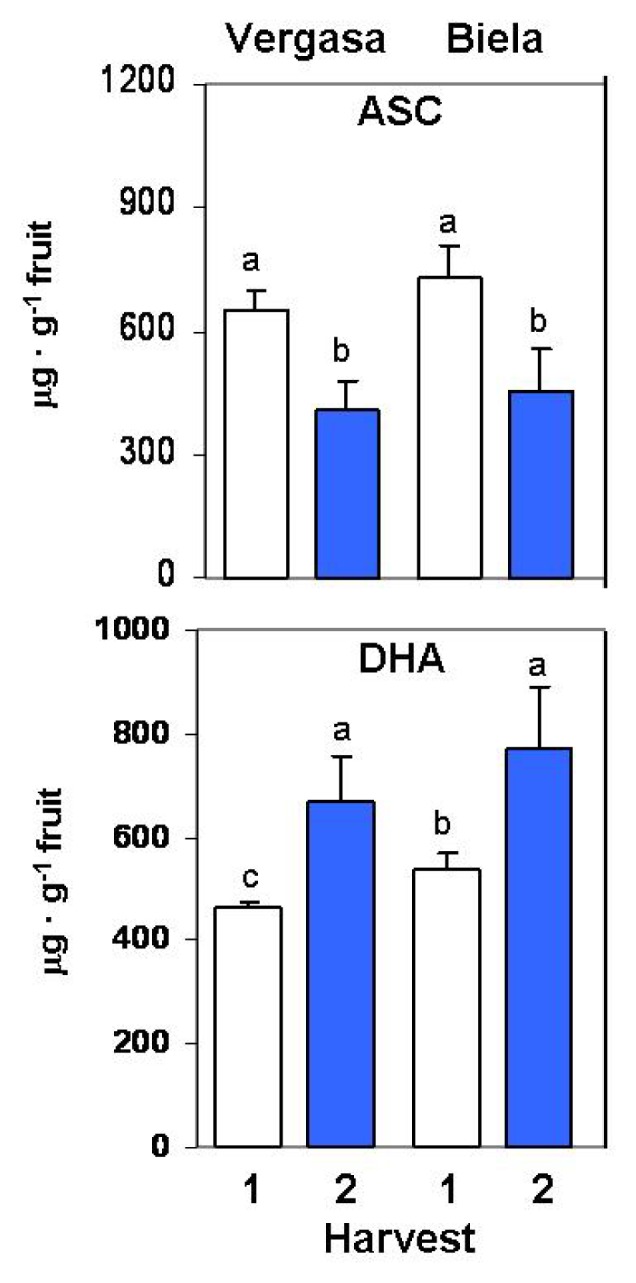
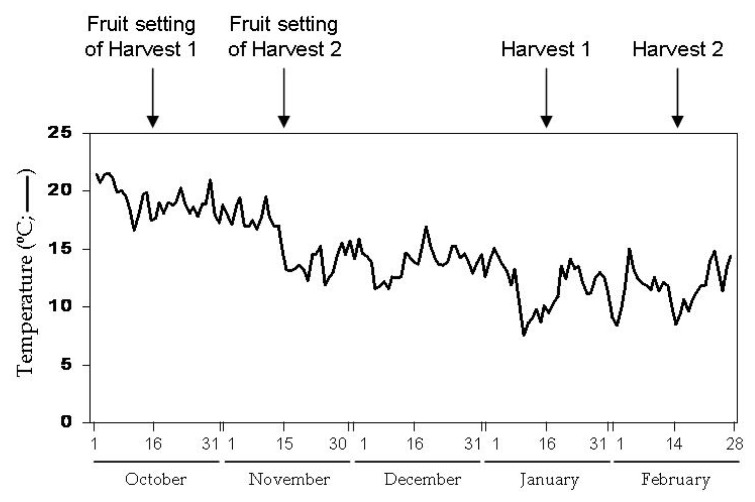
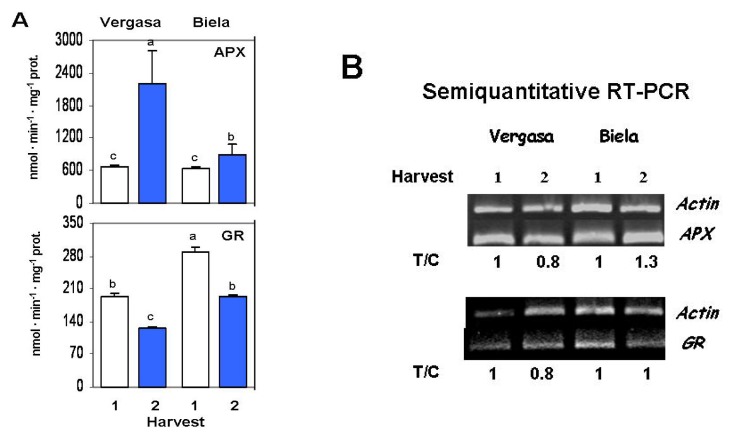
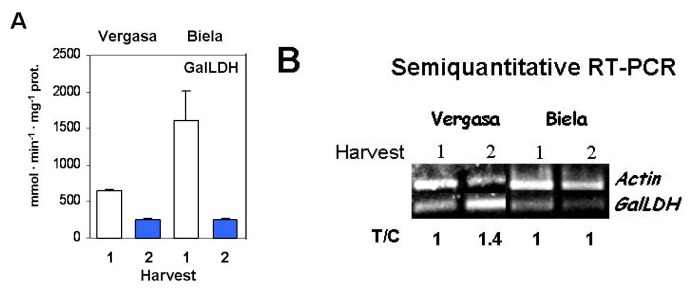
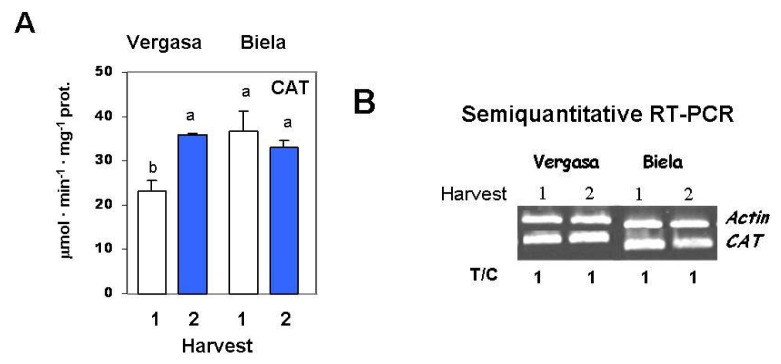
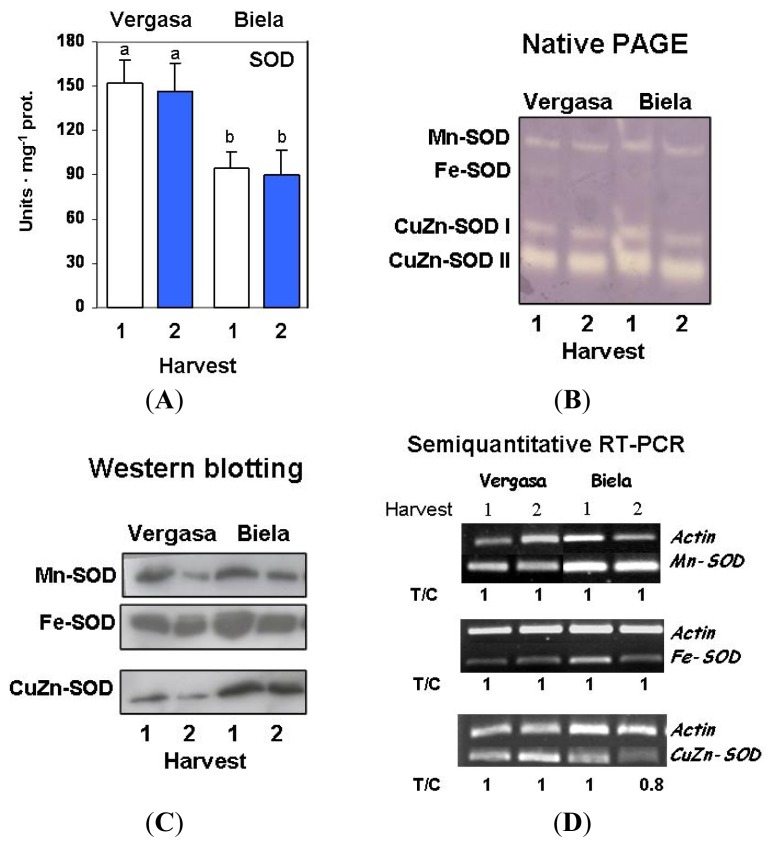
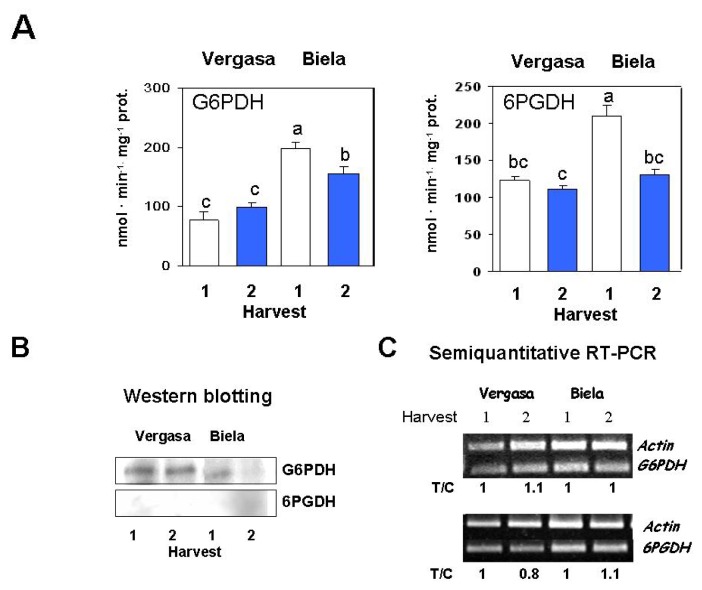
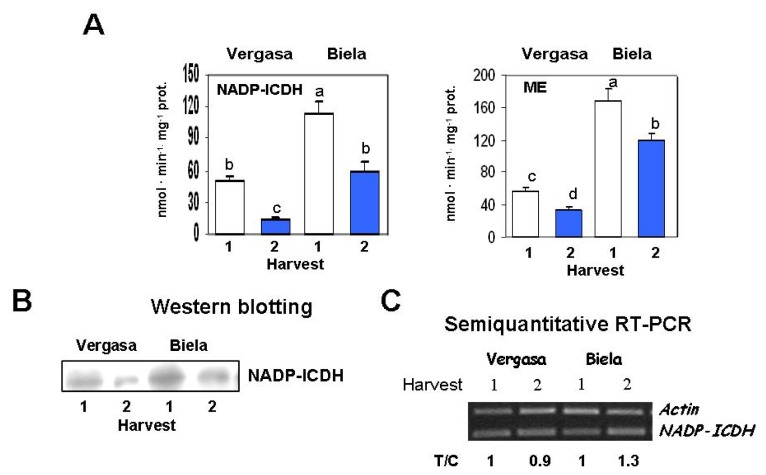
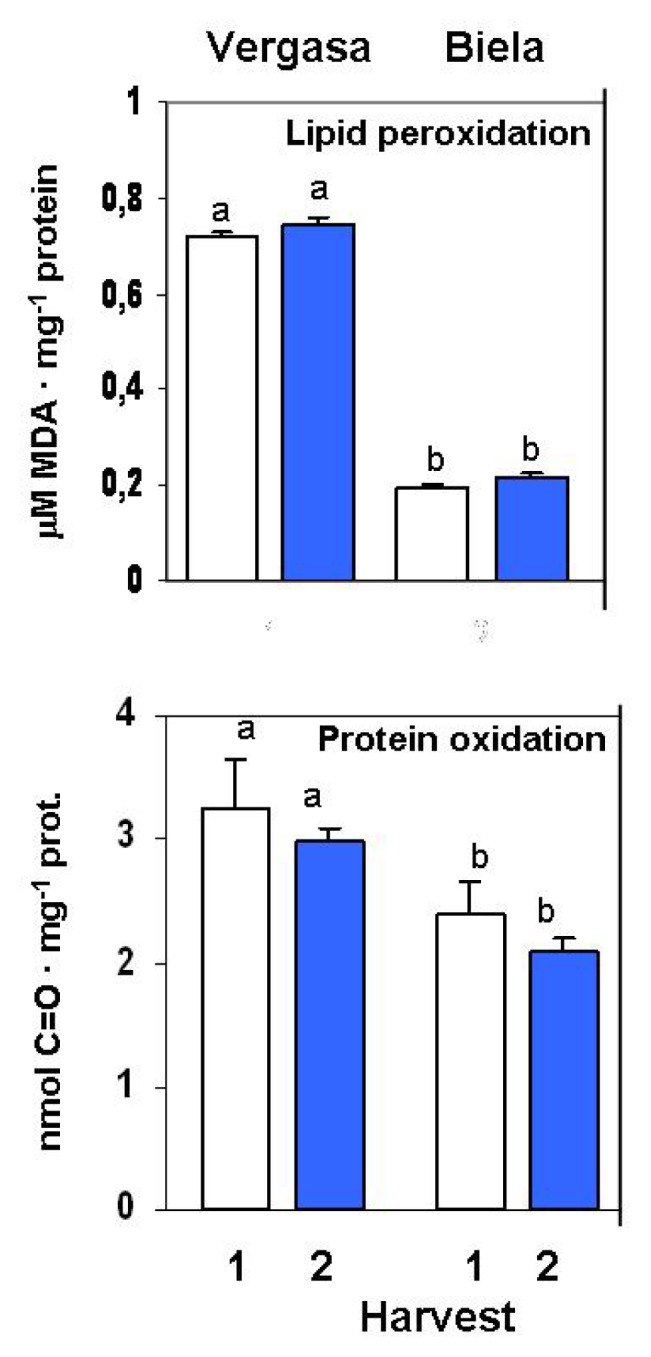
Sweet pepper is susceptible to changes in the environmental conditions, especially temperatures below 15 °C. In this work, two sets of pepper fruits (Capsicum annuum L.) which underwent distinct temperature profiles in planta were investigated. Accordingly, two harvesting times corresponding to each set were established: Harvest 1, whose fruits developed and ripened at 14.9 °C as average temperature; and Harvest 2, with average temperature of 12.4 °C. The oxidative metabolism was analyzed in all fruits. Although total ascorbate content did not vary between Harvests, a shift from the reduced to the oxidized form (dehydroascorbate), accompanied by a higher ascorbate peroxidase activity, was observed in Harvest 2 with respect to Harvest 1. Moreover, a decrease of the ascorbate-generating enzymatic system, the γ-galactono-lactone dehydrogenase, was found at Harvest 2. The activity values of the NADP-dependent dehydrogenases analyzed seem to indicate that a lower NADPH synthesis may occur in fruits which underwent lower temperature conditions. In spite of the important changes observed in the oxidative metabolism in fruits subjected to lower temperature, no oxidative stress appears to occur, as indicated by the lipid peroxidation and protein oxidation profiles. Thus, the antioxidative systems of pepper fruits seem to be involved in the response against temperature changes.
甜椒易受环境条件变化的影响,尤其是温度低于15°C时。在本研究中,对两组在植株上经历了不同温度变化的辣椒果实(辣椒属)进行了调查。相应地,为每组确定了两个采收时间:采收1,其果实发育和成熟时的平均温度为14.9°C;采收2,平均温度为12.4°C。对所有果实的氧化代谢进行了分析。虽然采收之间总抗坏血酸含量没有变化,但与采收1相比,采收2中观察到从还原形式(脱氢抗坏血酸)向氧化形式的转变,同时抗坏血酸过氧化物酶活性更高。此外,在采收2时发现抗坏血酸生成酶系统γ-半乳糖内酯脱氢酶的活性降低。所分析的依赖NADP的脱氢酶的活性值似乎表明,经历较低温度条件的果实中可能发生较低的NADPH合成。尽管在较低温度下果实的氧化代谢发生了重要变化,但脂质过氧化和蛋白质氧化情况表明,似乎没有发生氧化应激。因此,辣椒果实的抗氧化系统似乎参与了对温度变化的响应。