Center for Cell Signaling, University of Virginia, Charlottesville, VA 22903, USA.
J Cell Biol. 2013 May 13;201(4):541-57. doi: 10.1083/jcb.201212117. Epub 2013 May 6.
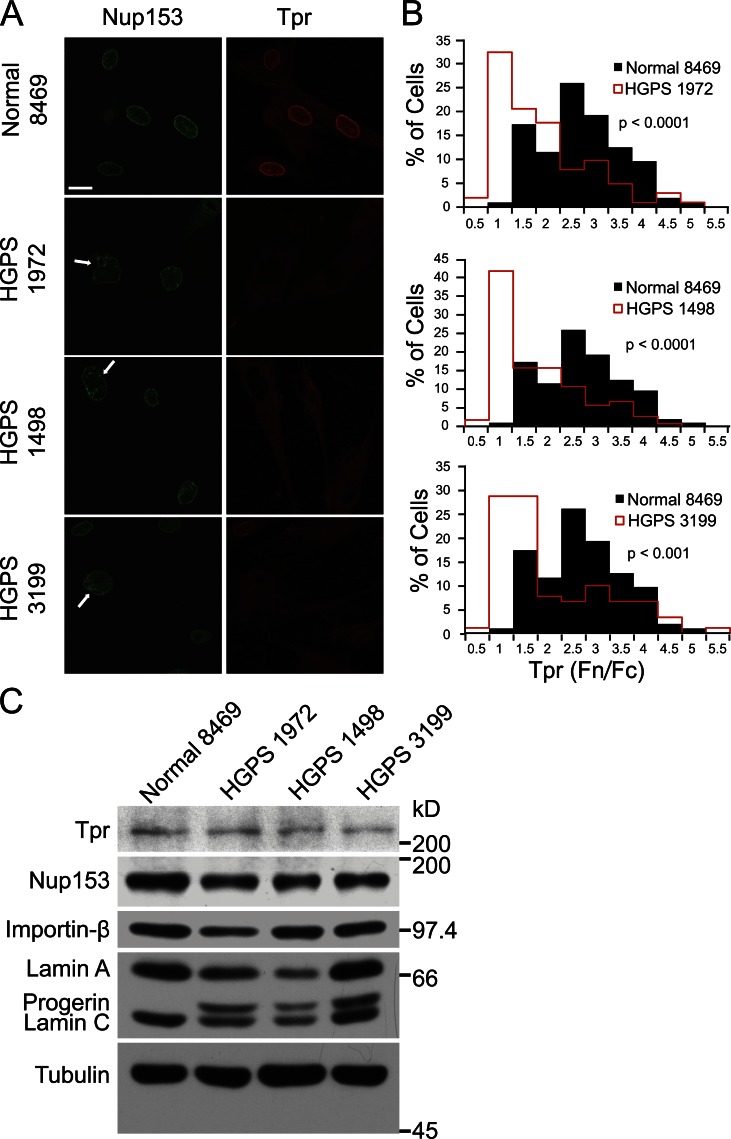
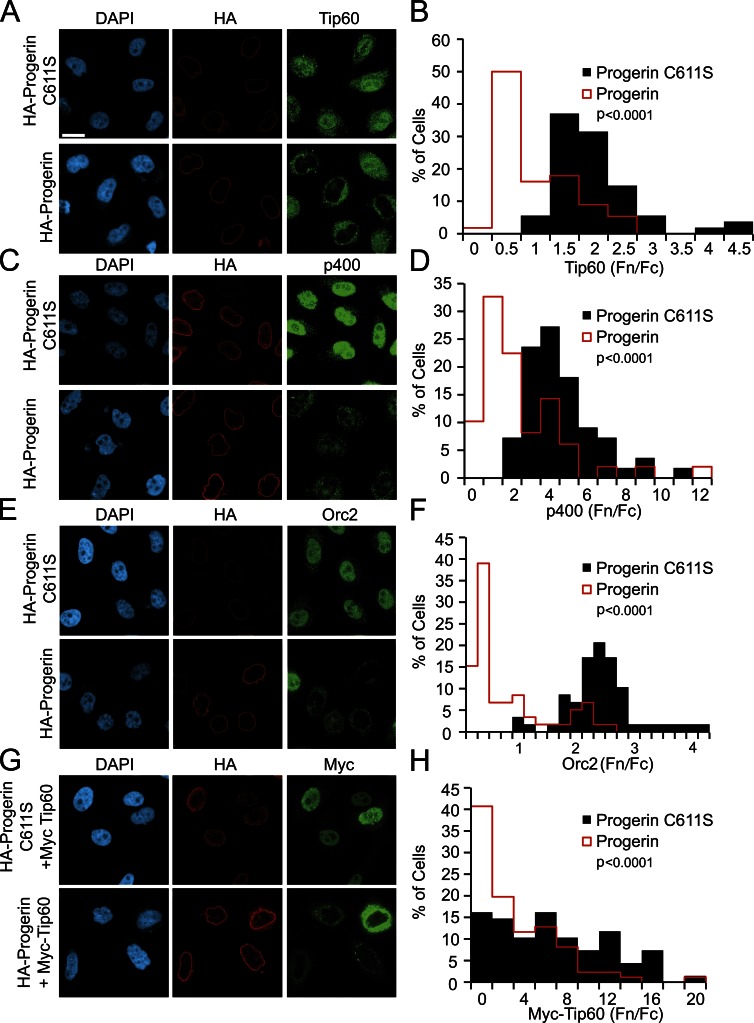
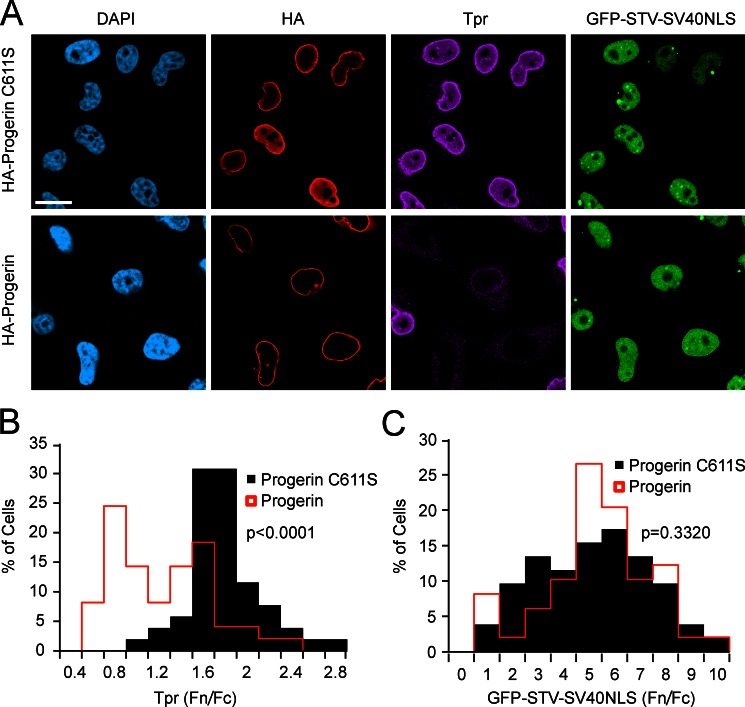
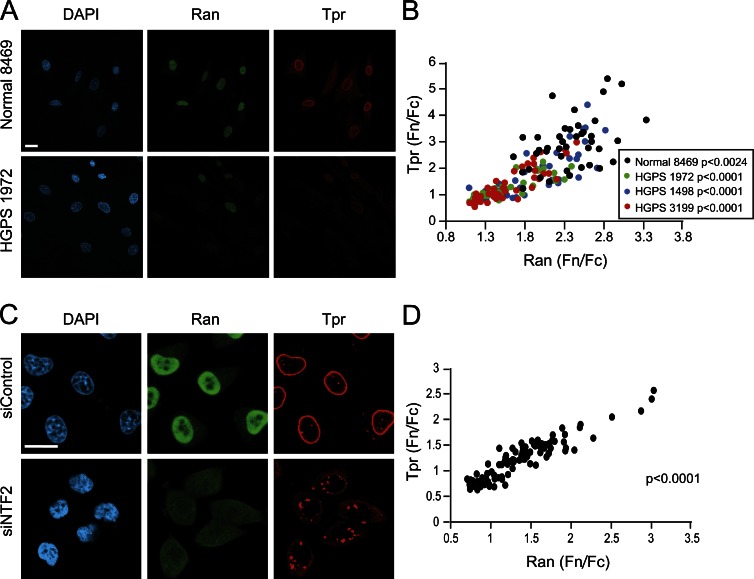
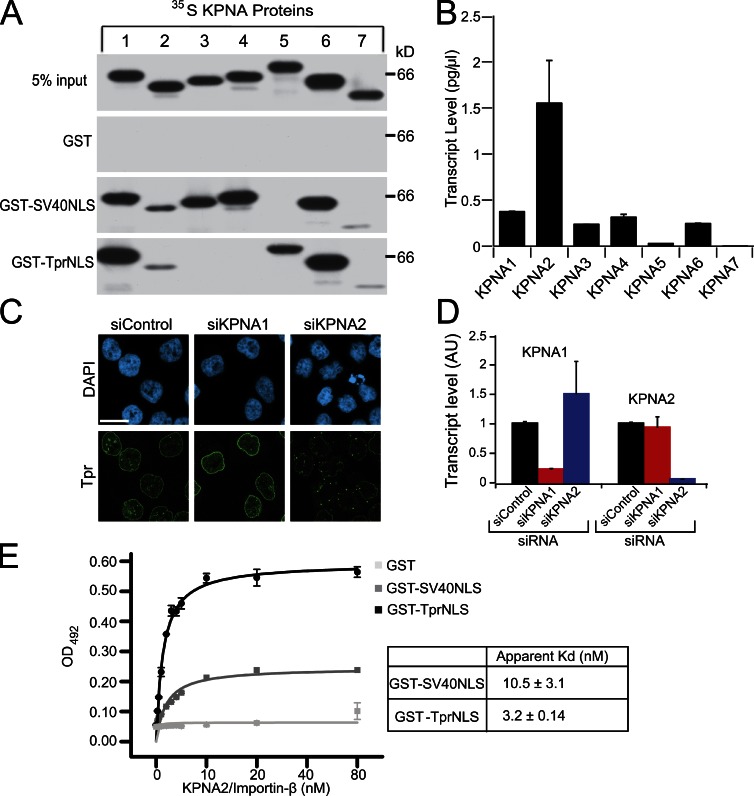
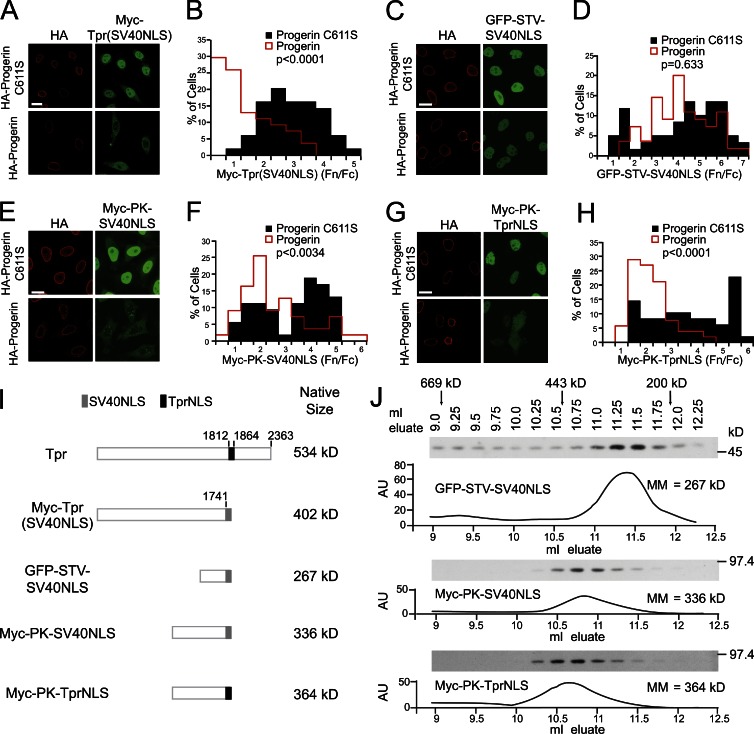
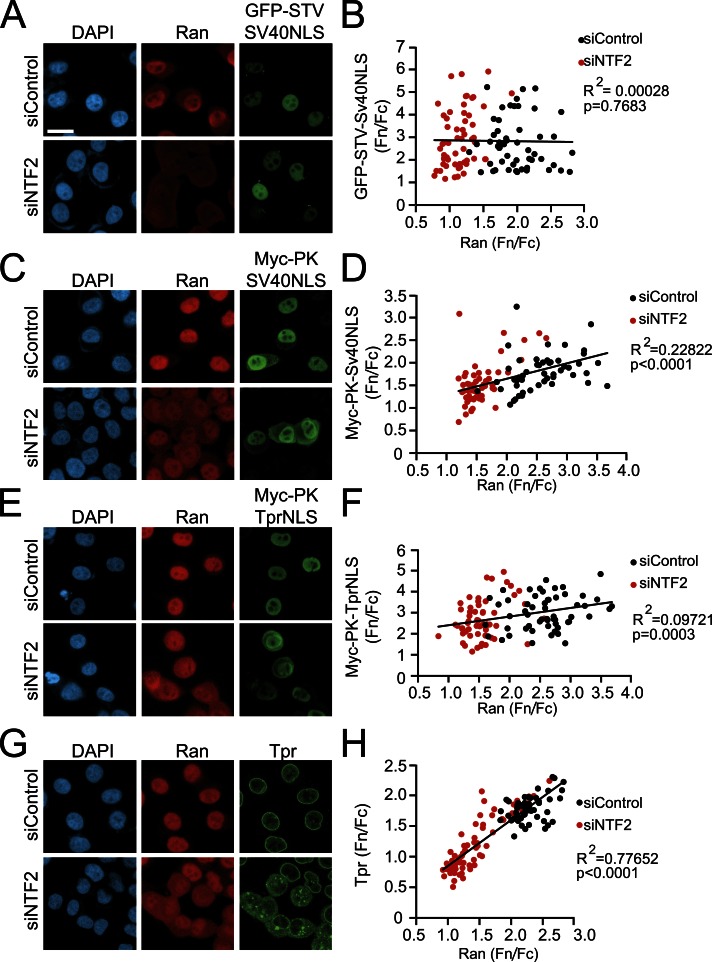
The RanGTPase acts as a master regulator of nucleocytoplasmic transport by controlling assembly and disassembly of nuclear transport complexes. RanGTP is required in the nucleus to release nuclear localization signal (NLS)-containing cargo from import receptors, and, under steady-state conditions, Ran is highly concentrated in the nucleus. We previously showed the nuclear/cytoplasmic Ran distribution is disrupted in Hutchinson-Gilford Progeria syndrome (HGPS) fibroblasts that express the Progerin form of lamin A, causing a major defect in nuclear import of the protein, translocated promoter region (Tpr). In this paper, we show that Tpr import was mediated by the most abundant import receptor, KPNA2, which binds the bipartite NLS in Tpr with nanomolar affinity. Analyses including NLS swapping revealed Progerin did not cause global inhibition of nuclear import. Rather, Progerin inhibited Tpr import because transport of large protein cargoes was sensitive to changes in the Ran nuclear/cytoplasmic distribution that occurred in HGPS. We propose that defective import of large protein complexes with important roles in nuclear function may contribute to disease-associated phenotypes in Progeria.
RanGTPase 通过控制核转运复合物的组装和拆卸,充当核质转运的主调控因子。RanGTP 在核内释放含有核定位信号(NLS)的货物从进口受体,并且在稳定状态下,Ran 高度集中在核内。我们之前曾表明,表达 Progerin 形式的 lamin A 的 Hutchinson-Gilford Progeria 综合征(HGPS)成纤维细胞中核/细胞质 Ran 分布被打乱,导致蛋白、易位启动子区域(Tpr)的核输入主要缺陷。在本文中,我们表明 Tpr 进口由最丰富的进口受体 KPNA2 介导,KPNA2 与 Tpr 中的二聚体 NLS 以纳摩尔亲和力结合。包括 NLS 交换的分析表明,Progerin 不会导致核输入的全局抑制。相反,Progerin 抑制 Tpr 进口,因为在 HGPS 中发生的 Ran 核/细胞质分布的变化会影响大蛋白货物的运输。我们提出,具有核功能重要作用的大蛋白复合物的导入缺陷可能导致 Progeria 相关表型。