Dipartimento di Medicina Molecolare and Biotecnologie Mediche, University Federico II and IEOS-CNR, 80131 Naples, Italy.
Nat Commun. 2013;4:1822. doi: 10.1038/ncomms2791.
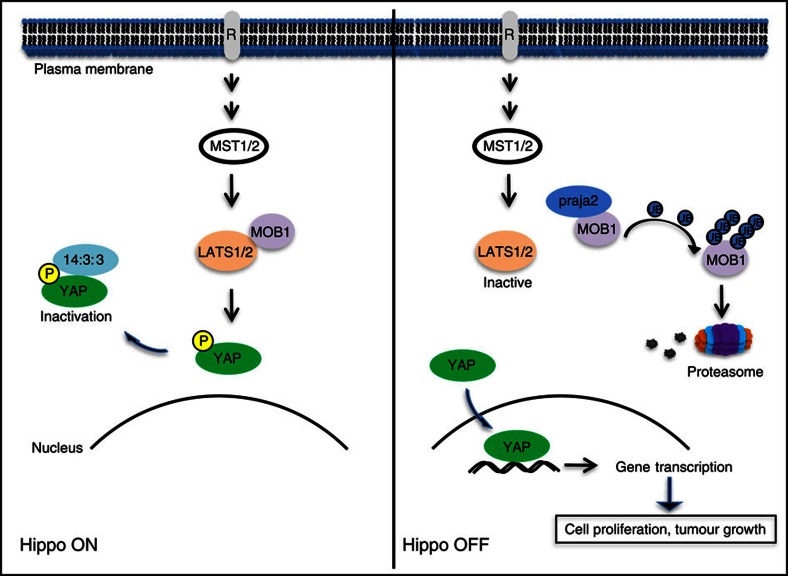
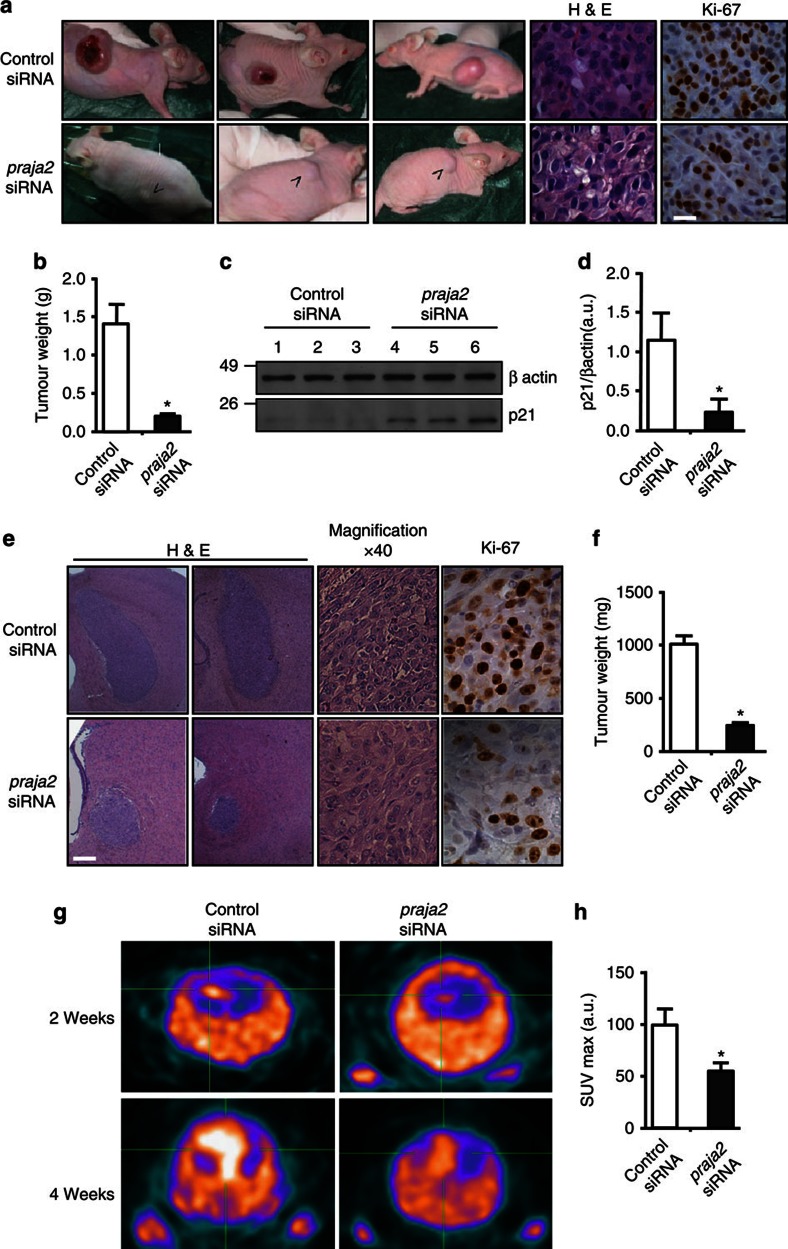
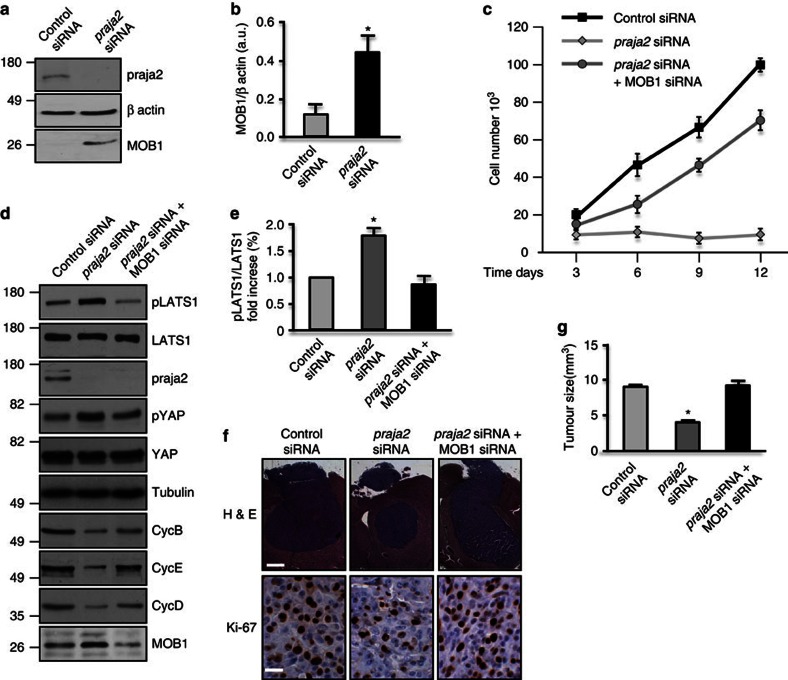
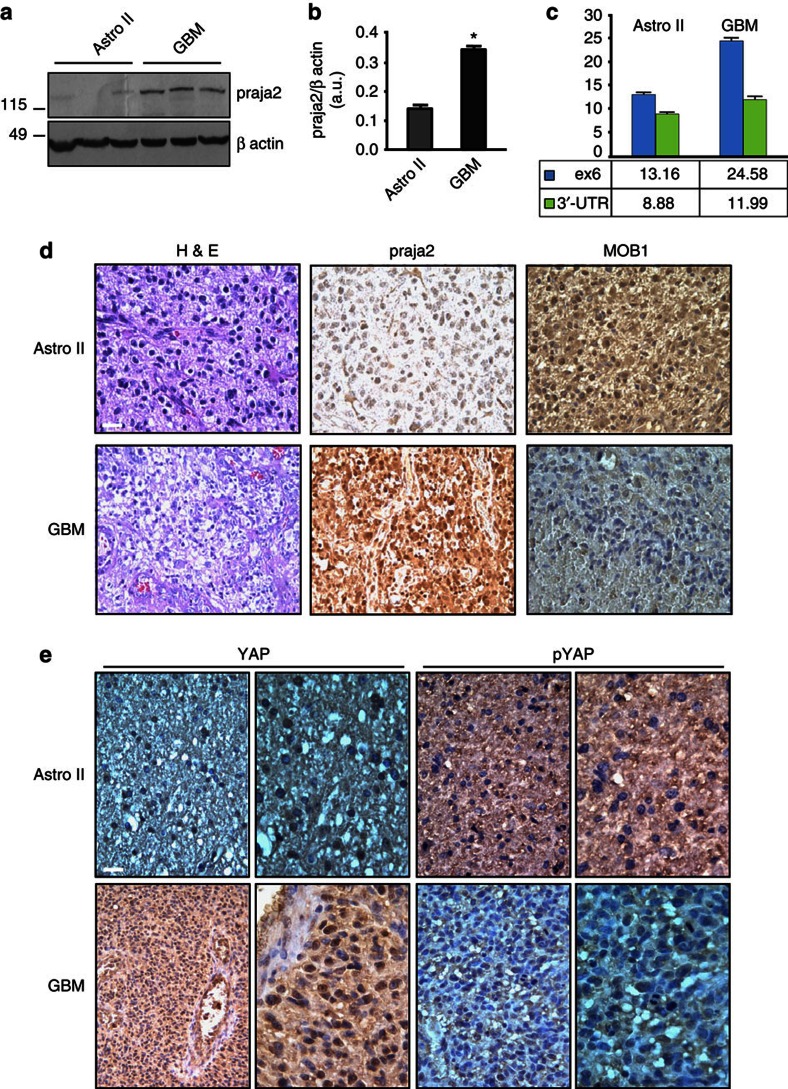
Human glioblastoma is the most frequent and aggressive form of brain tumour in the adult population. Proteolytic turnover of tumour suppressors by the ubiquitin-proteasome system is a mechanism that tumour cells can adopt to sustain their growth and invasiveness. However, the identity of ubiquitin-proteasome targets and regulators in glioblastoma are still unknown. Here we report that the RING ligase praja2 ubiquitylates and degrades Mob, a core component of NDR/LATS kinase and a positive regulator of the tumour-suppressor Hippo cascade. Degradation of Mob through the ubiquitin-proteasome system attenuates the Hippo cascade and sustains glioblastoma growth in vivo. Accordingly, accumulation of praja2 during the transition from low- to high-grade glioma is associated with significant downregulation of the Hippo pathway. These findings identify praja2 as a novel upstream regulator of the Hippo cascade, linking the ubiquitin proteasome system to deregulated glioblastoma growth.
人类脑胶质瘤是成人中最常见和侵袭性最强的脑肿瘤形式。肿瘤细胞可以通过泛素蛋白酶体系统对肿瘤抑制因子进行蛋白水解来维持其生长和侵袭性。然而,脑胶质瘤中泛素蛋白酶体靶标和调节因子的身份尚不清楚。在这里,我们报告了 RING 连接酶 praja2 泛素化和降解 Mob,Mob 是 NDR/LATS 激酶的核心组成部分,也是 Hippo 级联反应的肿瘤抑制因子的正向调节剂。通过泛素蛋白酶体系统降解 Mob 会减弱 Hippo 级联反应,并在体内维持脑胶质瘤的生长。因此,在从低级别到高级别胶质瘤的转变过程中,praja2 的积累与 Hippo 通路的显著下调有关。这些发现将 praja2 鉴定为 Hippo 级联反应的新的上游调节剂,将泛素蛋白酶体系统与不受调节的脑胶质瘤生长联系起来。