Department of Cell Biology and Neurosciences, Istituto Superiore di Sanità, Rome, Italy.
PLoS One. 2013 Apr 30;8(4):e62226. doi: 10.1371/journal.pone.0062226. Print 2013.
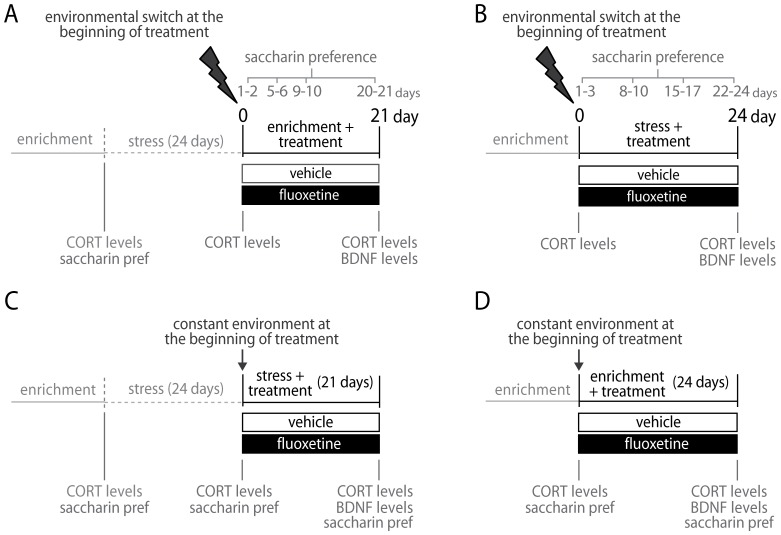
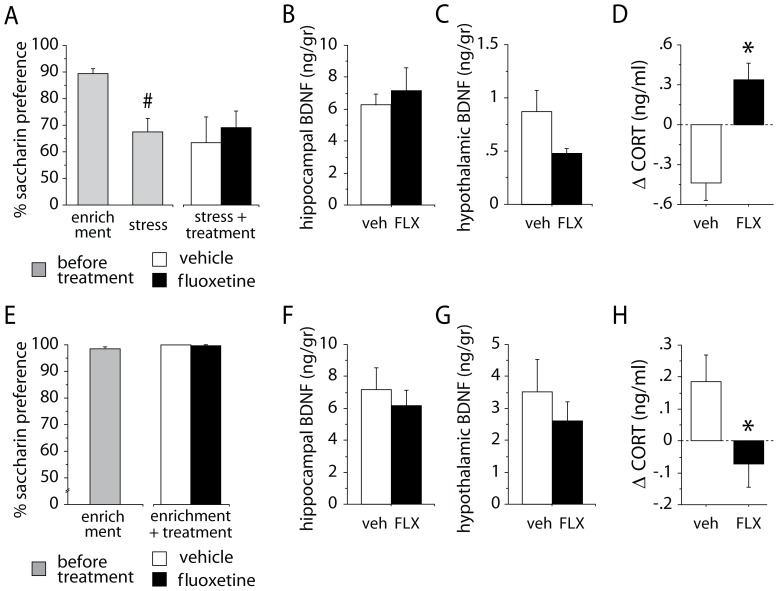
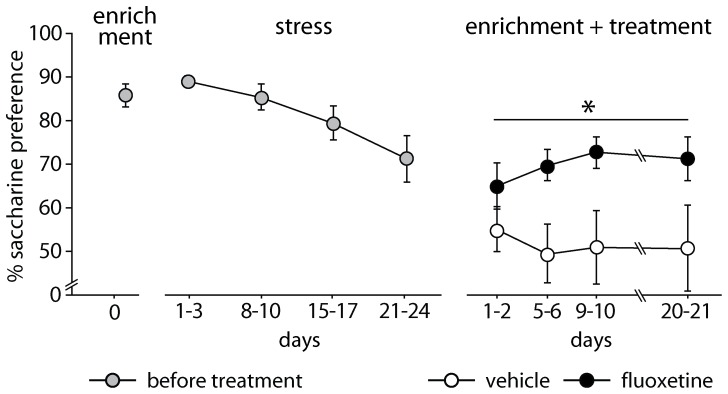
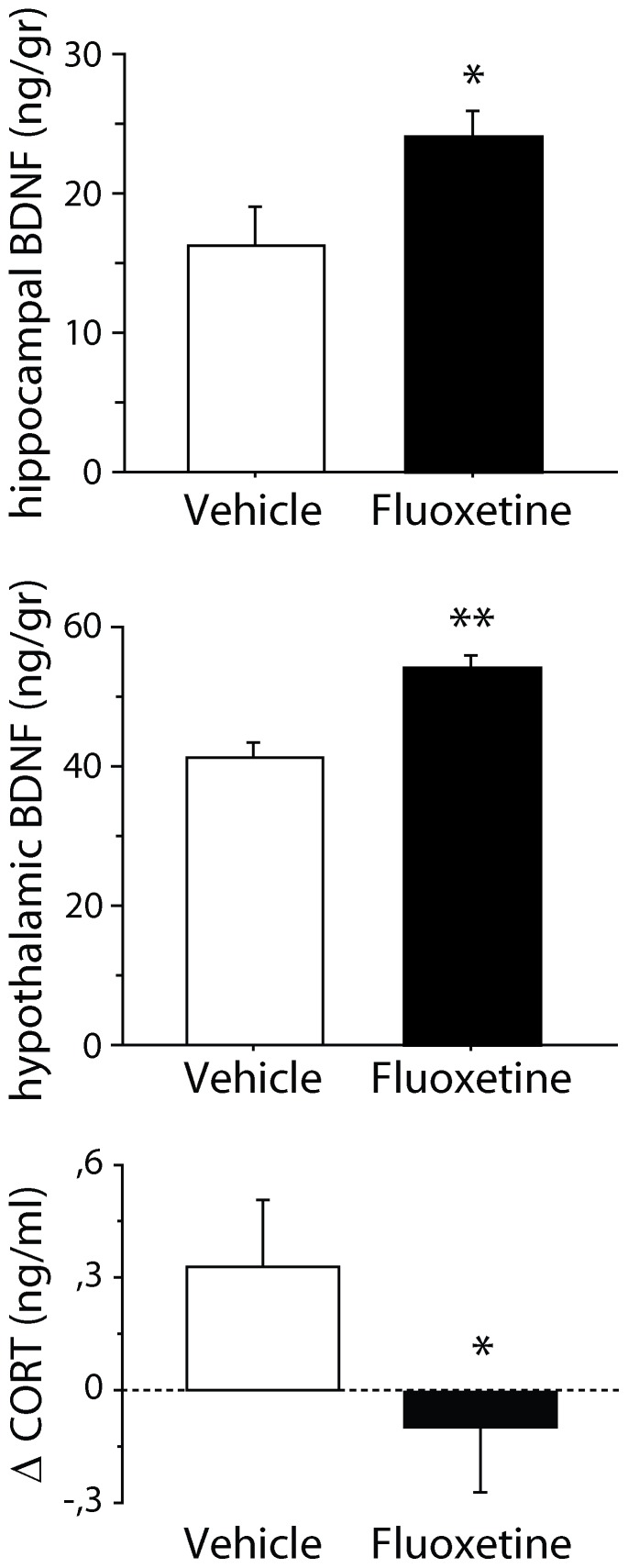
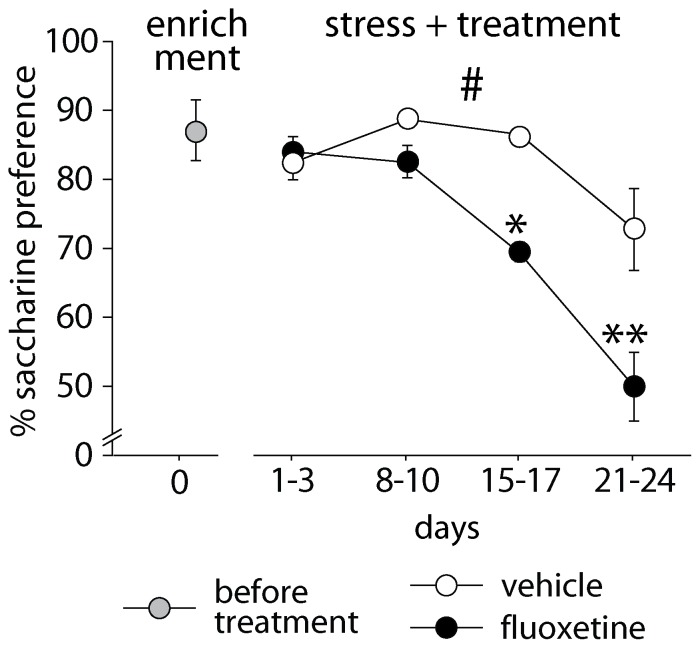
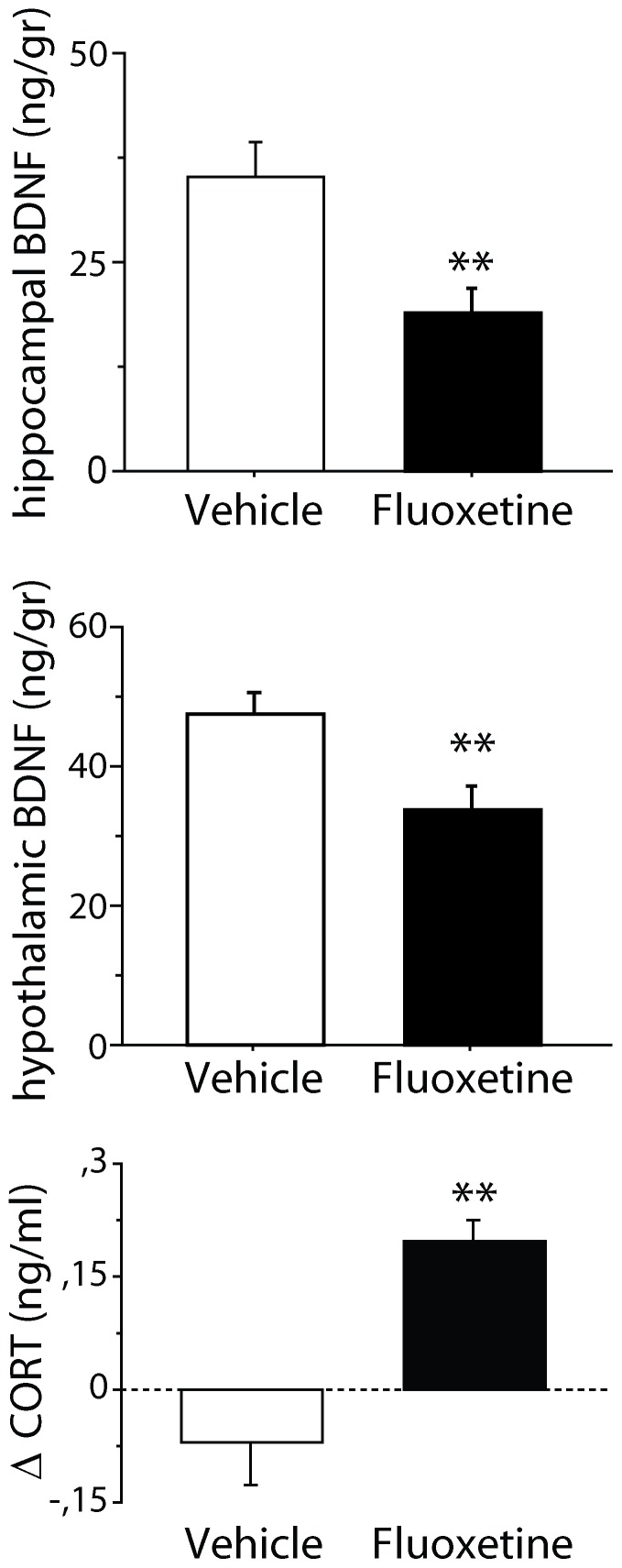
Antidepressants represent the standard treatment for major depression. However, their efficacy is variable and incomplete. A growing number of studies suggest that the environment plays a major role in determining the efficacy of these drugs, specifically of selective serotonin reuptake inhibitors (SSRI). A recent hypothesis posits that the increase in serotonin levels induced by SSRI may not affect mood per se, but enhances neural plasticity and, consequently, renders the individual more susceptible to the influence of the environment. Thus, SSRI administration in a favorable environment would lead to a reduction of symptoms, while in a stressful environment might lead to a worse prognosis. To test this hypothesis, we treated C57BL/6 adult male mice with chronic fluoxetine while exposing them to either (i) an enriched environment, after exposure to a chronic stress period aimed at inducing a depression-like phenotype, or (ii) a stressful environment. Anhedonia, brain BDNF and circulating corticosterone levels, considered endophenotypes of depression, were investigated. Mice treated with fluoxetine in an enriched condition improved their depression-like phenotype compared to controls, displaying higher saccharin preference, higher brain BDNF levels and reduced corticosterone levels. By contrast, when chronic fluoxetine administration occurred in a stressful condition, mice showed a more distinct worsening of the depression-like profile, displaying a faster decrease of saccharin preference, lower brain BDNF levels and increased corticosterone levels. Our findings suggest that the effect of SSRI on depression-like phenotypes in mice is not determined by the drug per se but is induced by the drug and driven by the environment. These findings may be helpful to explain variable effects of SSRI found in clinical practice and to device strategies aimed at enhancing their efficacy by means of controlling environmental conditions.
抗抑郁药是治疗重度抑郁症的标准治疗方法。然而,它们的疗效是可变的,并不完全。越来越多的研究表明,环境在决定这些药物(尤其是选择性 5-羟色胺再摄取抑制剂 (SSRI))的疗效方面起着主要作用。最近的一个假设认为,SSRI 诱导的血清素水平升高本身并不会影响情绪,而是增强了神经可塑性,从而使个体更容易受到环境的影响。因此,在有利的环境中给予 SSRI 治疗会减轻症状,而在压力环境中可能会导致预后更差。为了验证这一假设,我们用慢性氟西汀治疗 C57BL/6 成年雄性小鼠,同时将它们暴露于(i)丰富环境或(ii)应激环境中,之后再经历一段旨在诱导抑郁样表型的慢性应激期。我们研究了快感缺失、大脑 BDNF 和循环皮质酮水平等被认为是抑郁症的内表型。与对照组相比,在丰富环境中接受氟西汀治疗的小鼠改善了它们的抑郁样表型,表现出更高的蔗糖偏好、更高的大脑 BDNF 水平和更低的皮质酮水平。相比之下,当慢性氟西汀给药发生在应激环境中时,小鼠表现出更明显的抑郁样表型恶化,表现为蔗糖偏好更快下降、大脑 BDNF 水平更低和皮质酮水平升高。我们的研究结果表明,SSRI 对小鼠抑郁样表型的影响不是由药物本身决定的,而是由药物和环境共同决定的。这些发现可能有助于解释临床实践中发现的 SSRI 疗效的可变性,并通过控制环境条件来设计旨在增强其疗效的策略。