Key Laboratory of Brain Functional Genomics (Ministry of Education), Institute of Brain Functional Genomics, East China Normal University, Shanghai, China.
PLoS One. 2013 May 7;8(5):e63590. doi: 10.1371/journal.pone.0063590. Print 2013.
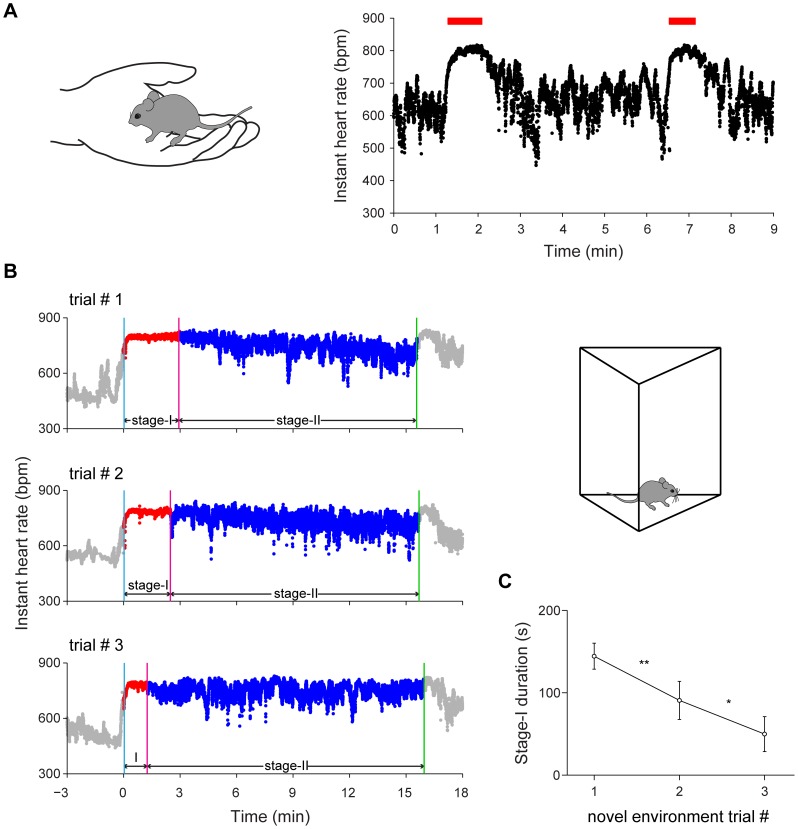
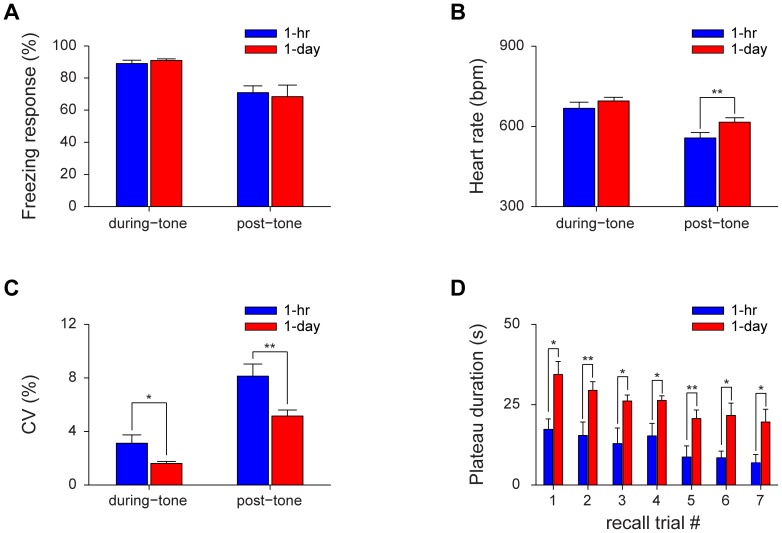
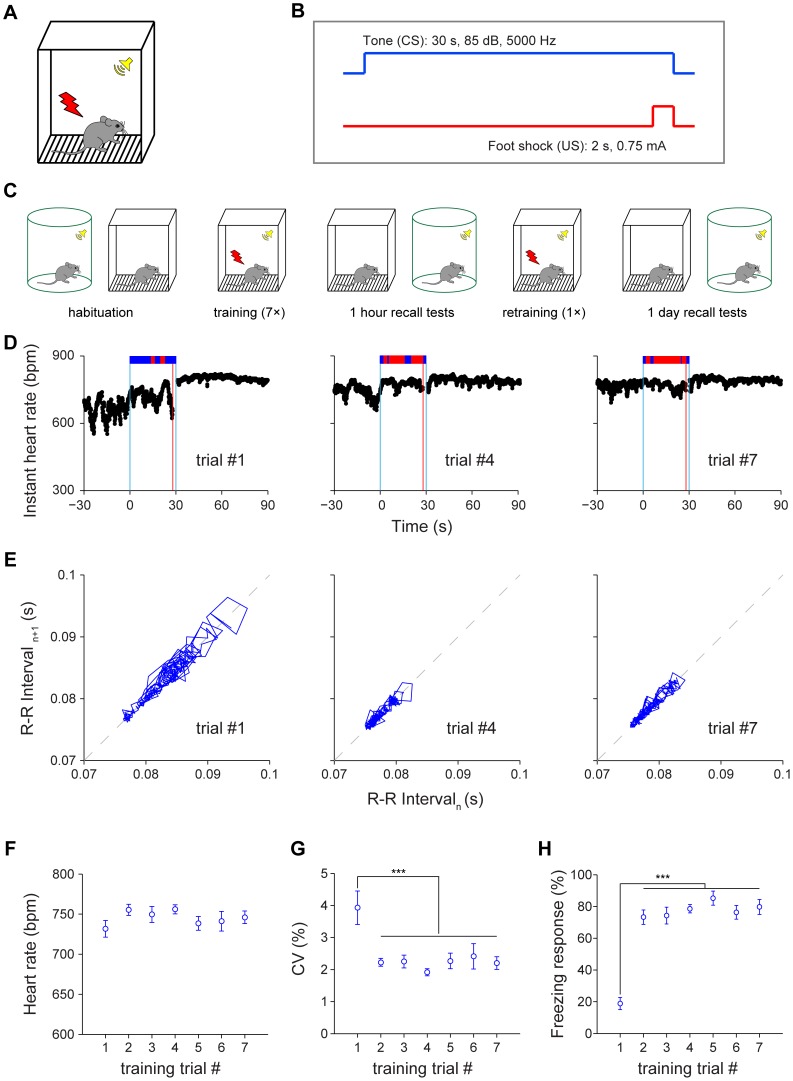
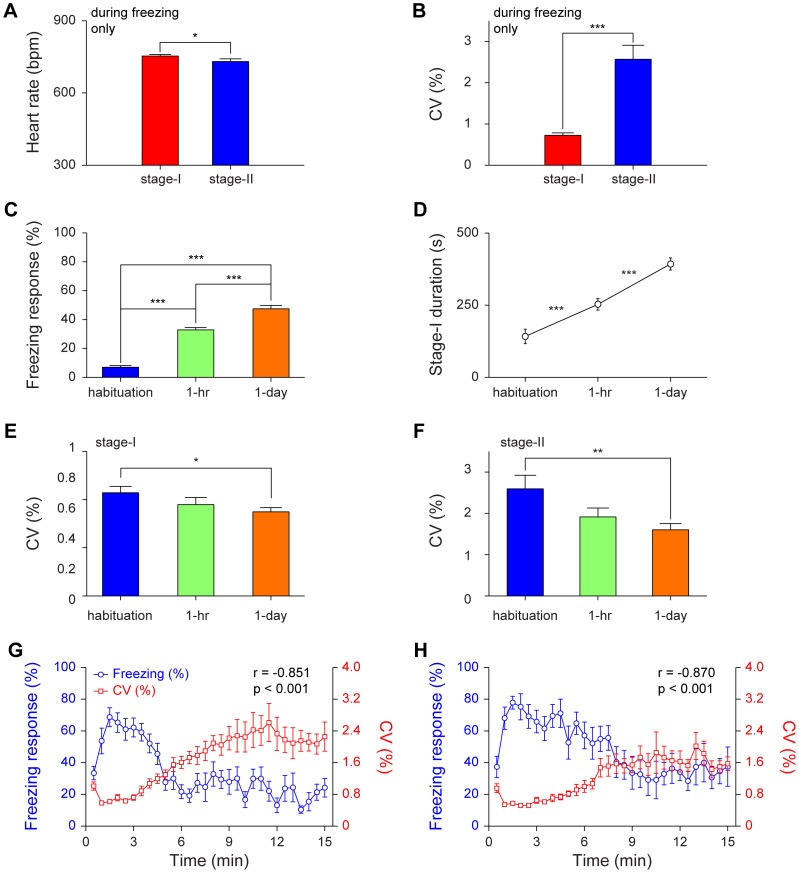
Heart physiology is a highly useful indicator for measuring not only physical states, but also emotional changes in animals. Yet changes of heart rate variability during fear conditioning have not been systematically studied in mice. Here, we investigated changes in heart rate and heart rate variability in both short-term and long-term contextual and cued fear conditioning. We found that while fear conditioning could increase heart rate, the most significant change was the reduction in heart rate variability which could be further divided into two distinct stages: a highly rhythmic phase (stage-I) and a more variable phase (stage-II). We showed that the time duration of the stage-I rhythmic phase were sensitive enough to reflect the transition from short-term to long-term fear memories. Moreover, it could also detect fear extinction effect during the repeated tone recall. These results suggest that heart rate variability is a valuable physiological indicator for sensitively measuring the consolidation and expression of fear memories in mice.
心脏生理学是一个非常有用的指标,不仅可以测量动物的身体状态,还可以测量其情绪变化。然而,在恐惧条件反射过程中心率变异性的变化在小鼠中尚未得到系统研究。在这里,我们研究了短期和长期情境和线索恐惧条件反射过程中心率和心率变异性的变化。我们发现,虽然恐惧条件反射可以增加心率,但最显著的变化是心率变异性的降低,它可以进一步分为两个不同的阶段:高度有节奏的阶段(阶段 I)和更可变的阶段(阶段 II)。我们表明,阶段 I 节律阶段的持续时间足够敏感,可以反映从短期到长期恐惧记忆的转变。此外,它还可以在重复音调回忆期间检测到恐惧消除效应。这些结果表明,心率变异性是一种有价值的生理指标,可以敏感地测量小鼠中恐惧记忆的巩固和表达。