Department of Ophthalmology, Samsung Medical Center, Sungkyunkwan University School of Medicine, Gangnam-gu, Seoul, Korea.
PLoS One. 2013 May 7;8(5):e63749. doi: 10.1371/journal.pone.0063749. Print 2013.
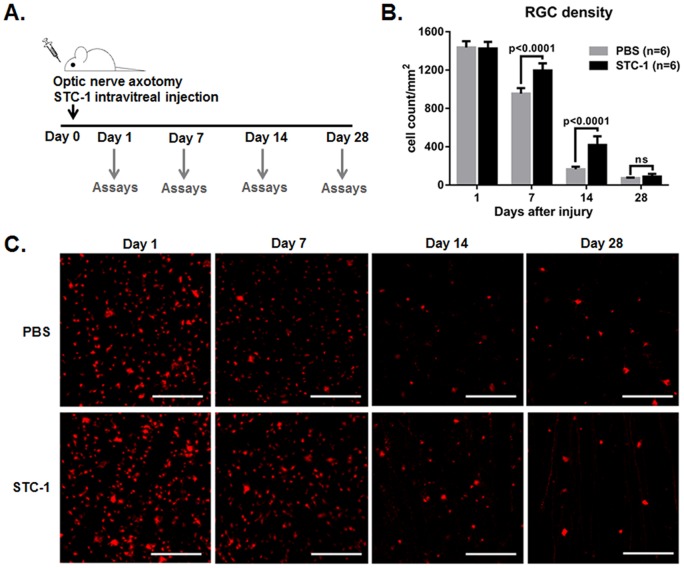
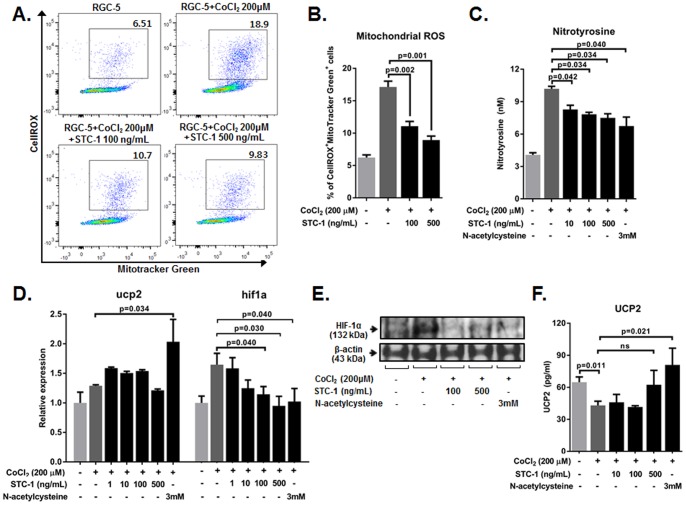
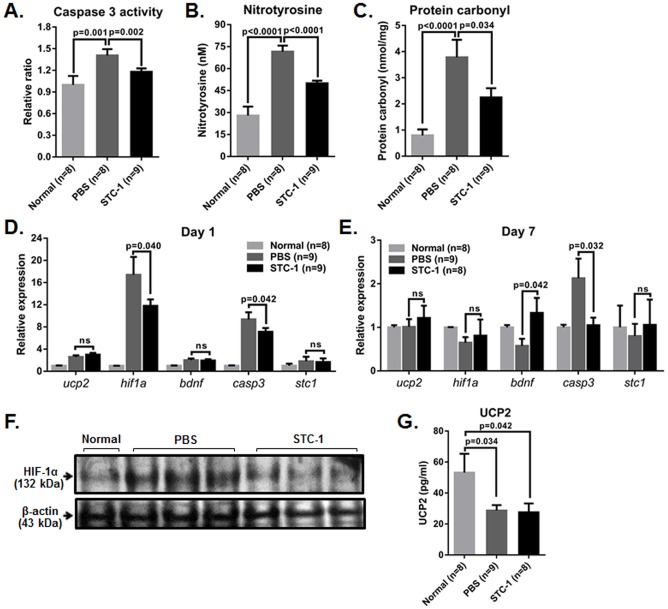
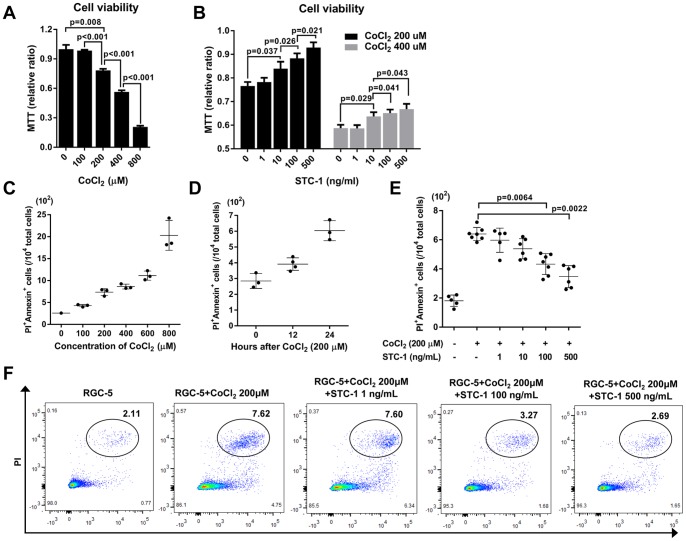
Optic neuropathy including glaucoma is one of the leading causes of irreversible vision loss, and there are currently no effective therapies. The hallmark of pathophysiology of optic neuropathy is oxidative stress and apoptotic death of retinal ganglion cells (RGCs), a population of neurons in the central nervous system with their soma in the inner retina and axons in the optic nerve. We here tested that an anti-apoptotic protein stanniocalcin-1 (STC-1) can prevent loss of RGCs in the rat retina with optic nerve transection (ONT) and in cultures of RGC-5 cells with CoCl2 injury. We found that intravitreal injection of STC-1 increased the number of RGCs in the retina at days 7 and 14 after ONT, and decreased apoptosis and oxidative damage. In cultures, treatment with STC-1 dose-dependently increased cell viability, and decreased apoptosis and levels of reactive oxygen species in RGC-5 cells that were exposed to CoCl2. The expression of HIF-1α that was up-regulated by injury was significantly suppressed in the retina and in RGC-5 cells by STC-1 treatment. The results suggested that intravitreal injection of STC-1 might be a useful therapy for optic nerve diseases in which RGCs undergo apoptosis through oxidative stress.
视神经病变包括青光眼是导致不可逆转视力丧失的主要原因之一,但目前尚无有效的治疗方法。视神经病变的病理生理学的标志是氧化应激和视网膜神经节细胞(RGC)的凋亡死亡,RGC 是中枢神经系统中的神经元群体,其体位于视网膜内,轴突位于视神经中。我们在这里测试了一种抗凋亡蛋白——斯钙素-1(STC-1),它可以防止视神经切断(ONT)后大鼠视网膜和 CoCl2 损伤培养的 RGC-5 细胞中 RGC 的损失。我们发现,玻璃体内注射 STC-1 可以增加 ONT 后 7 天和 14 天视网膜中 RGC 的数量,并减少细胞凋亡和氧化损伤。在培养物中,STC-1 处理剂量依赖性地增加了暴露于 CoCl2 的 RGC-5 细胞的细胞活力,并减少了细胞凋亡和活性氧水平。STC-1 处理显著抑制了损伤上调的 HIF-1α在视网膜和 RGC-5 细胞中的表达。这些结果表明,玻璃体内注射 STC-1 可能是一种有用的视神经疾病治疗方法,通过氧化应激使 RGC 发生细胞凋亡。