Kanamori Akira, Matsuba Ikuro
Kanamori Diabetes Clinic, First floor, Prestige Sagami Yume Odori, 8-1-1 Sagamihara, Sagamihara City, Kanagawa 229-0031, Japan.
J Clin Med Res. 2013 Jun;5(3):217-21. doi: 10.4021/jocmr1256w. Epub 2013 Apr 23.
Several studies have shown the effectiveness of sitagliptin, a dipeptidyl peptidase-4 inhibitor, for type 2 diabetes, with a hypoglycemic effect being demonstrated both when it is administered alone or in combination with other oral antidiabetic agents. However, there are few reports about its long-term efficacy, although medications for diabetes need to be effective over the long term. This study (as part of ASSET-K) aimed to investigate the efficacy and safety of sitagliptin when it was administered for 1.5 years or longer, and to explore factors associated with reduction of the therapeutic response.
Out of 375 patients treated with sitagliptin (50 mg/day) at Kanamori Diabetes Clinic between December 2009 and March 2012, 133 could be followed up for 72 weeks without interruption. After excluding 40 patients in whom the dosage and/or types of concomitant medications were modified during that period, the remaining 93 were included in this analysis. Clinical indices, such as blood glucose, HbA1c, and body weight, were investigated retrospectively. Compliance with diet and exercise therapy at 48 weeks was checked by a questionnaire.
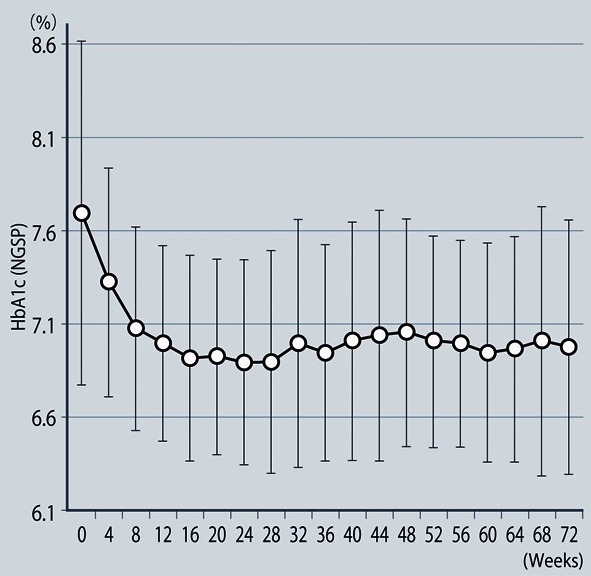
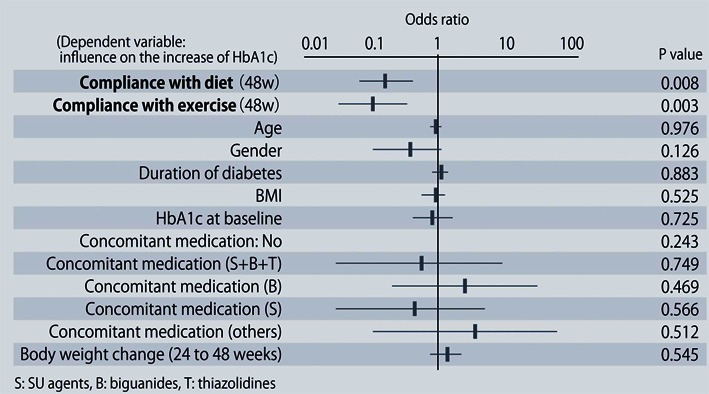
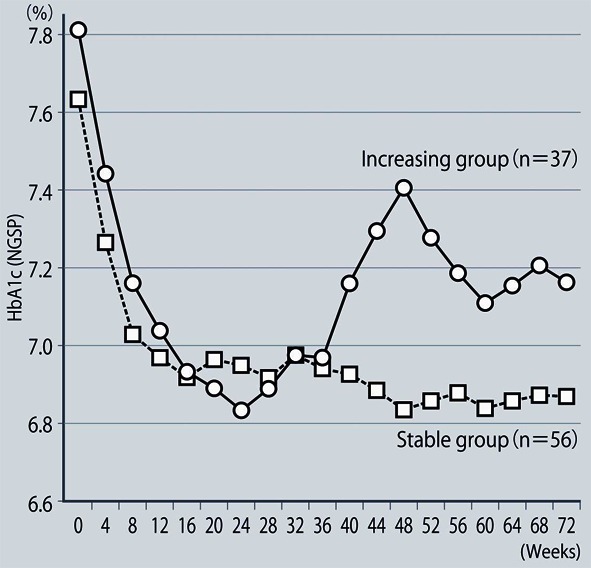
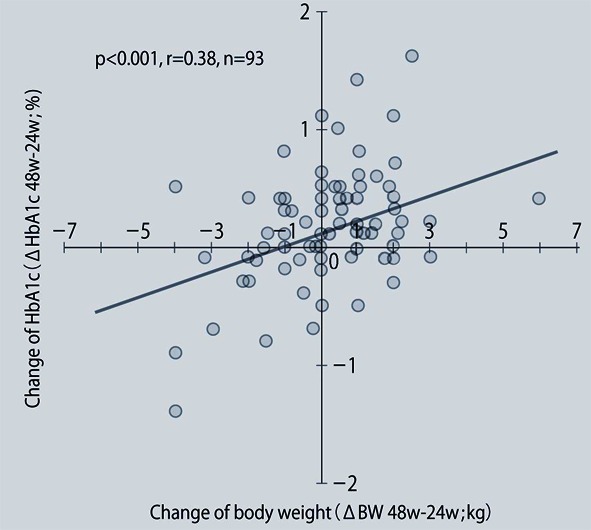
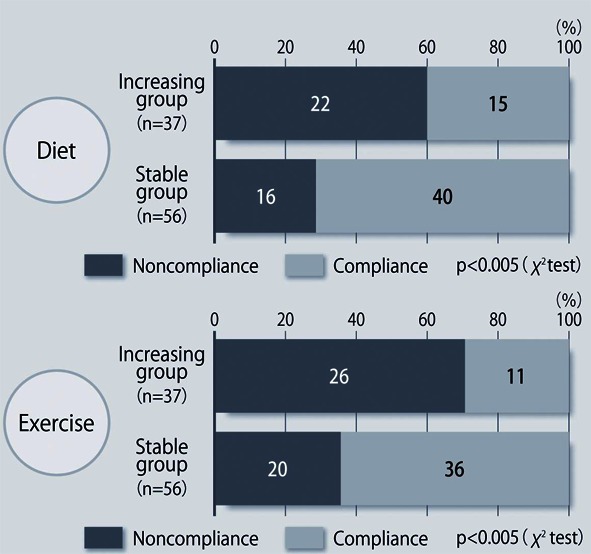
In the 93 patients analyzed (sitagliptin monotherapy, n = 9; combination therapy, n = 77; and switching from an alpha-glucosidase inhibitor or glinide, n = 7), hemoglobin A1c (HbA1c) showed a significant decrease after 24 weeks (7.70 ± 0.73% at baseline vs. 6.90 ± 0.55% at 24 weeks), but then showed a slight increase at 48 weeks. HbA1c was subsequently maintained in the same range with no significant changes until 72 weeks. A positive correlation was noted between the changes of HbA1c and body weight from 24 to 48 weeks. Compliance with diet and exercise therapy was worse in patients showing a ≥ 0.3% increase of HbA1c (n = 37) from 24 to 48 weeks than in the others (n = 56). Multiple logistic regression analysis showed that both factors were independent determinants of the increase of HbA1c from 24 weeks onward.
Sitagliptin showed good efficacy and safety when administered for 18 months as both monotherapy and combination therapy. Inadequate compliance with diet/exercise therapy and weight again may be associated with an increase of HbA1c over time during treatment with sitagliptin.
多项研究已表明二肽基肽酶-4抑制剂西他列汀对2型糖尿病有效,无论单独使用还是与其他口服抗糖尿病药物联合使用均有降糖作用。然而,关于其长期疗效的报道较少,尽管糖尿病药物需要长期有效。本研究(作为ASSET-K的一部分)旨在调查西他列汀使用1.5年或更长时间的疗效和安全性,并探索与治疗反应降低相关的因素。
在2009年12月至2012年3月期间于金森糖尿病诊所接受西他列汀(50毫克/天)治疗的375例患者中,133例能够连续随访72周。在排除在此期间改变了伴随用药剂量和/或类型的40例患者后,其余93例纳入本分析。回顾性调查血糖、糖化血红蛋白(HbA1c)和体重等临床指标。通过问卷调查48周时饮食和运动治疗的依从性。
在分析的93例患者中(西他列汀单药治疗9例,联合治疗77例,从α-葡萄糖苷酶抑制剂或格列奈类药物转换治疗7例),糖化血红蛋白(HbA1c)在24周后显著下降(基线时为7.70±0.73%,24周时为6.90±0.55%),但在48周时略有上升。随后直到72周,HbA1c维持在相同范围内,无显著变化。24至48周期间HbA1c的变化与体重之间存在正相关。从24至48周HbA1c升高≥0.3%的患者(n = 37)饮食和运动治疗的依从性比其他患者(n = 56)差。多因素logistic回归分析表明,这两个因素都是24周后HbA1c升高的独立决定因素。
西他列汀作为单药治疗和联合治疗使用18个月时显示出良好的疗效和安全性。饮食/运动治疗依从性不足和体重增加可能与西他列汀治疗期间HbA随时间升高有关。