Institute of Evolution and Ecology, Plant Evolutionary Ecology, University of Tübingen, Tübingen, Germany.
PLoS One. 2013 May 6;8(5):e63524. doi: 10.1371/journal.pone.0063524. Print 2013.
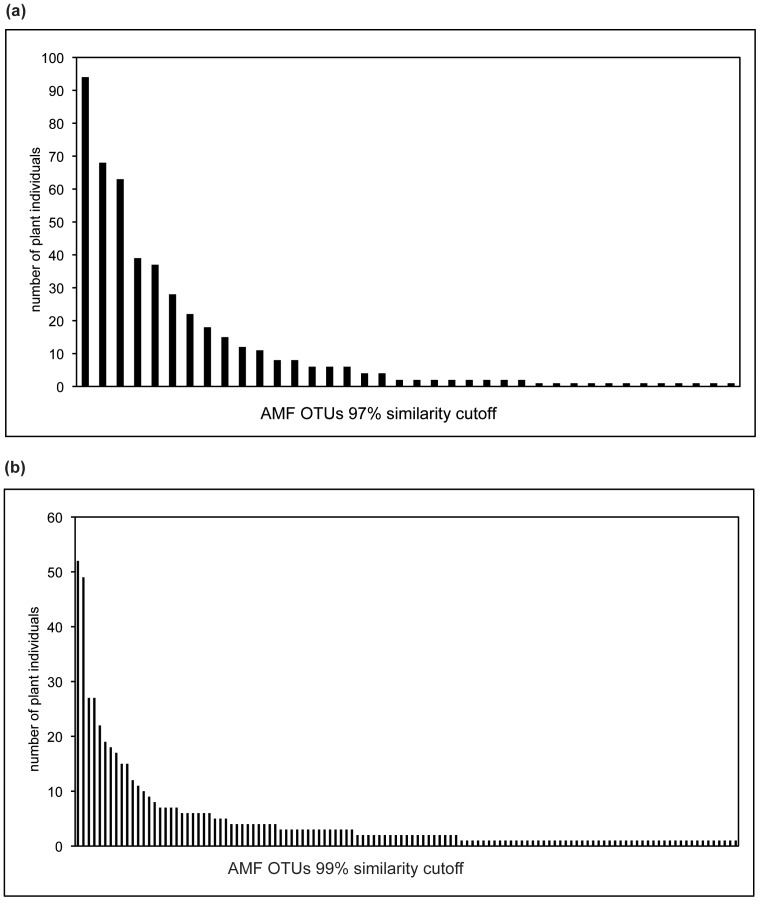
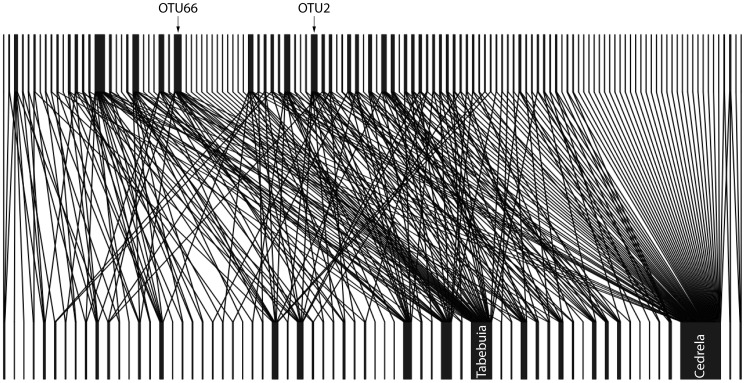
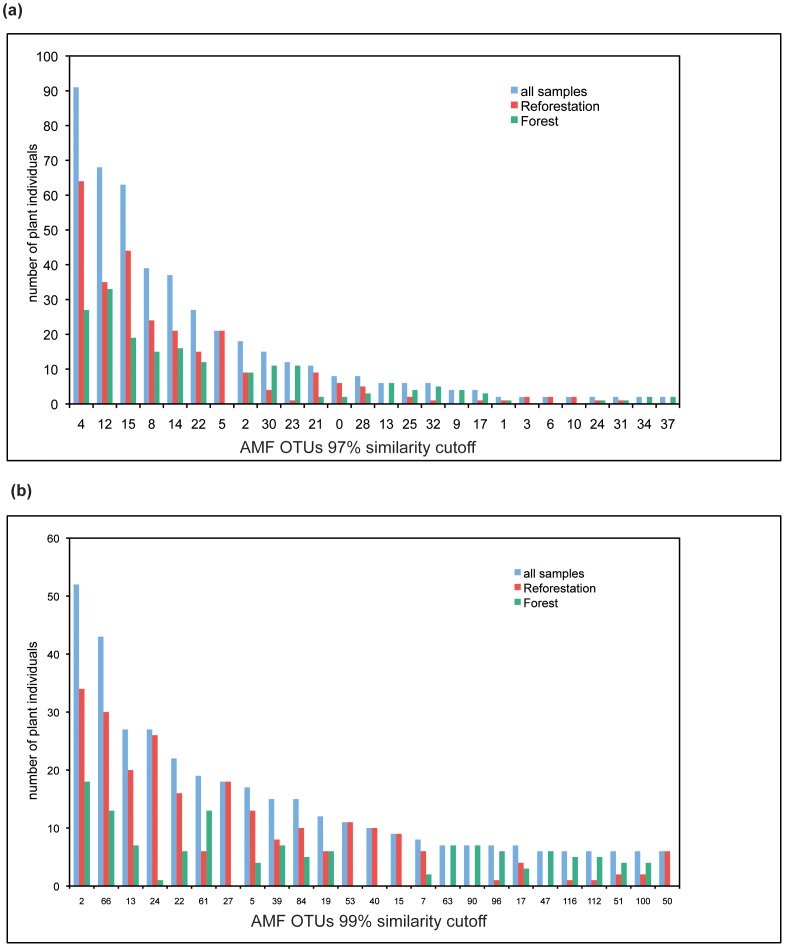
Arbuscular mycorrhizae are important for growth and survival of tropical trees. We studied the community of arbuscular mycorrhizal fungi in a tropical mountain rain forest and in neighbouring reforestation plots in the area of Reserva Biológica San Francisco (South Ecuador). The arbuscular mycorrhizal fungi were analysed with molecular methods sequencing part of the 18 S rDNA. The sequences were classified as Operational Taxonomic Units (OTUs). We found high fungal species richness with OTUs belonging to Glomerales, Diversisporales and Archaeosporales. Despite intensive sampling, the rarefaction curves are still unsaturated for the pristine forest and the reforestation plots. The communities consisted of few frequent and many rare species. No specific interactions are recognizable. The plant individuals are associated with one to ten arbuscular mycorrhizal fungi and mostly with one to four. The fungal compositions associated with single plant individuals show a great variability and variety within one plant species. Planted and naturally occurring plants show high similarities in their fungal communities. Pristine forest and reforestation plots showed similar richness, similar diversity and a significantly nested structure of plant-AMF community. The results indicate that small-scale fragmentation presently found in this area has not destroyed the natural AMF community, at least yet. Thus, the regeneration potential of natural forest vegetation at the tested sites is not inhibited by a lack of appropriate mycobionts.
丛枝菌根真菌对于热带树木的生长和存活很重要。我们研究了位于厄瓜多尔南部圣弗朗西斯科生物保护区(Reserva Biológica San Francisco)地区的热带山地雨林以及周边再造林区的丛枝菌根真菌群落。利用分子方法对部分 18S rDNA 进行测序,分析了丛枝菌根真菌。这些序列被分类为操作分类单元(OTUs)。我们发现真菌物种丰富度很高,OTUs 属于球囊霉目、巨孢囊霉目和无隔孢子囊霉目。尽管进行了密集采样,但原始森林和再造林区的稀疏曲线仍然不饱和。群落由少数常见种和许多稀有种组成。没有发现特定的相互作用。植物个体与一到十种丛枝菌根真菌相关,大多数与一到四种相关。与单个植物个体相关的真菌组成表现出很大的变异性和同一种植物内的多样性。人工种植的和自然生长的植物在真菌群落方面具有高度的相似性。原始森林和再造林区表现出相似的丰富度、相似的多样性和植物-AMF 群落的显著嵌套结构。结果表明,目前在该地区发现的小规模破碎化尚未破坏自然 AMF 群落,至少目前还没有。因此,在测试地点,自然森林植被的再生潜力没有因缺乏适当的菌根而受到抑制。