Zambia AIDS-related TB Research Project, University of Zambia, P,O Box 50697, Lusaka, Zambia.
AIDS Res Ther. 2013 May 15;10(1):12. doi: 10.1186/1742-6405-10-12.
Despite the increasingly wider availability of antiretroviral therapy (ART), some people living with HIV (PLHIV) and eligible for treatment have opted to adopt self-care practices thereby risking early AIDS-related mortality.
A qualitative study was conducted in urban Zambia to gain insights into PLHIV self-care practices and experiences and explore the implications for successful delivery of ART care. Between March 2010 and September 2011, in-depth interviews were conducted with PLHIV who had dropped out of treatment (n=25) and those that had opted not to initiate medication (n=37). Data was entered into and managed using Atlas ti, and analysed inductively using latent content analysis.
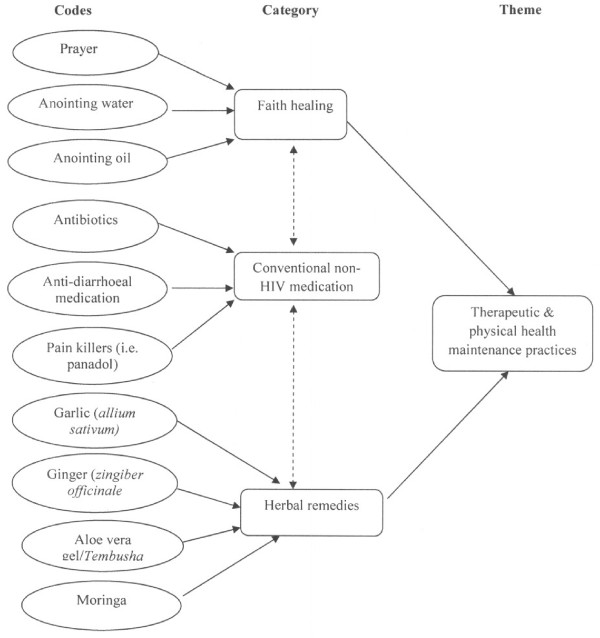
PHIV used therapeutic and physical health maintenance, psychological well-being and healthy lifestyle self-care practices to maintain physical health and mitigate HIV-related symptoms. Herbal remedies, faith healing and self-prescription of antibiotics and other conventional medicines to treat HIV-related ailments were used for therapeutic and physical health maintenance purposes. Psychological well-being self-care practices used were religiosity/spirituality and positive attitudes towards HIV infection. These practices were modulated by close social network relationships with other PLHIV, family members and peers, who acted as sources of emotional, material and financial support. Cessations of sexual relationships, adoption of safe sex to avoid re-infections and uptake of nutritional supplements were the commonly used risk reduction and healthy lifestyle practices respectively.
While these self-care practices may promote physical and psychosocial well-being and mitigate AIDS-related symptoms, at least in the short term, they however undermine PLHIV access to ART care thereby putting PLHIV at risk of early AIDS-related mortality. The use of scientifically unproven herbal remedies raises health and safety concerns; faith healing may create fatalism and resignation with death while the reported self-prescription of antibiotics to treat HIV-related infections raises concerns about future development of microbial drug resistance amongst PLHIV. Collectively, these self-care practices undermine efforts to effectively abate the spread and burden of HIV and reduce AIDS-related mortality. Therefore, there is need for sensitization campaigns on the benefits of ART and the risks associated with widespread self-prescription of antibiotics and use of scientifically unproven herbal remedies.
尽管抗逆转录病毒疗法(ART)的可及性日益广泛,但一些感染艾滋病毒的人(PLHIV)和符合治疗条件的人选择采用自我护理实践,从而冒着早期艾滋病相关死亡的风险。
在赞比亚城市进行了一项定性研究,以深入了解 PLHIV 的自我护理实践和经验,并探讨成功提供 ART 护理的影响。2010 年 3 月至 2011 年 9 月期间,对已退出治疗的 PLHIV(n=25)和选择不开始用药的 PLHIV(n=37)进行了深入访谈。数据输入和管理使用了 Atlas ti,并使用潜在内容分析进行了归纳分析。
PLHIV 采用治疗和身体健康维护、心理保健和健康生活方式自我保健实践来维持身体健康和减轻 HIV 相关症状。草药疗法、信仰疗法和自我处方抗生素和其他常规药物来治疗 HIV 相关疾病,用于治疗和身体健康维护目的。使用的心理保健自我保健实践包括宗教信仰/灵性和对 HIV 感染的积极态度。这些实践受到与其他 PLHIV、家庭成员和同伴的密切社会网络关系的调节,他们是情感、物质和经济支持的来源。停止性关系、采用安全性行为避免再次感染和服用营养补充剂是常用的减少风险和健康生活方式实践。
虽然这些自我保健实践可能在短期内促进身体和心理社会福祉并减轻 AIDS 相关症状,但它们会破坏 PLHIV 获得 ART 护理的机会,从而使 PLHIV 面临早期 AIDS 相关死亡的风险。使用未经科学证实的草药疗法引起健康和安全问题;信仰疗法可能会导致对死亡的宿命论和顺从,而据报道自我处方抗生素治疗 HIV 相关感染则引起对 PLHIV 中微生物药物耐药性未来发展的担忧。总的来说,这些自我保健实践破坏了有效减轻 HIV 的传播和负担以及降低 AIDS 相关死亡率的努力。因此,需要开展关于 ART 益处和广泛自我处方抗生素和使用未经科学证实的草药疗法相关风险的宣传活动。