New England Mental Illness Research Education and Clinical Centers, VA Connecticut Healthcare System, Yale School of Medicine, United States.
Drug Alcohol Depend. 2013 Oct 1;132(3):681-7. doi: 10.1016/j.drugalcdep.2013.04.022. Epub 2013 May 16.
Improving clinicians' interest, confidence, and commitment in using evidence-based treatment (EBT) is often an aim of training clinicians in EBT. However, the degree to which these areas actually improve through training and what their relationship is to treatment integrity is unknown.
Using data from a multi-site study (Martino et al., 2010) comparing three methods of clinician training in motivational interviewing (MI), changes in interest, confidence, and commitment over time and their relationship to MI adherence and competence were assessed using mixed-effects regression models. Individual patterns of change were examined through cluster analysis.
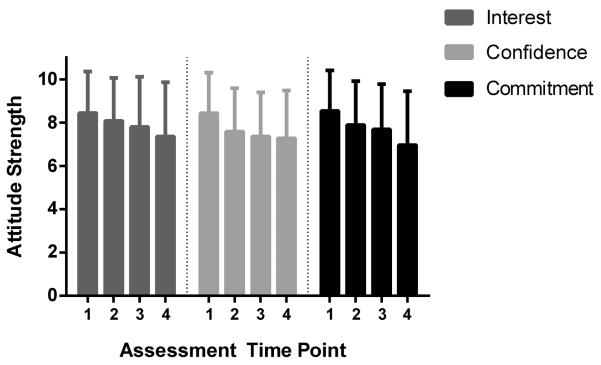
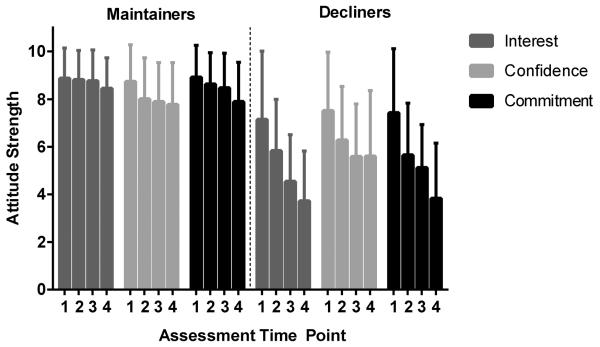
Interest, confidence, and commitment declined over time across training conditions with two distinct patterns: 76% clinicians largely maintained strong interest in MI over time with only slight decreases in confidence and commitment (the "maintainers"), while 24% began with lower initial interest, confidence, and commitment, which subsequently declined over time (the "decliners"). Interest and commitment were not associated with MI adherence and competence; confidence was associated with increased competence in the use of advanced MI strategies. However, decliners demonstrated greater use of MI-inconsistent techniques than maintainers overall (d=0.28).
Training in MI may have an unintended consequence of diminishing clinicians' interest, confidence, or commitment in using MI in practice. While attitudinal variables in this study show mixed relationships to MI integrity, they may have some utility in identifying less enthusiastic participants, better preparing them for training, or tailoring training approaches to meet individual training needs.
提高临床医生对使用循证治疗(EBT)的兴趣、信心和承诺,通常是培训临床医生使用 EBT 的目标之一。然而,通过培训这些领域实际上有多大程度的提高,以及它们与治疗完整性的关系是未知的。
利用一项多地点研究(Martino 等人,2010 年)的数据集,该研究比较了三种动机性访谈(MI)临床医生培训方法,使用混合效应回归模型评估了兴趣、信心和承诺随时间的变化及其与 MI 依从性和能力的关系。通过聚类分析检查了个体变化模式。
在培训条件下,兴趣、信心和承诺随时间推移而下降,呈现出两种截然不同的模式:76%的临床医生随着时间的推移,对 MI 的兴趣保持强劲,只有信心和承诺略有下降(“维持者”),而 24%的临床医生开始时兴趣、信心和承诺较低,随后随时间下降(“下降者”)。兴趣和承诺与 MI 依从性和能力无关;信心与使用高级 MI 策略的能力提高有关。然而,与维持者相比,下降者总体上更多地使用与 MI 不一致的技术(d=0.28)。
MI 培训可能会产生意想不到的后果,即降低临床医生在实践中使用 MI 的兴趣、信心或承诺。虽然本研究中的态度变量与 MI 完整性存在混合关系,但它们可能有助于识别不太热心的参与者,更好地为他们准备培训,或针对个人培训需求调整培训方法。