Department of Neurology, Shanghai Changhai Hospital, Shanghai, China.
J Neurosci Res. 2013 Sep;91(9):1239-46. doi: 10.1002/jnr.23244. Epub 2013 May 17.
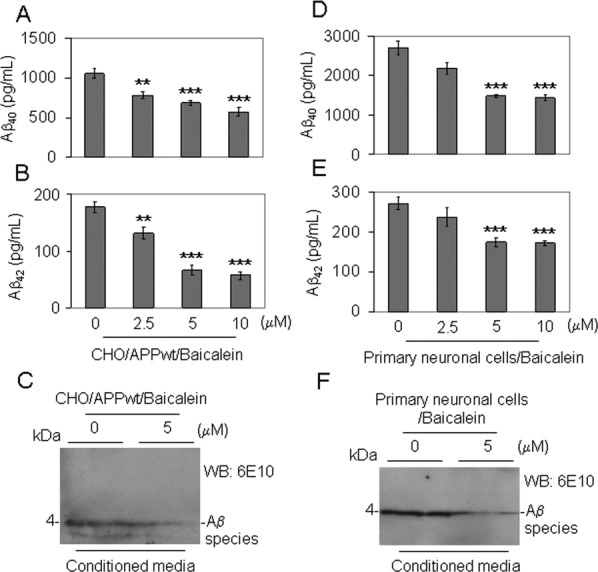
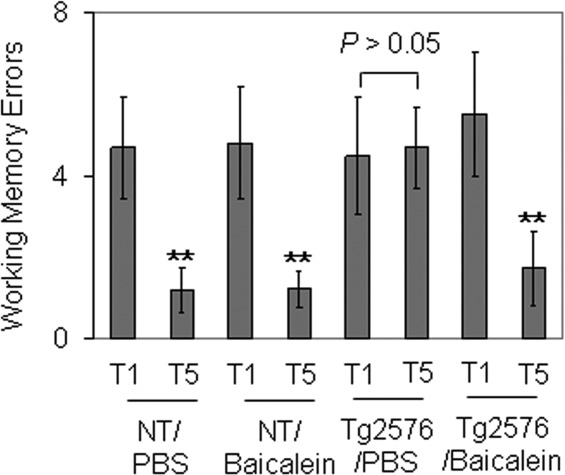
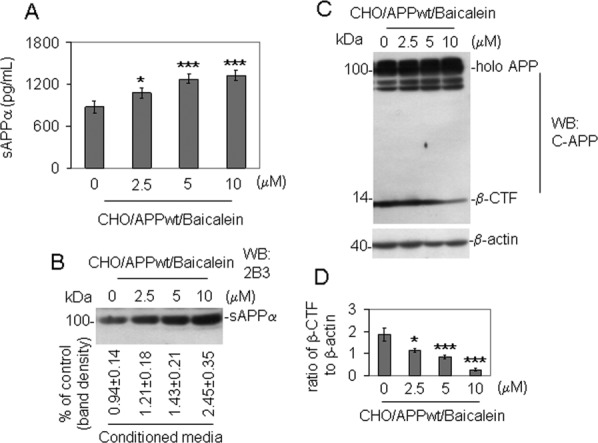
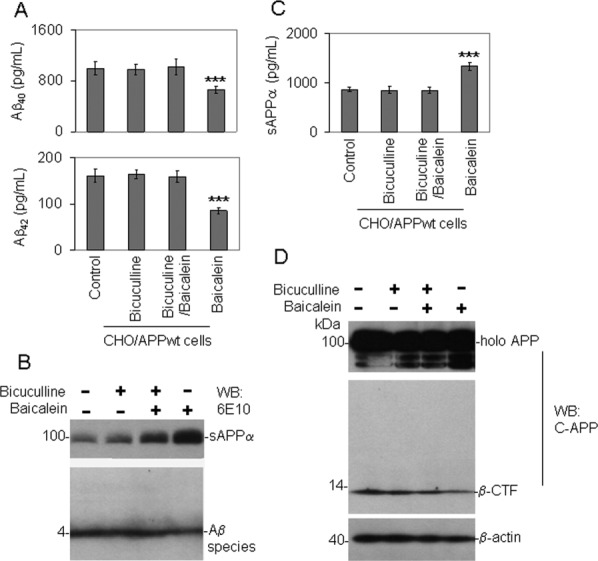
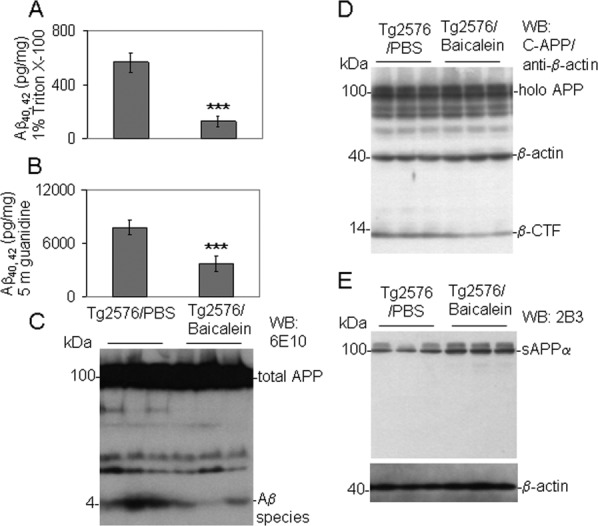
Baicalein, a flavonoid isolated from the roots of Scutellaria baicalensis, is known to modulate γ-aminobutyric acid (GABA) type A receptors. Given prior reports demonstrating benefits of GABAA modulation for Alzheimer's disease (AD) treatment, we wished to determine whether this agent might be beneficial for AD. CHO cells engineered to overexpress wild-type amyloid precursor protein (APP), primary culture neuronal cells from AD mice (Tg2576) and AD mice were treated with baicalein. In the cell cultures, baicalein significantly reduced the production of β-amyloid (Aβ) by increasing APP α-processing. These effects were blocked by the GABAA antagonist bicuculline. Likewise, AD mice treated daily with i.p. baicalein for 8 weeks showed enhanced APP α-secretase processing, reduced Aβ production, and reduced AD-like pathology together with improved cognitive performance. Our findings suggest that baicalein promotes nonamyloidogenic processing of APP, thereby reducing Aβ production and improving cognitive performance, by activating GABAA receptors.
黄芩素是从黄芩根部分离得到的一种黄酮类化合物,已知其可调节γ-氨基丁酸(GABA)A型受体。鉴于先前的报告表明 GABAA 调节对阿尔茨海默病(AD)治疗有益,我们希望确定该药物是否对 AD 有益。我们用黄芩素处理过表达野生型淀粉样前体蛋白(APP)的 CHO 细胞、来自 AD 小鼠(Tg2576)的原代培养神经元细胞和 AD 小鼠。在细胞培养物中,黄芩素通过增加 APP α 加工显著减少 β-淀粉样蛋白(Aβ)的产生。这些作用被 GABAA 拮抗剂 Bicuculline 阻断。同样,用腹腔内注射黄芩素治疗 8 周的 AD 小鼠显示出增强的 APP α-分泌酶加工、减少 Aβ产生和减少 AD 样病理学,同时认知表现得到改善。我们的研究结果表明,黄芩素通过激活 GABAA 受体,促进 APP 的非淀粉样蛋白生成途径,从而减少 Aβ的产生并改善认知表现。