Department of Cell and Molecular Biology, Faculty of Biotechnology and Biomolecular Sciences, University Putra Malaysia, 43400 Serdang, Selangor, Malaysia.
Mediators Inflamm. 2013;2013:639468. doi: 10.1155/2013/639468. Epub 2013 Apr 16.
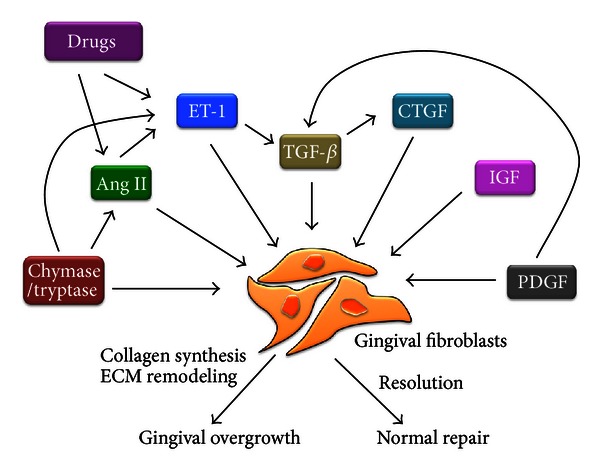
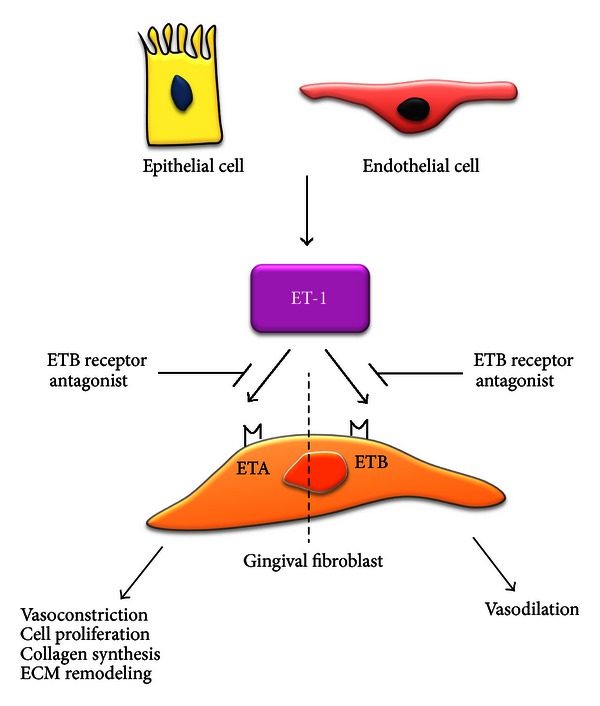
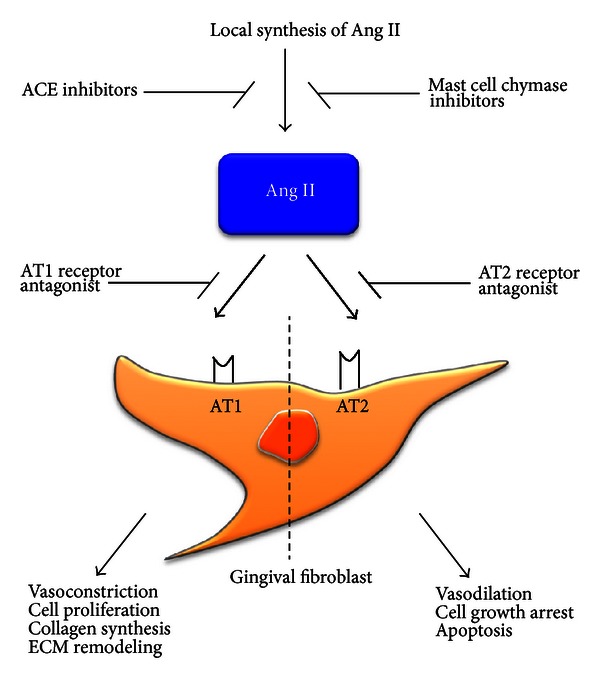
Gingival overgrowth is a side effect of certain medications. The most fibrotic drug-induced lesions develop in response to therapy with phenytoin, the least fibrotic lesions are caused by cyclosporin A, and the intermediate fibrosis occurs in nifedipine-induced gingival overgrowth. Fibrosis is one of the largest groups of diseases for which there is no therapy but is believed to occur because of a persistent tissue repair program. During connective tissue repair, activated gingival fibroblasts synthesize and remodel newly created extracellular matrix. Proteins such as transforming growth factor (TGF), endothelin-1 (ET-1), angiotensin II (Ang II), connective tissue growth factor (CCN2/CTGF), insulin-like growth factor (IGF), and platelet-derived growth factor (PDGF) appear to act in a network that contributes to the development of gingival fibrosis. Since inflammation is the prerequisite for gingival overgrowth, mast cells and its protease enzymes also play a vital role in the pathogenesis of gingival fibrosis. Drugs targeting these proteins are currently under consideration as antifibrotic treatments. This review summarizes recent observations concerning the contribution of TGF-β, CTGF, IGF, PDGF, ET-1, Ang II, and mast cell chymase and tryptase enzymes to fibroblast activation in gingival fibrosis and the potential utility of agents blocking these proteins in affecting the outcome of drug-induced gingival overgrowth.
牙龈增生是某些药物的副作用。最纤维化的药物诱导病变是对苯妥英钠治疗的反应,最少纤维化病变是由环孢素 A 引起的,硝苯地平诱导的牙龈增生则发生中间纤维化。纤维化是最大的疾病群体之一,目前尚无治疗方法,但据信是由于持续的组织修复程序而发生的。在结缔组织修复过程中,激活的牙龈成纤维细胞合成和重塑新形成的细胞外基质。转化生长因子 (TGF)、内皮素-1 (ET-1)、血管紧张素 II (Ang II)、结缔组织生长因子 (CCN2/CTGF)、胰岛素样生长因子 (IGF) 和血小板衍生生长因子 (PDGF) 等蛋白似乎在一个网络中发挥作用,有助于牙龈纤维化的发展。由于炎症是牙龈增生的前提,肥大细胞及其蛋白酶也在牙龈纤维化的发病机制中发挥着重要作用。目前正在考虑针对这些蛋白质的药物作为抗纤维化治疗。这篇综述总结了最近关于 TGF-β、CTGF、IGF、PDGF、ET-1、Ang II 和肥大细胞糜蛋白酶和胰蛋白酶酶对牙龈纤维化中成纤维细胞激活的贡献,以及阻断这些蛋白质对影响药物诱导的牙龈增生的结果的潜在用途。