Traub Frank, Andreou Dimosthenis, Niethard Maya, Tiedke Carmen, Werner Mathias, Tunn Per-Ulf
Department of Orthopedic Oncology, Sarcoma Center Berlin-Brandenburg, HELIOS Klinikum Berlin-Buch, Schwanebecker Chaussee 50, 13125 Berlin, Germany.
Sarcoma. 2013;2013:745360. doi: 10.1155/2013/745360. Epub 2013 Apr 3.
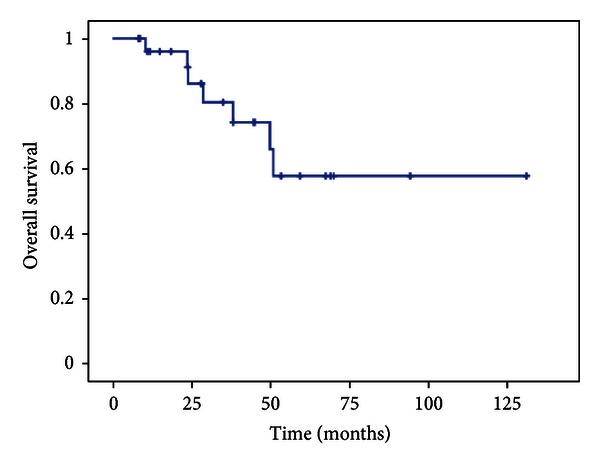
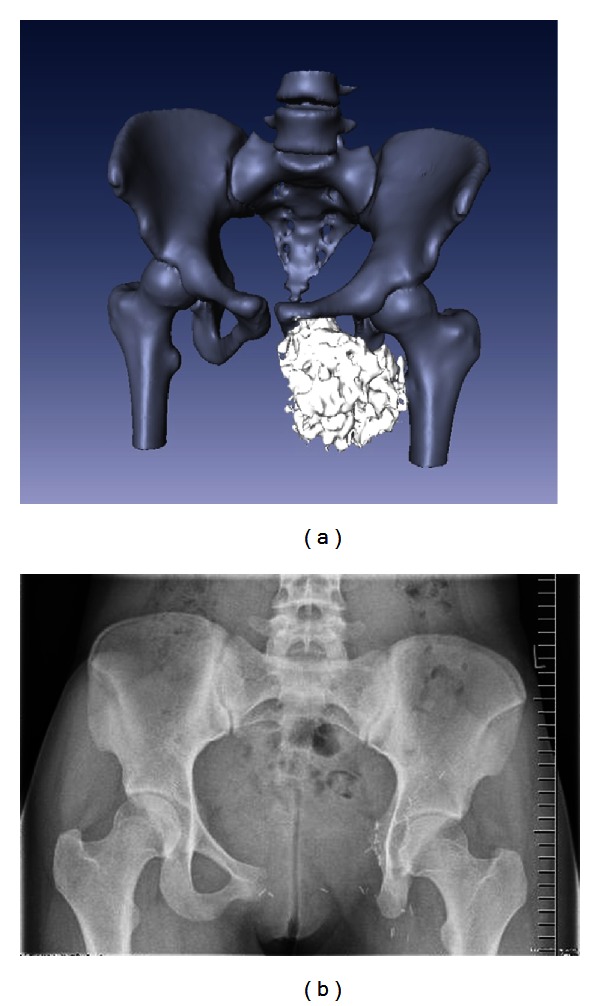
Background. Surgical treatment of malignant pelvic bone tumors can be very challenging. The objective of this retrospective study was to evaluate the oncological as well as the clinical and functional outcome after limb salvage surgery and biological reconstruction. Methods. The files of 27 patients with malignant pelvic bone tumors, who underwent surgical resection at our department between 2000 and 2011, were retrospectively analyzed (9 Ewing's sarcoma, 8 chondrosarcoma, 4 osteosarcoma, 1 synovial sarcoma, 1 malignant fibrous histiocytoma, and 4 carcinoma metastases). Results. After internal hemipelvectomy reconstruction was performed by hip transposition (n = 16), using autologous nonvascularised fibular graft (n = 5) or autologous iliac crest bone graft (n = 2). In one patient a proximal femor prothetis and in three patients a total hip prosthesis was implanted at the time of resection. The median follow-up was 33 months. Two- and five-year disease-specific survival rates of all patients were 86.1% and 57.7%, respectively. The mean functional MSTS score was 16.5 (~55%) for all patients. Conclusion. On the basis of the oncological as well as the clinical and functional outcome, biological reconstruction after internal hemipelvectomy seems to be a reliable technique for treating patients with a malignant pelvic bone tumor.
背景。骨盆恶性骨肿瘤的外科治疗极具挑战性。本回顾性研究的目的是评估保肢手术及生物重建后的肿瘤学疗效以及临床和功能结局。方法。回顾性分析了2000年至2011年间在我科接受手术切除的27例骨盆恶性骨肿瘤患者的病历(9例尤因肉瘤、8例软骨肉瘤、4例骨肉瘤、1例滑膜肉瘤、1例恶性纤维组织细胞瘤和4例癌转移)。结果。在进行半骨盆切除术重建后,16例行髋关节转位,5例使用自体非血管化腓骨移植,2例使用自体髂嵴骨移植。1例患者在切除时植入了股骨近端假体,3例患者植入了全髋关节假体。中位随访时间为33个月。所有患者的2年和5年疾病特异性生存率分别为86.1%和57.7%。所有患者的平均功能MSTS评分为16.5分(约55%)。结论。基于肿瘤学疗效以及临床和功能结局,半骨盆切除术后的生物重建似乎是治疗骨盆恶性骨肿瘤患者的可靠技术。