Department of Medicine, Johns Hopkins University, School of Medicine, Baltimore, MD, USA.
mBio. 2013 May 21;4(3):e00039-13. doi: 10.1128/mBio.00039-13.
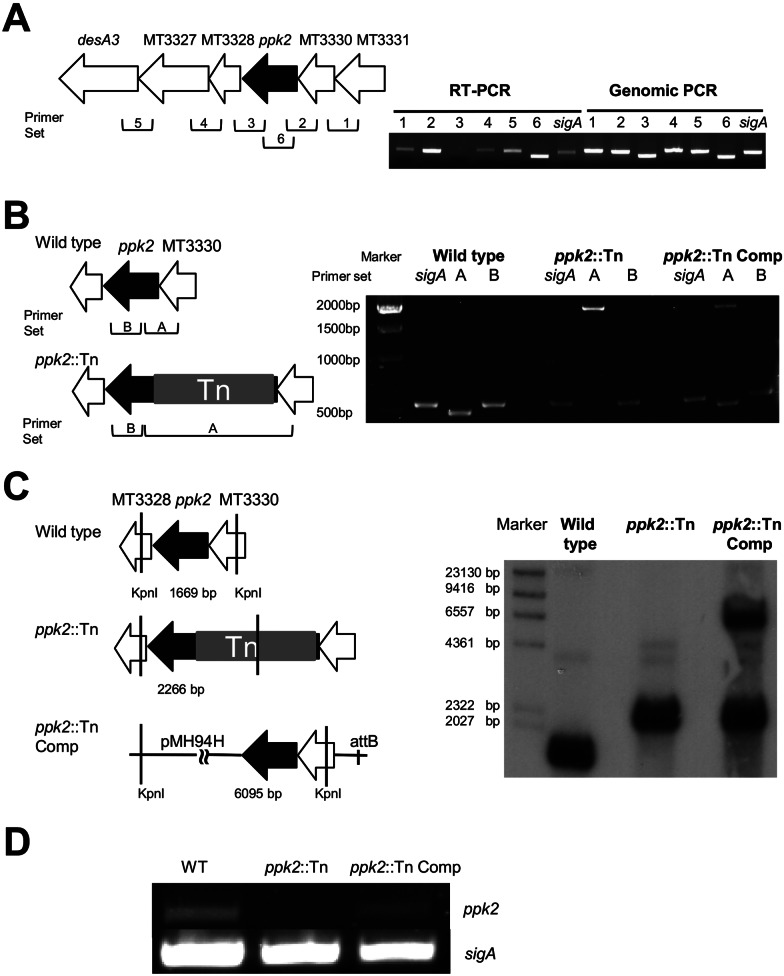
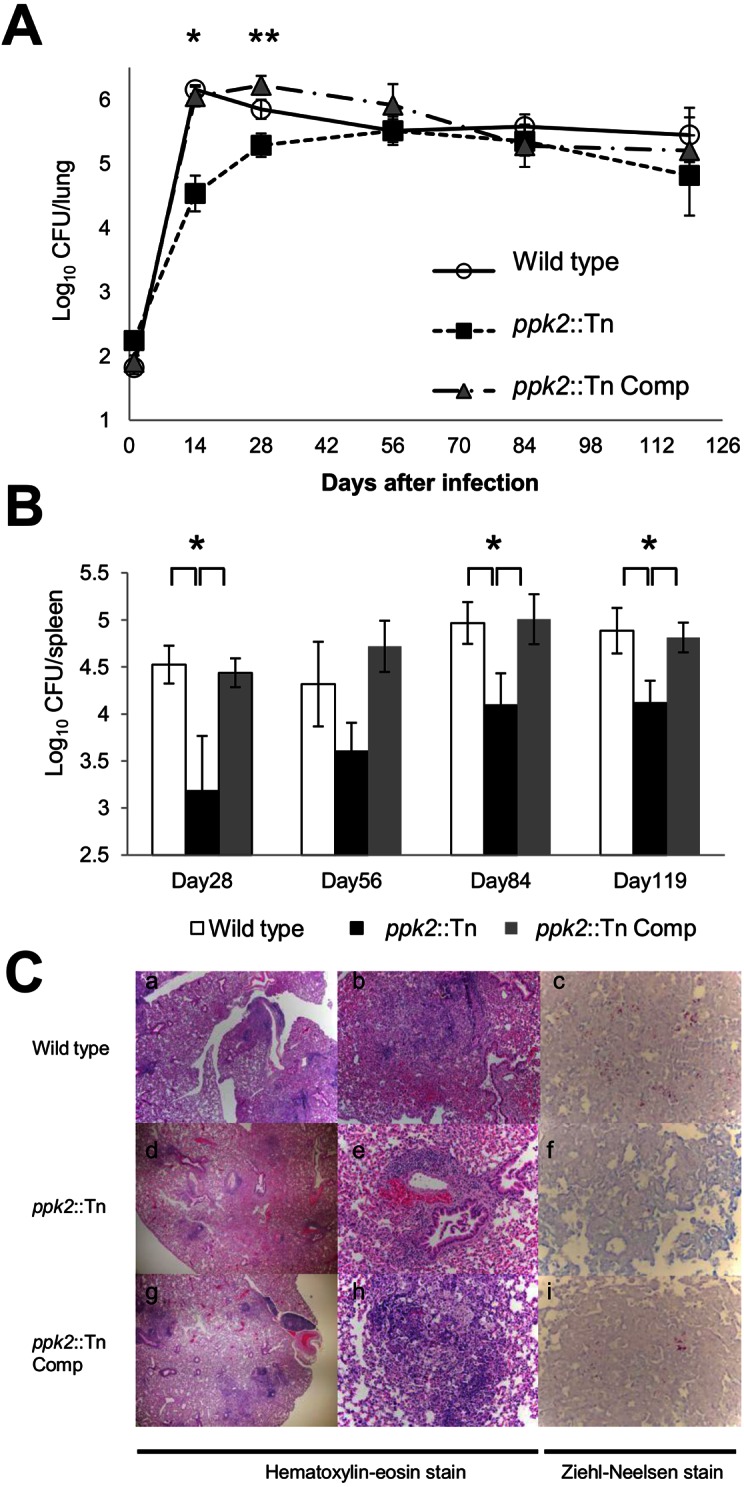
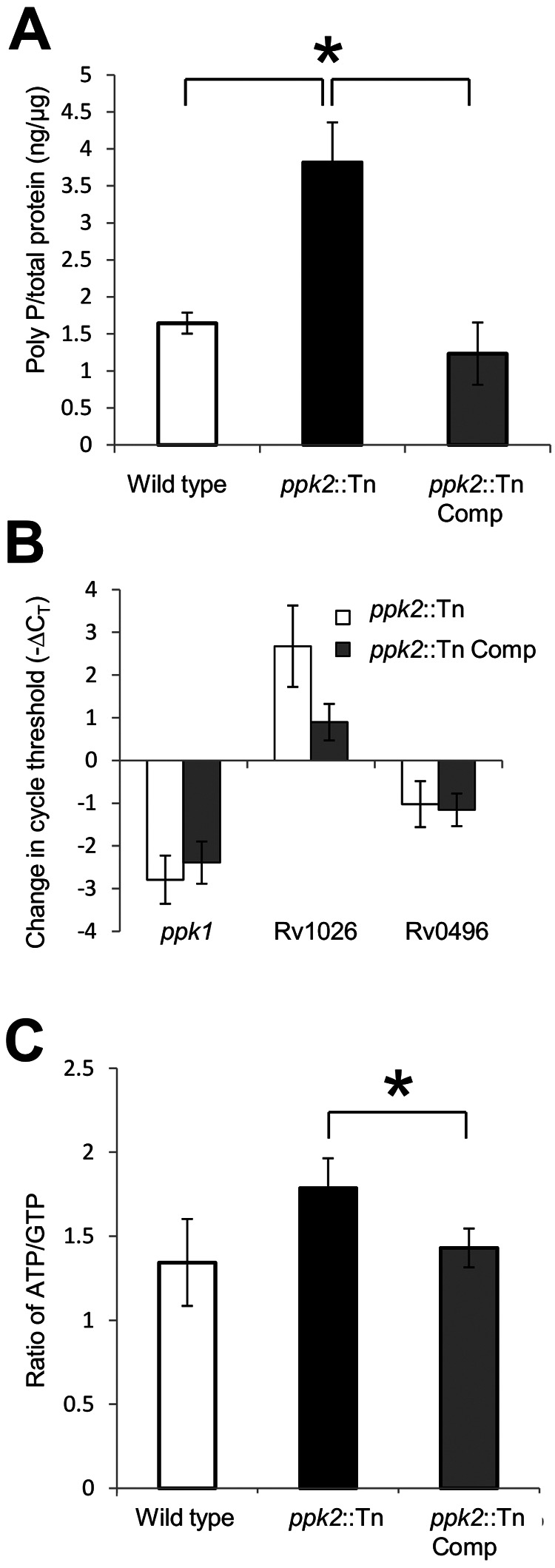
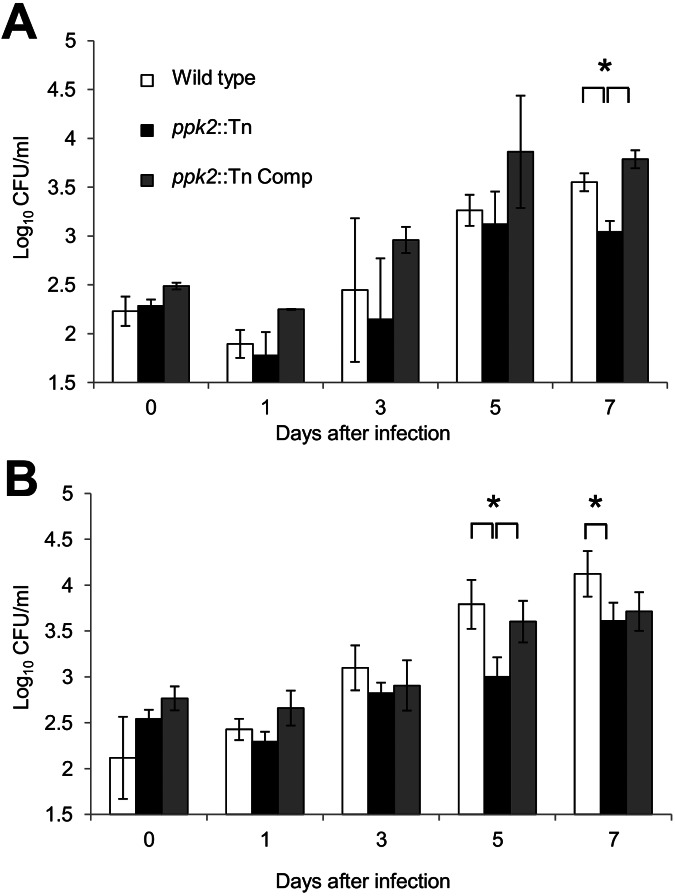
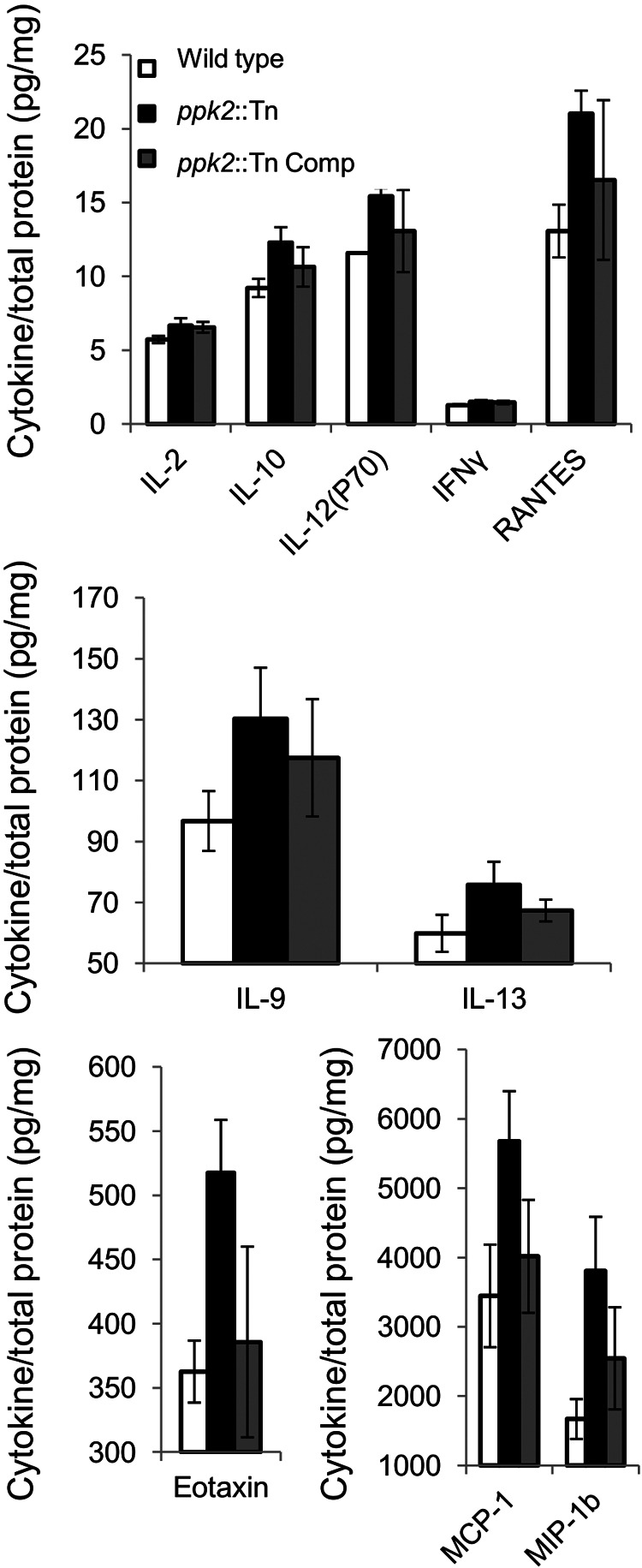
The Mycobacterium tuberculosis gene Rv3232c/MT3329 (ppk2) encodes a class II polyphosphate kinase, which hydrolyzes inorganic polyphosphate (poly P) to synthesize GTP. We assessed the role of ppk2 in M. tuberculosis poly P regulation, antibiotic tolerance, and virulence. A ppk2-deficient mutant (ppk2::Tn) and its isogenic wild-type (WT) and complemented (Comp) strains were studied. For each strain, the intrabacillary poly P content, MIC of isoniazid, and growth kinetics during infection of J774 macrophages were determined. Multiplex immunobead assays were used to evaluate cytokines elaborated during macrophage infection. The requirement of ppk2 for M. tuberculosis virulence was assessed in the murine model. The ppk2::Tn mutant was found to have significantly increased poly P content and a 4-fold increase in the MIC of isoniazid relative to the WT and Comp strains. The ppk2::Tn mutant showed reduced survival at day 7 in activated and naive J774 macrophages relative to the WT. Naive ppk2::Tn mutant-infected macrophages showed increased expression of interleukin 2 (IL-2), IL-9, IL-10, IL-12p70, and gamma interferon (IFN-γ) relative to WT-infected macrophages. The ppk2::Tn mutant exhibited significantly lower lung CFU during acute murine infection compared to the control groups. ppk2 is required for control of intrabacillary poly P levels and optimal M. tuberculosis growth and survival in macrophages and mouse lungs. IMPORTANCE Mycobacterium tuberculosis, the causative agent of tuberculosis (TB), is a highly successful human pathogen because it has developed mechanisms to multiply and survive in the lungs by circumventing the immune system. Identification of virulence factors responsible for M. tuberculosis growth and persistence in host tissues may assist in the development of novel strategies to treat TB. In this study, we found that the mycobacterial enzyme polyphosphate kinase 2 (PPK2) is required for controlling intracellular levels of important regulatory molecules and for maintaining susceptibility to the first-line anti-TB drug isoniazid. In addition, PPK2 was found to be required for M. tuberculosis growth in the lungs of mice, at least in part by suppressing the expression of certain key cytokines and chemokines by inactivated lung macrophages.
结核分枝杆菌基因 Rv3232c/MT3329(ppk2)编码 II 类多聚磷酸盐激酶,该酶可水解无机多聚磷酸盐(多聚 P)合成 GTP。我们评估了 ppk2 在结核分枝杆菌多聚磷酸盐调节、抗生素耐受性和毒力中的作用。研究了 ppk2 缺陷突变体(ppk2::Tn)及其同基因野生型(WT)和互补(Comp)菌株。对于每个菌株,测定了菌体内多聚磷酸盐含量、异烟肼的 MIC 和感染 J774 巨噬细胞时的生长动力学。使用多重免疫珠测定法评估巨噬细胞感染期间产生的细胞因子。在小鼠模型中评估了 ppk2 对结核分枝杆菌毒力的要求。与 WT 和 Comp 菌株相比,ppk2::Tn 突变体的多聚磷酸盐含量显著增加,异烟肼的 MIC 增加了 4 倍。与 WT 相比,ppk2::Tn 突变体在激活和未激活的 J774 巨噬细胞中第 7 天的存活率降低。与 WT 感染的巨噬细胞相比,未激活的 ppk2::Tn 突变体感染的巨噬细胞中白细胞介素 2(IL-2)、IL-9、IL-10、IL-12p70 和γ干扰素(IFN-γ)的表达增加。与对照组相比,急性小鼠感染期间,ppk2::Tn 突变体的肺部 CFU 显著降低。ppk2 是控制菌体内多聚磷酸盐水平和结核分枝杆菌在巨噬细胞和小鼠肺部中最佳生长和存活所必需的。
重要性结核分枝杆菌是结核病(TB)的病原体,是一种非常成功的人类病原体,因为它已经发展出了多种机制来逃避免疫系统,在肺部中繁殖和存活。鉴定与分枝杆菌在宿主组织中生长和持续存在相关的毒力因子可能有助于开发治疗结核病的新策略。在这项研究中,我们发现分枝杆菌多聚磷酸盐激酶 2(PPK2)是控制重要调节分子的细胞内水平和维持对一线抗结核药物异烟肼敏感性所必需的。此外,发现 PPK2 对于结核分枝杆菌在小鼠肺部中的生长是必需的,至少部分是通过抑制失活的肺巨噬细胞中某些关键细胞因子和趋化因子的表达。