Hamm Christopher W, Gray Michael J
Department of Microbiology, Heersink School of Medicine, University of Alabama at Birmingham, Birmingham, Alabama, USA.
mBio. 2025 Feb 5;16(2):e0351124. doi: 10.1128/mbio.03511-24. Epub 2024 Dec 27.
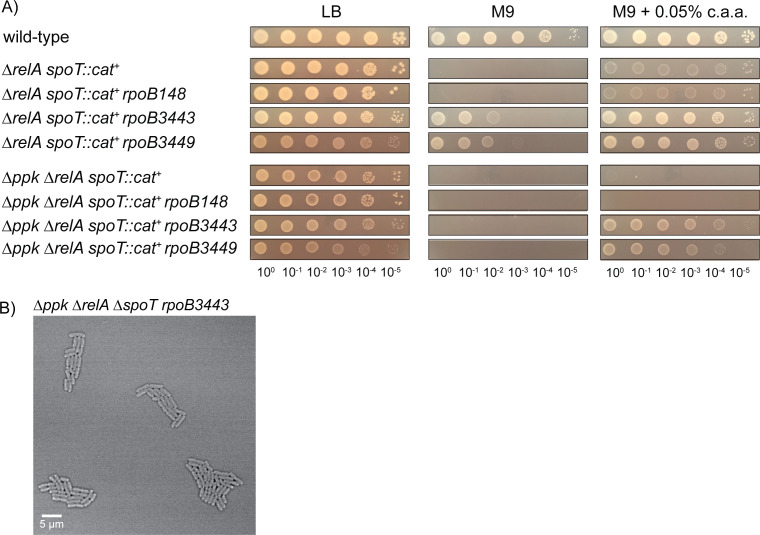
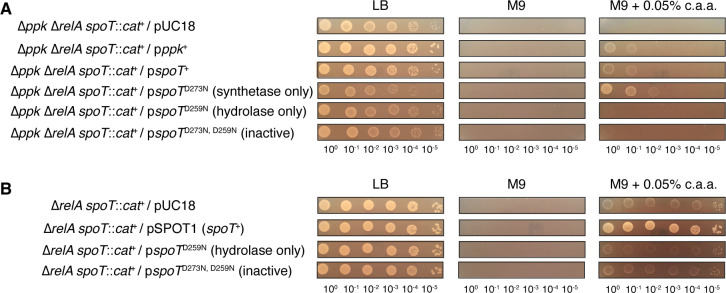
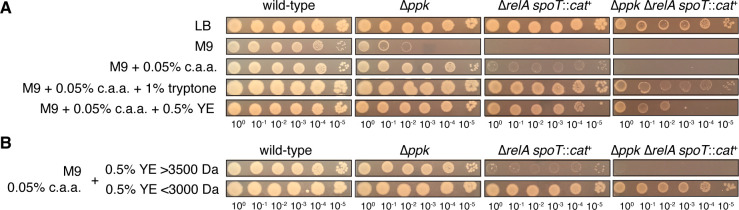
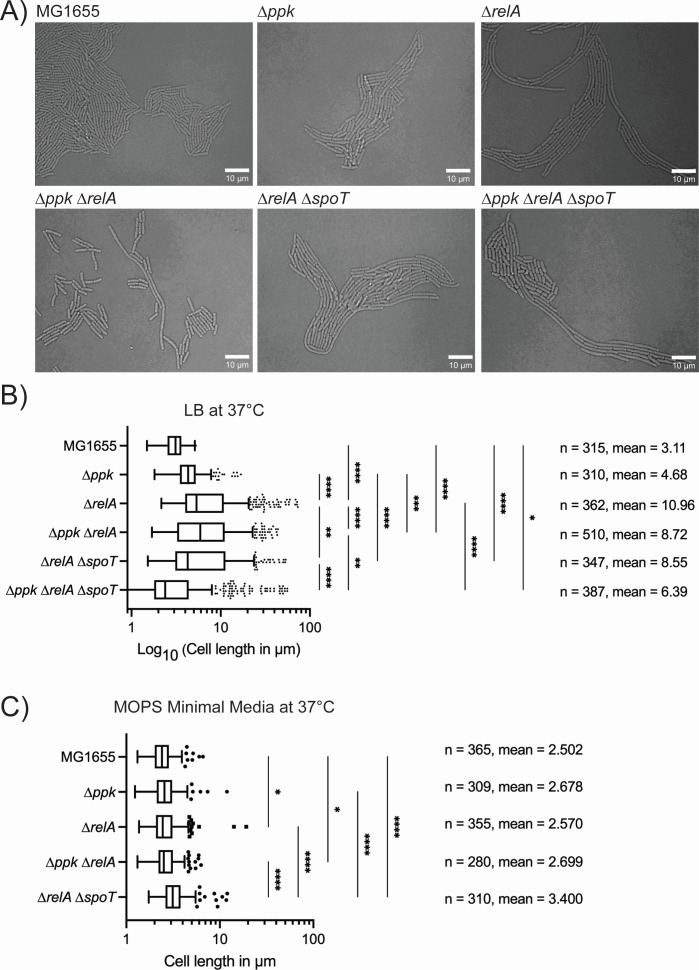
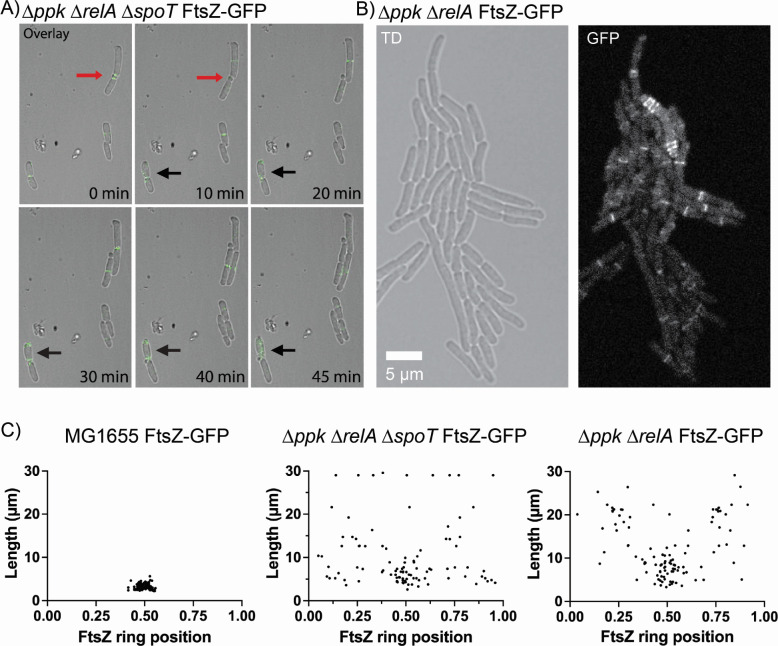
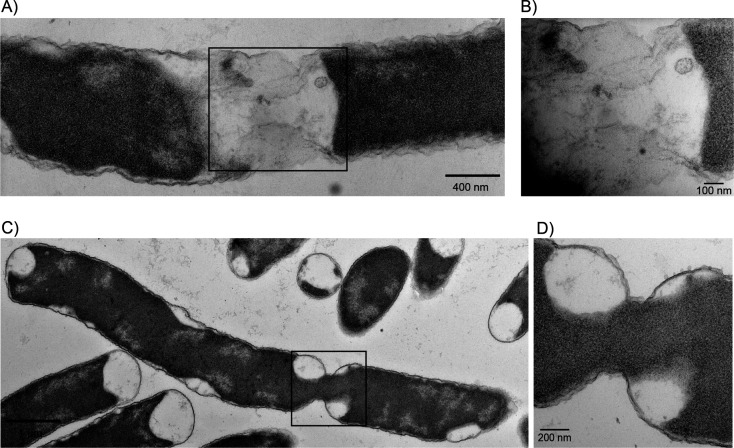
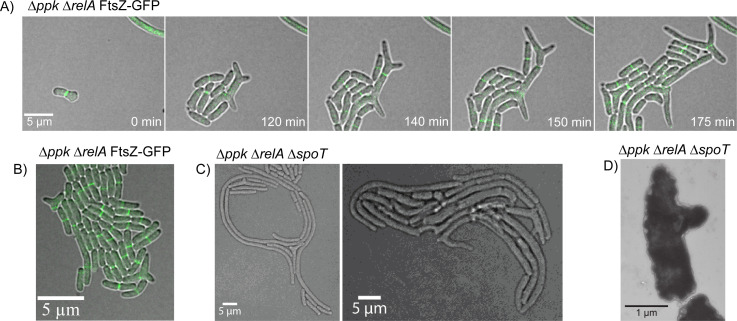
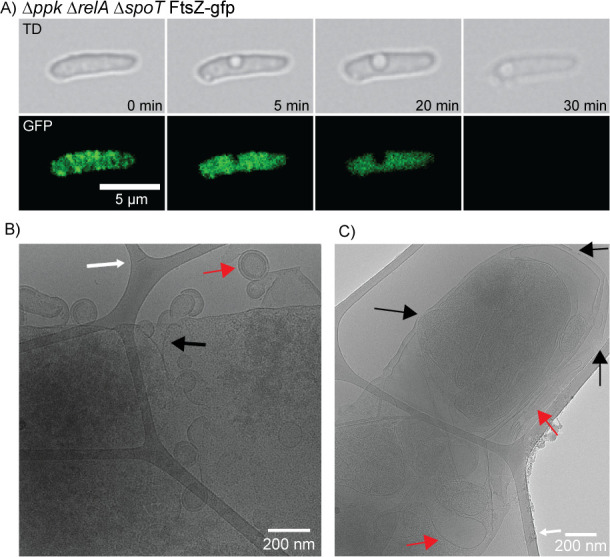
Bacteria encounter numerous stressors in their constantly changing environments and have evolved many methods to deal with stressors quickly and effectively. One well-known and broadly conserved stress response in bacteria is the stringent response, mediated by the alarmone (p)ppGpp. (p)ppGpp is produced in response to amino acid starvation and other nutrient limitations and stresses and regulates both the activity of proteins and expression of genes. also makes inorganic polyphosphate (polyP), an ancient molecule evolutionary conserved across most bacteria and other cells, in response to a variety of stress conditions, including amino acid starvation. PolyP can act as an energy and phosphate storage pool, metal chelator, regulatory signal, and chaperone, among other functions. Here we report that lacking both (p)ppGpp and polyP have a complex phenotype indicating previously unknown overlapping roles for (p)ppGpp and polyP in regulating cell division, cell morphology, and metabolism. Disruption of either (p)ppGpp or polyP synthesis led to the formation of filamentous cells, but simultaneous disruption of both pathways resulted in cells with heterogenous cell morphologies, including highly branched cells, severely mislocalized Z-rings, and cells containing substantial void spaces. These mutants also failed to grow when nutrients were limited, even when amino acids were added. These results provide new insights into the relationship between polyP synthesis and the stringent response in bacteria and point toward their having a joint role in controlling metabolism, cell division, and cell growth.IMPORTANCECell division is a fundamental biological process, and the mechanisms that control it in have been the subject of intense research scrutiny for many decades. Similarly, both the (p)ppGpp-dependent stringent response and inorganic polyphosphate (polyP) synthesis are well-studied, evolutionarily ancient, and widely conserved pathways in diverse bacteria. Our results indicate that these systems, normally studied as stress-response mechanisms, play a coordinated and novel role in regulating cell division, morphology, and metabolism even under non-stress conditions.
在不断变化的环境中,细菌会遇到众多应激源,并进化出许多方法来快速有效地应对这些应激源。细菌中一种广为人知且广泛保守的应激反应是严紧反应,由警报素(p)ppGpp介导。(p)ppGpp是在应对氨基酸饥饿和其他营养限制及应激时产生的,它既能调节蛋白质的活性,又能调控基因的表达。细菌还会在包括氨基酸饥饿在内的各种应激条件下产生无机多聚磷酸盐(多聚P),这是一种在大多数细菌和其他细胞中进化保守的古老分子。多聚P可充当能量和磷酸盐储存库、金属螯合剂、调节信号以及分子伴侣等多种角色。在此我们报告,同时缺乏(p)ppGpp和多聚P的细菌具有复杂的表型,这表明(p)ppGpp和多聚P在调节细胞分裂、细胞形态和代谢方面存在此前未知的重叠作用。破坏(p)ppGpp或多聚P的合成都会导致丝状细胞的形成,但同时破坏这两条途径会导致细胞出现异质的细胞形态,包括高度分支的细胞、Z环严重错位的细胞以及含有大量空隙的细胞。当营养物质有限时,即使添加了氨基酸,这些突变体也无法生长。这些结果为细菌中多聚P合成与严紧反应之间的关系提供了新的见解,并表明它们在控制代谢、细胞分裂和细胞生长方面具有共同作用。
重要性
细胞分裂是一个基本的生物学过程,数十年来,控制细菌细胞分裂的机制一直是深入研究的对象。同样,依赖(p)ppGpp的严紧反应和无机多聚磷酸盐(多聚P)的合成也是在多种细菌中经过充分研究、在进化上古老且广泛保守的途径。我们的结果表明,这些通常作为应激反应机制进行研究的系统,即使在非应激条件下,在调节细胞分裂、形态和代谢方面也发挥着协调且新颖的作用。