Instituto de Acuicultura, Universidad de Santiago de Compostela, Campus Universitario Sur, Santiago de Compostela, Spain.
PLoS Negl Trop Dis. 2013 May 16;7(5):e2210. doi: 10.1371/journal.pntd.0002210. Print 2013.
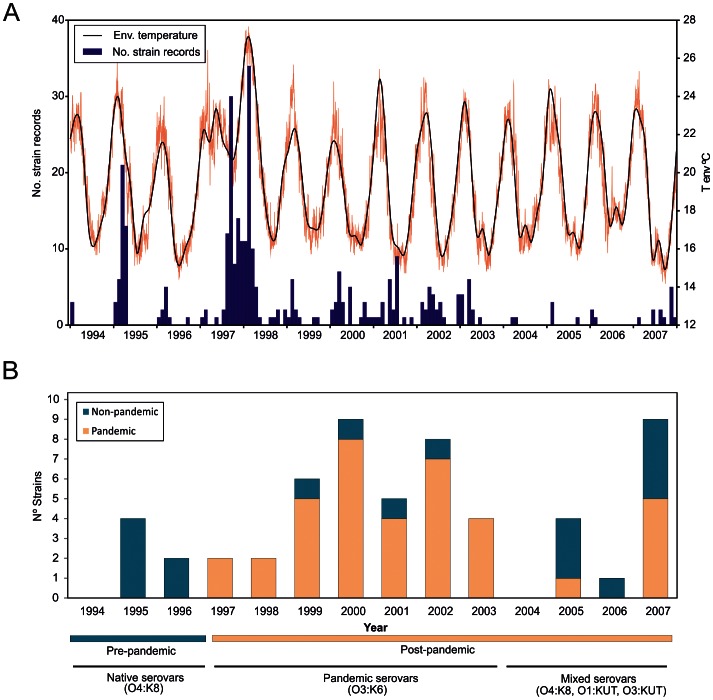
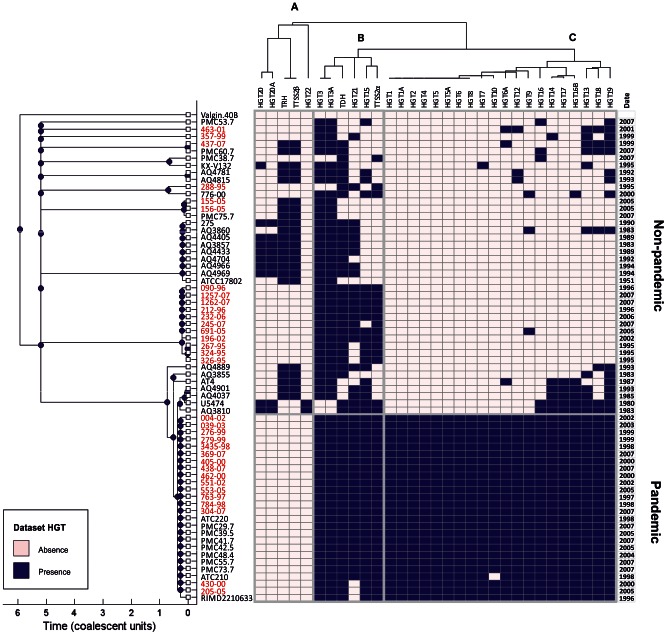
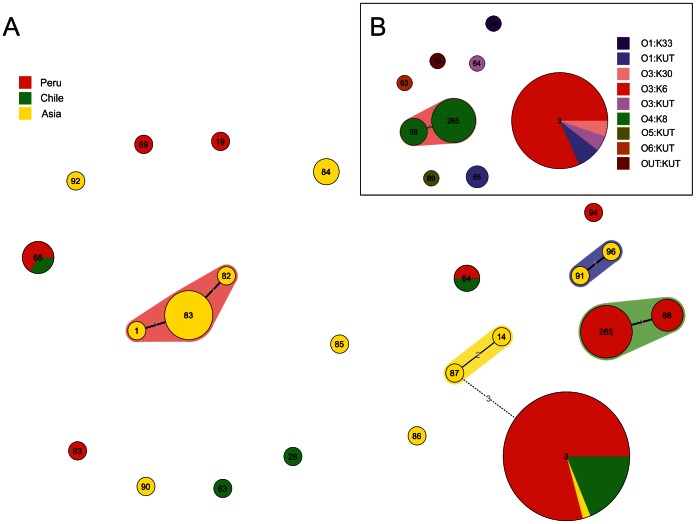
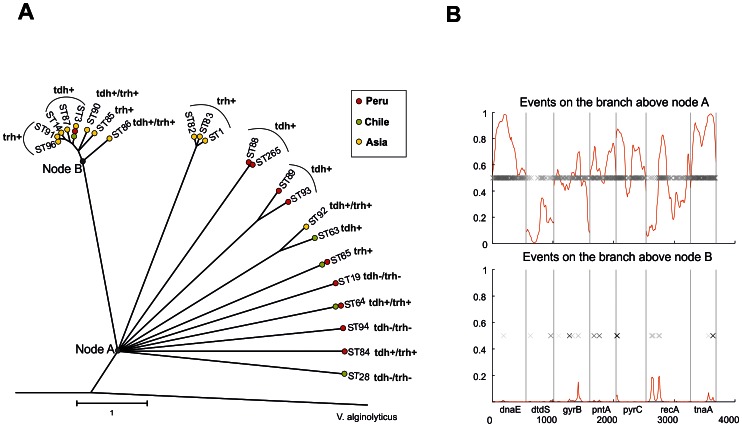
Vibrio parahaemolyticus is a foodborne pathogen that has become a public health concern at the global scale. The epidemiological significance of V. parahaemolyticus infections in Latin America received little attention until the winter of 1997 when cases related to the pandemic clone were detected in the region, changing the epidemic dynamics of this pathogen in Peru. With the aim to assess the impact of the arrival of the pandemic clone on local populations of pathogenic V. parahaemolyticus in Peru, we investigated the population genetics and genomic variation in a complete collection of non-pandemic strains recovered from clinical sources in Peru during the pre- and post-emergence periods of the pandemic clone. A total of 56 clinical strains isolated in Peru during the period 1994 to 2007, 13 strains from Chile and 20 strains from Asia were characterized by Multilocus Sequence Typing (MLST) and checked for the presence of Variable Genomic Regions (VGRs). The emergence of O3:K6 cases in Peru implied a drastic disruption of the seasonal dynamics of infections and a shift in the serotype dominance of pathogenic V. parahaemolyticus. After the arrival of the pandemic clone, a great diversity of serovars not previously reported was detected in the country, which supports the introduction of additional populations cohabitating with the pandemic group. Moreover, the presence of genomic regions characteristic of the pandemic clone in other non-pandemic strains may represent early evidence of genetic transfer from the introduced population to the local communities. Finally, the results of this study stress the importance of population admixture, horizontal genetic transfer and homologous recombination as major events shaping the structure and diversity of pathogenic V. parahaemolyticus.
副溶血性弧菌是一种食源性病原体,已成为全球范围内的公共卫生关注点。直到 1997 年冬季,该地区才发现与大流行克隆相关的病例,这改变了这种病原体在秘鲁的流行动态,此前拉丁美洲对副溶血性弧菌感染的流行病学意义关注甚少。为了评估大流行克隆对秘鲁当地致病性副溶血性弧菌群体的影响,我们调查了在大流行克隆出现前后从秘鲁临床来源获得的非大流行菌株完整集合的群体遗传学和基因组变异。总共对在 1994 年至 2007 年期间从秘鲁分离的 56 株临床菌株、来自智利的 13 株菌株和来自亚洲的 20 株菌株进行了多位点序列分型(MLST)分析,并检查了可变基因组区域(VGRs)的存在情况。副溶血性弧菌 O3:K6 病例的出现意味着感染季节性动态的急剧破坏和致病性副溶血性弧菌血清型优势的转变。大流行克隆到达后,在该国检测到了以前未报告的大量血清型,这支持了引入其他与大流行群体共存的群体。此外,其他非大流行菌株中存在大流行克隆特征的基因组区域可能代表了从引入群体向当地社区遗传转移的早期证据。最后,这项研究的结果强调了群体混合、水平基因转移和同源重组作为塑造致病性副溶血性弧菌结构和多样性的主要事件的重要性。