Institute of Biochemistry and Physiology of Plants and Microorganisms, Russian Academy of Sciences, 13 Prospekt Entuziastov, Saratov 410049, Russia.
Nanoscale Res Lett. 2013 May 22;8(1):250. doi: 10.1186/1556-276X-8-250.
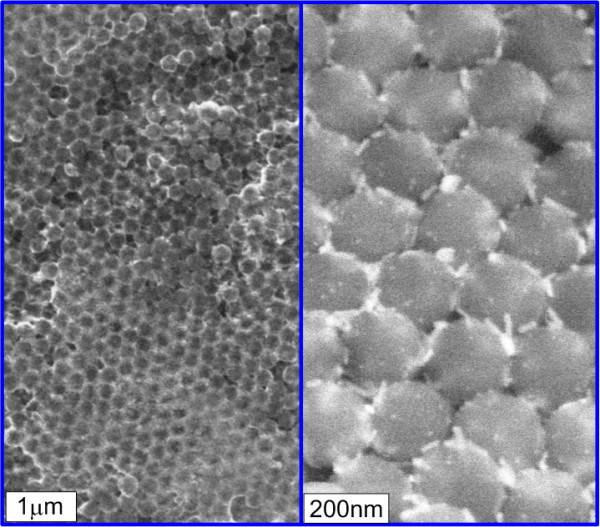
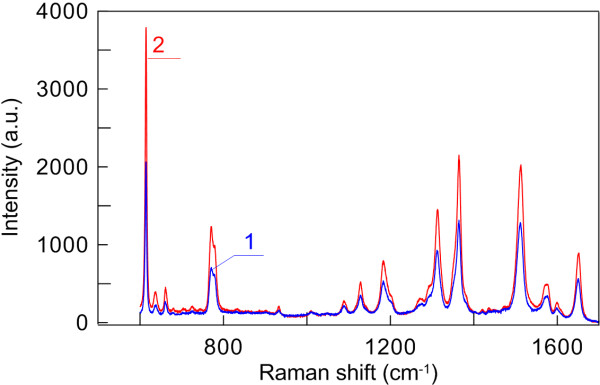
We describe a new approach to the fabrication of surface-enhanced Raman scattering (SERS) substrates using gold nanorod (GNR) nanopowders to prepare concentrated GNR sols, followed by their deposition on an opal-like photonic crystal (OPC) film formed on a silicon wafer. For comparative experiments, we also prepared GNR assemblies on plain silicon wafers. GNR-OPC substrates combine the increased specific surface, owing to the multilayer silicon nanosphere structure, and various spatial GNR configurations, including those with possible plasmonic hot spots. We demonstrate here the existence of the optimal OPC thickness and GNR deposition density for the maximal SERS effect. All other things being equal, the analytical integral SERS enhancement of the GNR-OPC substrates is higher than that of the thick, randomly oriented GNR assemblies on plain silicon wafers. Several ways to further optimize the strategy suggested are discussed.
我们描述了一种使用金纳米棒(GNR)纳米粉末制备浓缩 GNR 溶胶的新方法,然后将其沉积在硅片上形成的类蛋白石光子晶体(OPC)薄膜上,从而制造表面增强拉曼散射(SERS)基底。为了进行比较实验,我们还在普通硅片上制备了 GNR 组装体。GNR-OPC 基底结合了多层硅纳米球结构增加的比表面积和各种空间 GNR 配置,包括可能存在等离子体热点的配置。我们在这里证明了存在最佳的 OPC 厚度和 GNR 沉积密度,以实现最大的 SERS 效应。在其他条件相同的情况下,GNR-OPC 基底的分析积分 SERS 增强高于普通硅片上厚的、随机取向的 GNR 组装体。讨论了进一步优化所提出策略的几种方法。