Department of Developmental Biology, Washington University School of Medicine, St. Louis, Missouri, USA.
Center for Genome Sciences and Systems Biology, Washington University School of Medicine, St. Louis, Missouri, USA.
J Invest Dermatol. 2013 Dec;133(12):2714-2721. doi: 10.1038/jid.2013.228. Epub 2013 May 22.
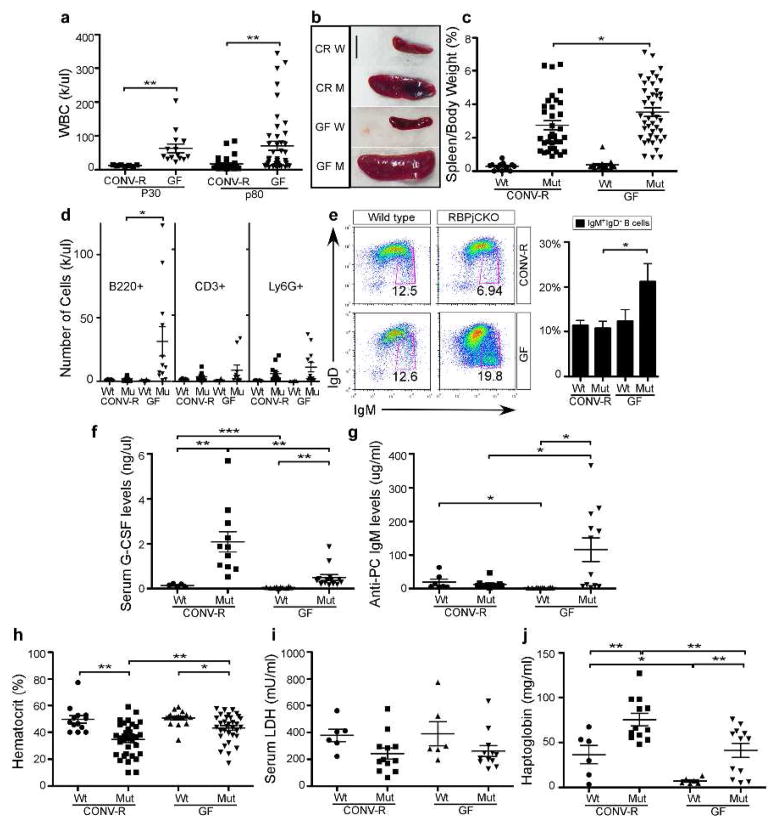
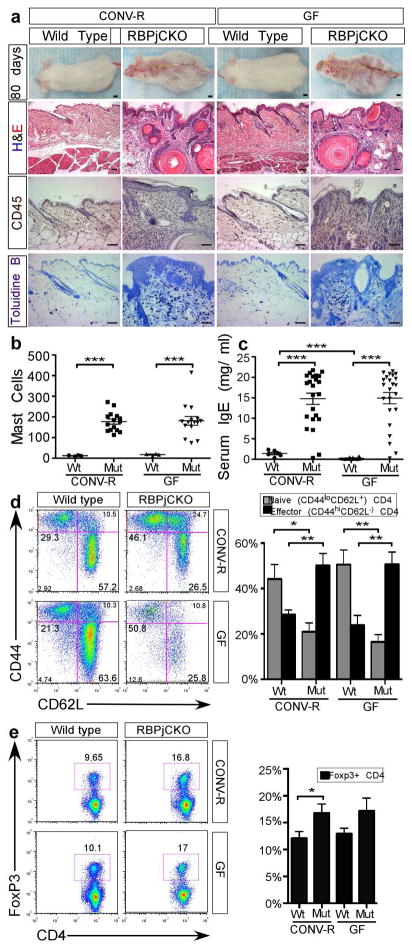
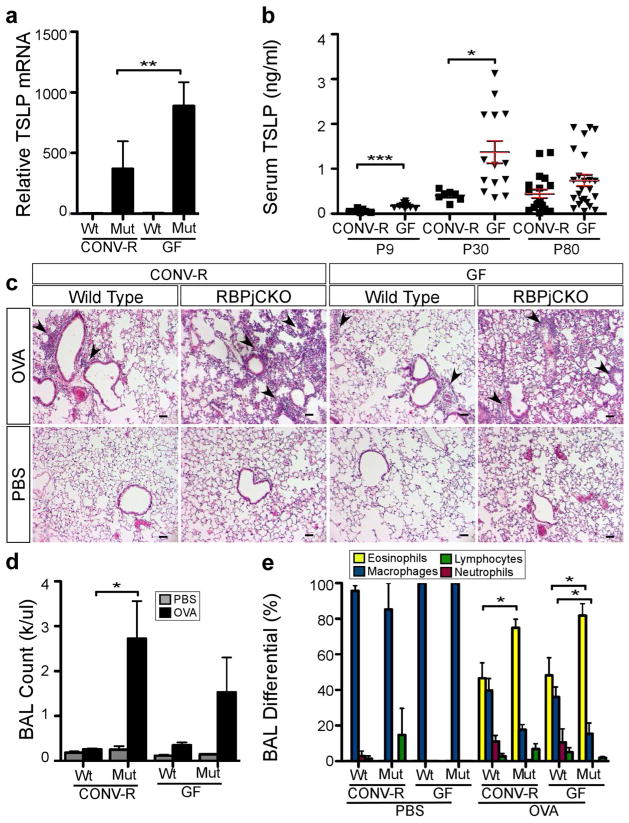
Evidence is accumulating to suggest that our indigenous microbial communities (microbiota) may have a role in modulating allergic and immune disorders of the skin. To examine the link between the microbiota and atopic dermatitis (AD), we examined a mouse model of defective cutaneous barrier function with an AD-like disease due to loss of Notch signaling. Comparisons of conventionally raised and germ-free (GF) mice revealed a similar degree of allergic skin inflammation, systemic atopy, and airway hypersensitivity. GF mutant animals expressed significantly higher levels of thymic stromal lymphopoietin, a major proinflammatory cytokine released by skin with defective barrier function, resulting in a more severe B-lymphoproliferative disorder that persisted into adulthood. These findings suggest a role for the microbiota in ameliorating stress signals released by keratinocytes in response to perturbation in cutaneous barrier function.
有证据表明,我们的本土微生物群落(微生物群)可能在调节皮肤的过敏和免疫紊乱方面发挥作用。为了研究微生物群与特应性皮炎(AD)之间的联系,我们研究了一种由于 Notch 信号缺失而导致皮肤屏障功能缺陷的类似 AD 疾病的小鼠模型。对常规饲养和无菌(GF)小鼠的比较显示,过敏皮肤炎症、全身性过敏和气道高反应性的程度相似。GF 突变动物表达了更高水平的胸腺基质淋巴细胞生成素,这是一种由皮肤屏障功能缺陷释放的主要促炎细胞因子,导致更严重的 B 淋巴细胞增生紊乱,持续到成年期。这些发现表明,微生物群在改善角质形成细胞对皮肤屏障功能紊乱释放的应激信号方面发挥作用。