Departments of Psychiatry and Pharmacology, Toxicology and Neuroscience, LSU Health Sciences Center, Shreveport, Louisiana, USA.
PLoS One. 2013 May 20;8(5):e63851. doi: 10.1371/journal.pone.0063851. Print 2013.
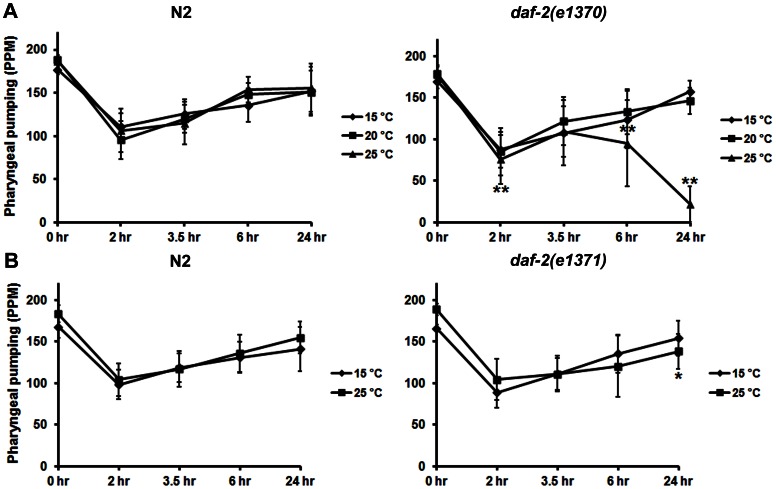
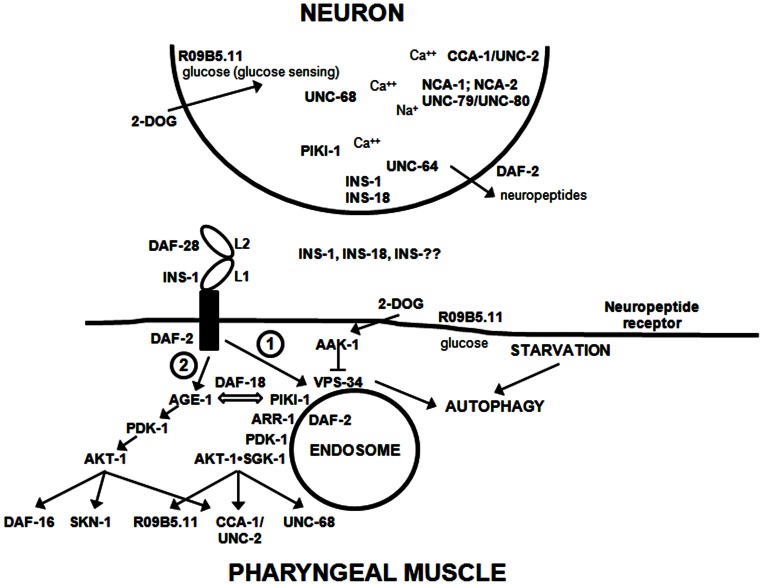
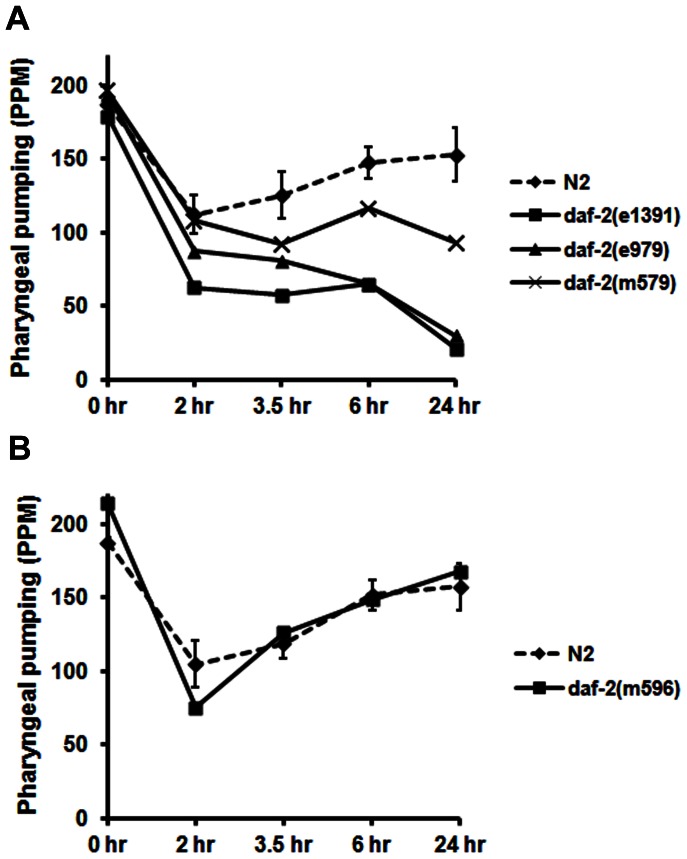
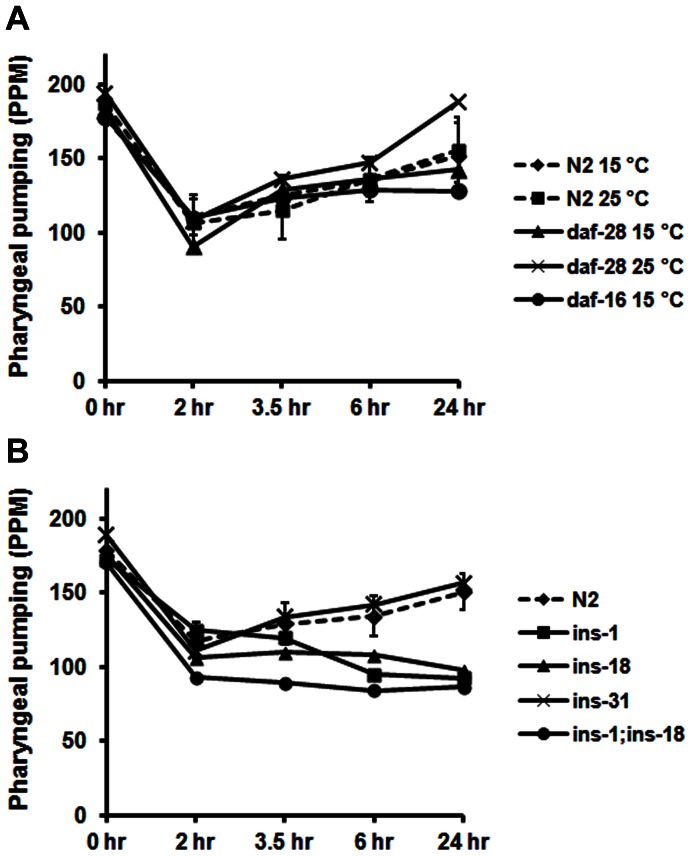
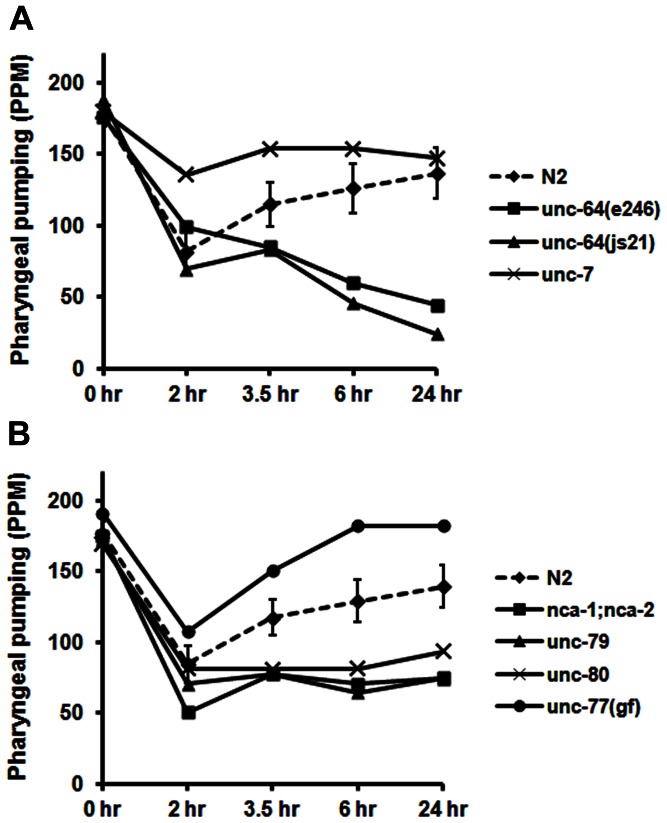
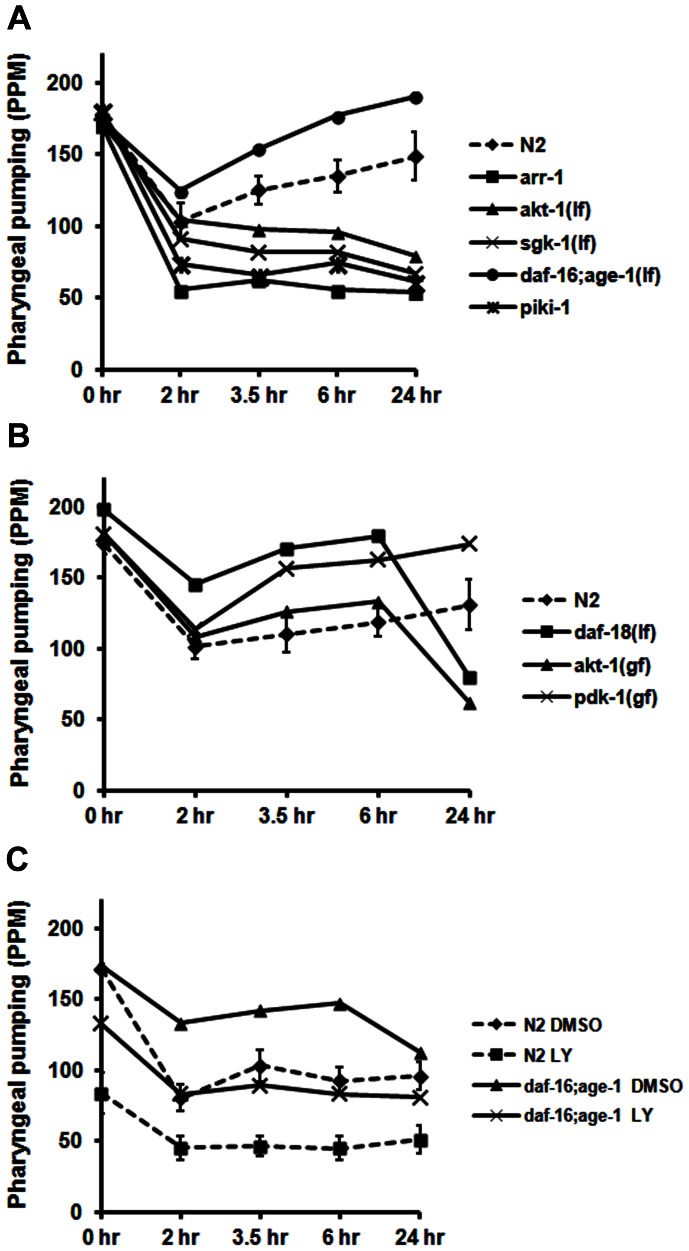
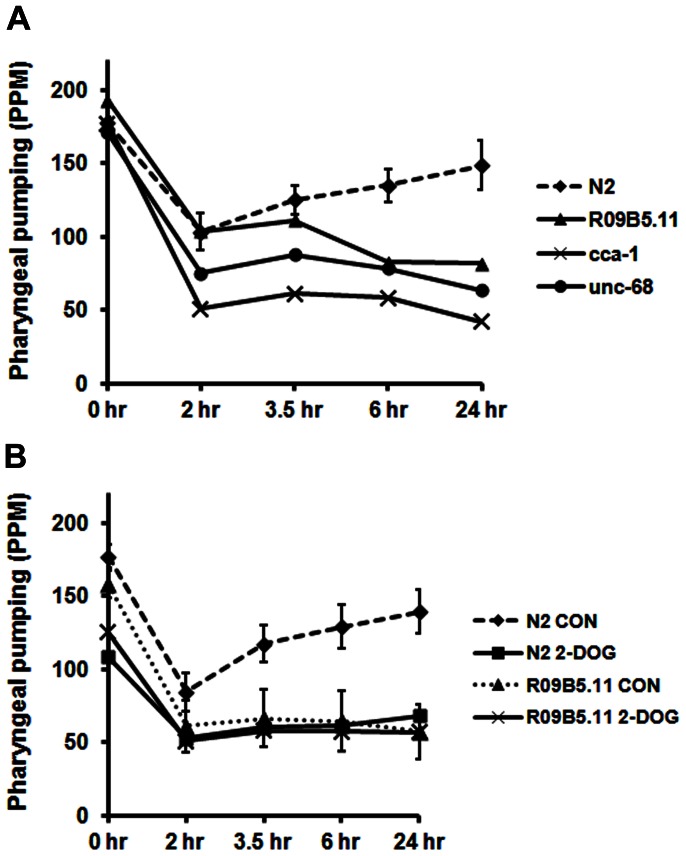
In C. elegans, pharyngeal pumping is regulated by the presence of bacteria. In response to food deprivation, the pumping rate rapidly declines by about 50-60%, but then recovers gradually to baseline levels on food after 24 hr. We used this system to study the role of insulin/IGF-1 signaling (IIS) in the recovery of pharyngeal pumping during starvation. Mutant strains with reduced function in the insulin/IGF-1 receptor, DAF-2, various insulins (INS-1 and INS-18), and molecules that regulate insulin release (UNC-64 and NCA-1; NCA-2) failed to recover normal pumping rates after food deprivation. Similarly, reduction or loss of function in downstream signaling molecules (e.g., ARR-1, AKT-1, and SGK-1) and effectors (e.g., CCA-1 and UNC-68) impaired pumping recovery. Pharmacological studies with kinase and metabolic inhibitors implicated class II/III phosphatidylinositol 3-kinases (PI3Ks) and glucose metabolism in the recovery response. Interestingly, both over- and under-activity in IIS was associated with poorer recovery kinetics. Taken together, the data suggest that optimum levels of IIS are required to maintain high levels of pharyngeal pumping during starvation. This work may ultimately provide insights into the connections between IIS, nutritional status and sarcopenia, a hallmark feature of aging in muscle.
在秀丽隐杆线虫中,咽泵的活动受到细菌存在的调节。在食物匮乏的情况下,泵的活动速率会迅速下降约 50-60%,但在 24 小时后重新进食时,会逐渐恢复到基线水平。我们利用这个系统来研究胰岛素/IGF-1 信号通路 (IIS) 在饥饿时咽泵活动恢复中的作用。胰岛素/IGF-1 受体 DAF-2、各种胰岛素(INS-1 和 INS-18)以及调节胰岛素释放的分子(UNC-64 和 NCA-1;NCA-2)功能降低的突变株在饥饿后无法恢复正常的泵活动速率。同样,下游信号分子(例如,ARR-1、AKT-1 和 SGK-1)和效应分子(例如,CCA-1 和 UNC-68)的减少或功能丧失也会损害泵活动的恢复。激酶和代谢抑制剂的药理学研究表明,II 类/III 类磷酸肌醇 3-激酶 (PI3Ks) 和葡萄糖代谢参与了恢复反应。有趣的是,IIS 的过度和不足活动都与较差的恢复动力学有关。综上所述,这些数据表明,在饥饿期间,需要最优水平的 IIS 来维持高水平的咽泵活动。这项工作最终可能会为 IIS、营养状况和肌肉减少症(衰老时肌肉的一个标志特征)之间的联系提供深入的了解。