Department of Molecular Neuro-Oncology, Howard Hughes Medical Institute, The Rockefeller University, New York, NY 10065, USA.
Annu Rev Neurosci. 2013 Jul 8;36:243-70. doi: 10.1146/annurev-neuro-062912-114322. Epub 2013 May 20.
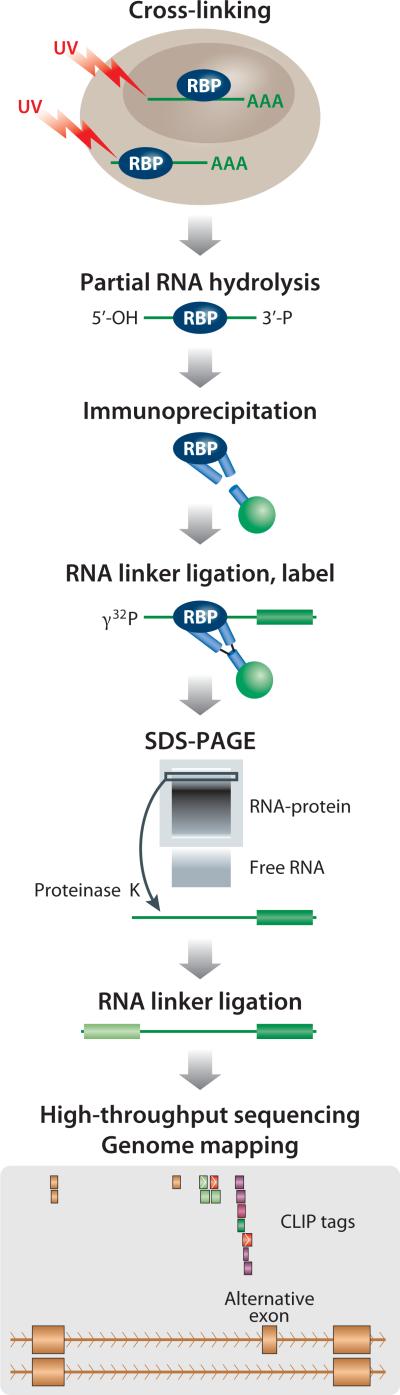
Neurons have their own systems for regulating RNA. Several multigene families encode RNA binding proteins (RNABPs) that are uniquely expressed in neurons, including the well-known neuron-specific markers ELAV and NeuN and the disease antigen NOVA. New technologies have emerged in recent years to assess the function of these proteins in vivo, and the answers are yielding insights into how and why neurons may regulate RNA in special ways-to increase cellular complexity, to localize messenger RNA (mRNA) spatially, and to regulate their expression in response to synaptic stimuli. The functions of such restricted neuronal proteins are likely to be complemented by more widely expressed RNABPs that may themselves have developed specialized functions in neurons, including Argonaute/microRNAs (miRNAs). Here we review what is known about such RNABPs and explore the potential biologic and neurologic significance of neuronal RNA regulatory systems.
神经元有自己的 RNA 调节系统。几个多基因家族编码 RNA 结合蛋白(RNABP),这些蛋白在神经元中特异表达,包括著名的神经元特异性标志物 ELAV 和 NeuN 以及疾病抗原 NOVA。近年来出现了一些新技术来评估这些蛋白质在体内的功能,这些答案为我们提供了一些见解,了解神经元如何以及为何可能以特殊方式调节 RNA,以增加细胞复杂性、空间定位信使 RNA(mRNA)并响应突触刺激来调节其表达。这些受限的神经元蛋白的功能可能会被更广泛表达的 RNABP 所补充,这些蛋白本身可能在神经元中发展出了专门的功能,包括 Argonaute/ microRNAs(miRNAs)。在这里,我们回顾了这些 RNABP 的已知知识,并探讨了神经元 RNA 调节系统的潜在生物学和神经学意义。