Howard Hughes Medical Institute, St. Jude Children's Research Hospital, Memphis, TN 38105, USA.
Structure. 2013 Jun 4;21(6):1030-41. doi: 10.1016/j.str.2013.04.019. Epub 2013 May 23.
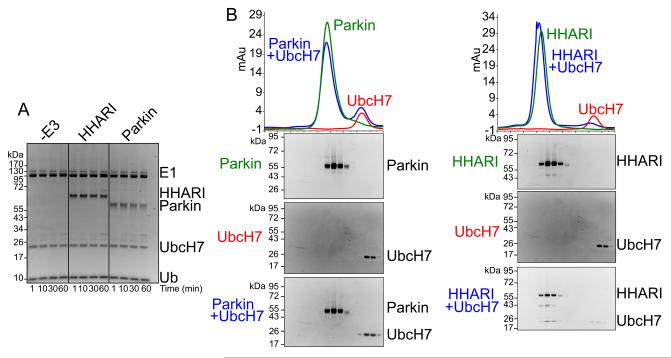
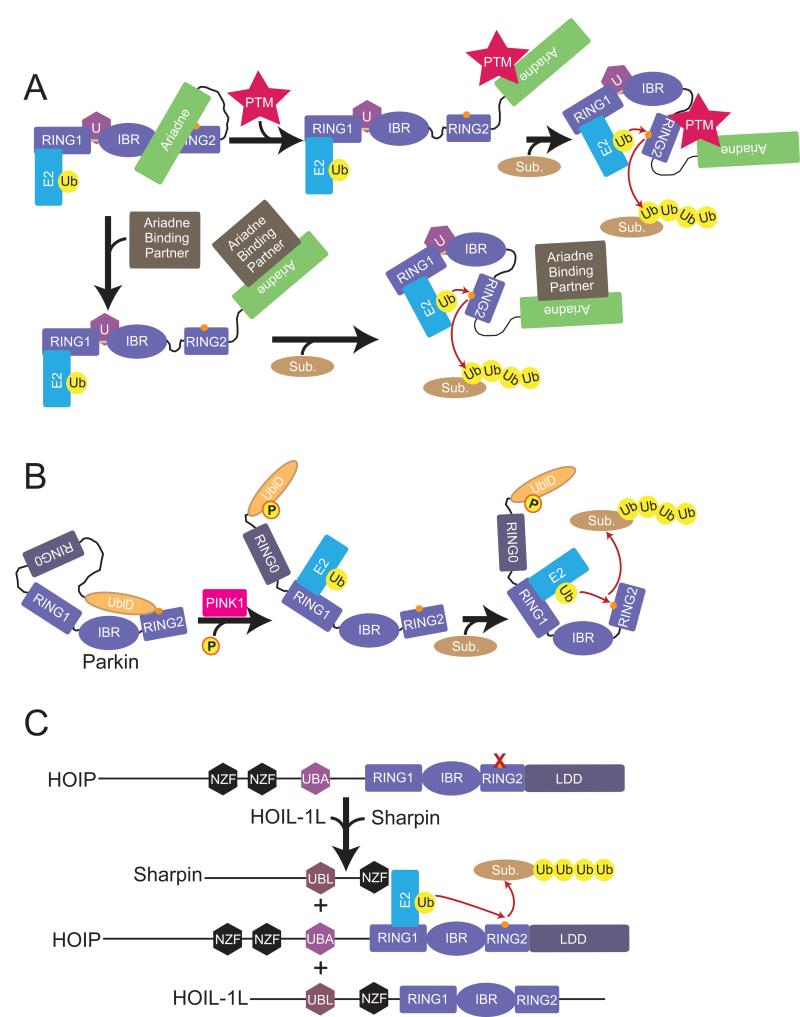
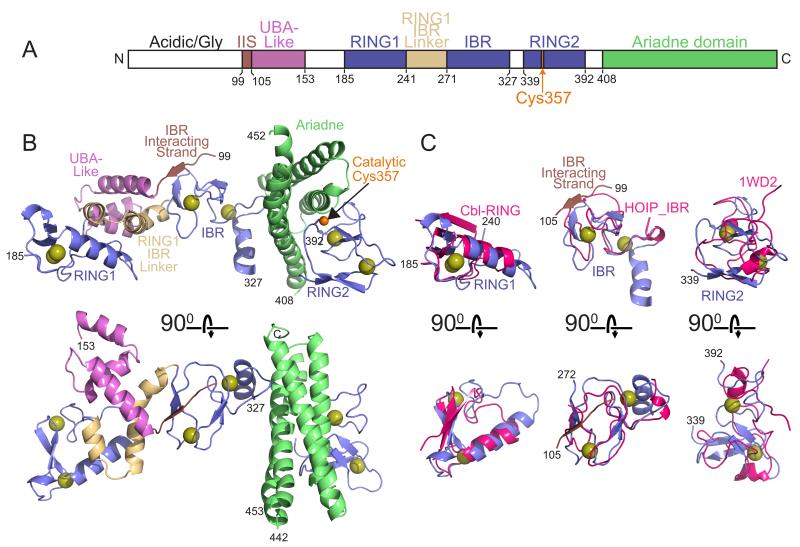
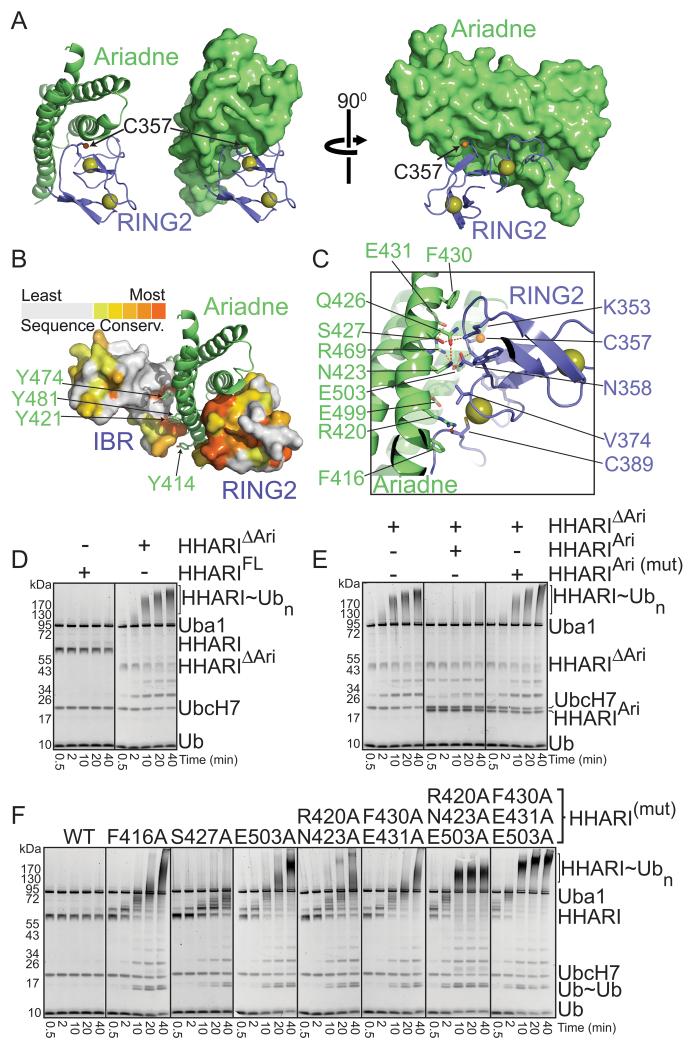
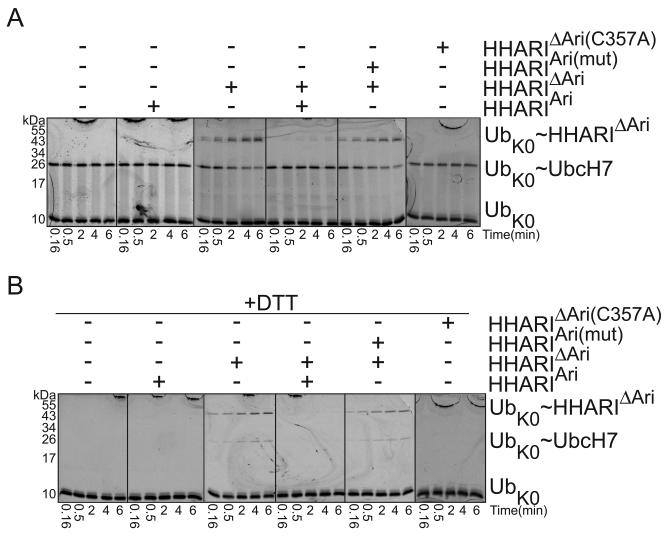
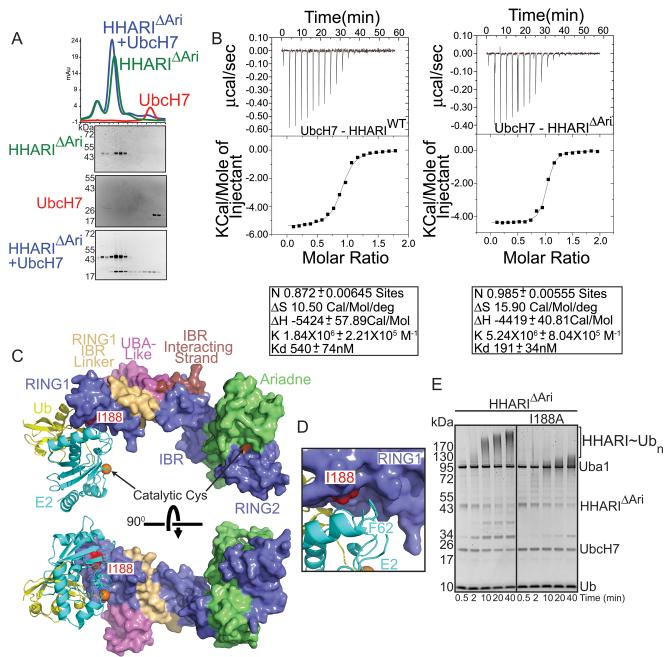
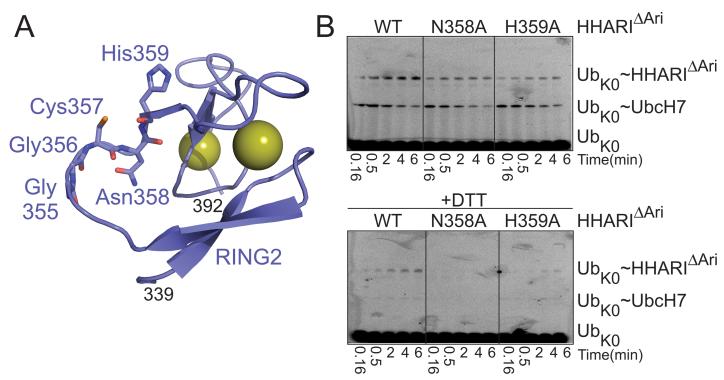
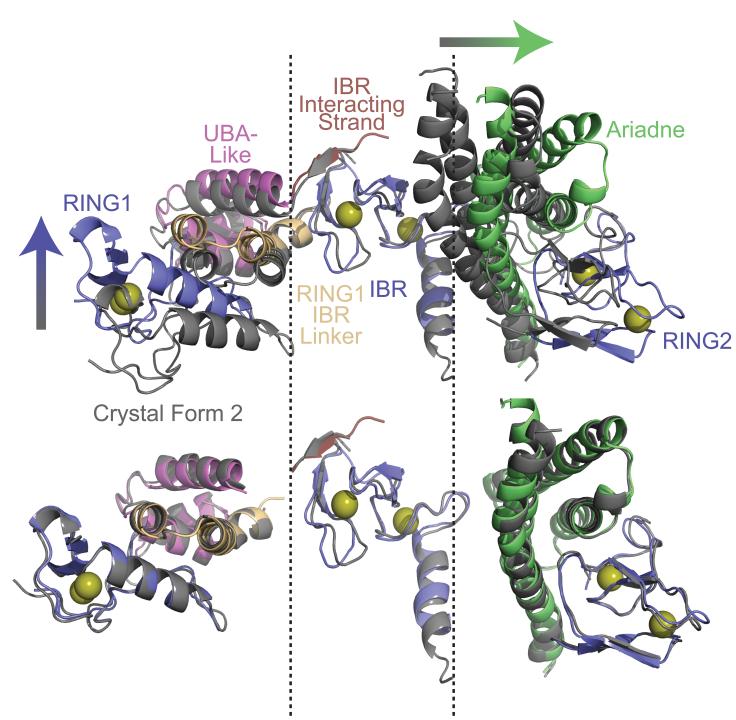
A distinct mechanism for ubiquitin (Ub) ligation has recently been proposed for the RING1-IBR-RING2 (RBR) family of E3s: an N-terminal RING1 domain recruits a thioester-linked intermediate complex between Ub and the E2 UbcH7, and a structurally distinct C-terminal RING2 domain displays a catalytic cysteine required for Ub ligation. To obtain insights into RBR E3s, we determined the crystal structure of the human homolog of Ariadne (HHARI), which reveals the individual RING1, IBR, and RING2 domains embedded in superdomains involving sequences specific to the Ariadne RBR subfamily. The central IBR is flanked on one side by RING1, which is exposed and binds UbcH7. On the other side, a C-terminal autoinhibitory "Ariadne domain" masks the RING2 active site. Insights into RBR E3 mechanisms are provided by structure-based mutations that indicate distinct steps of relief from autoinhibition, Ub transfer from E2 to HHARI, and ligation from the HHARI cysteine to a terminal acceptor.
最近提出了一种 RING1-IBR-RING2 (RBR) 家族 E3s 的泛素 (Ub) 连接的独特机制:N 端 RING1 结构域募集 Ub 和 E2 UbcH7 之间的硫酯连接中间复合物,结构上不同的 C 端 RING2 结构域显示出催化半胱氨酸,用于 Ub 连接。为了深入了解 RBR E3,我们确定了人类 Ariadne (HHARI) 同源物的晶体结构,该结构揭示了嵌入涉及特定于 Ariadne RBR 亚家族的序列的超结构中的单个 RING1、IBR 和 RING2 结构域。中央 IBR 一侧被 RING1 包围,RING1 暴露并结合 UbcH7。在另一侧,C 端自动抑制的“Ariadne 结构域”掩盖了 RING2 活性位点。基于结构的突变提供了 RBR E3 机制的深入了解,这些突变表明自动抑制的解除、Ub 从 E2 转移到 HHARI 以及 HHARI 半胱氨酸与末端受体的连接的不同步骤。