Instituto Aragones de Ciencias de la Salud-IIS Aragon, Zaragoza, Spain.
BMC Med. 2013 May 28;11:139. doi: 10.1186/1741-7015-11-139.
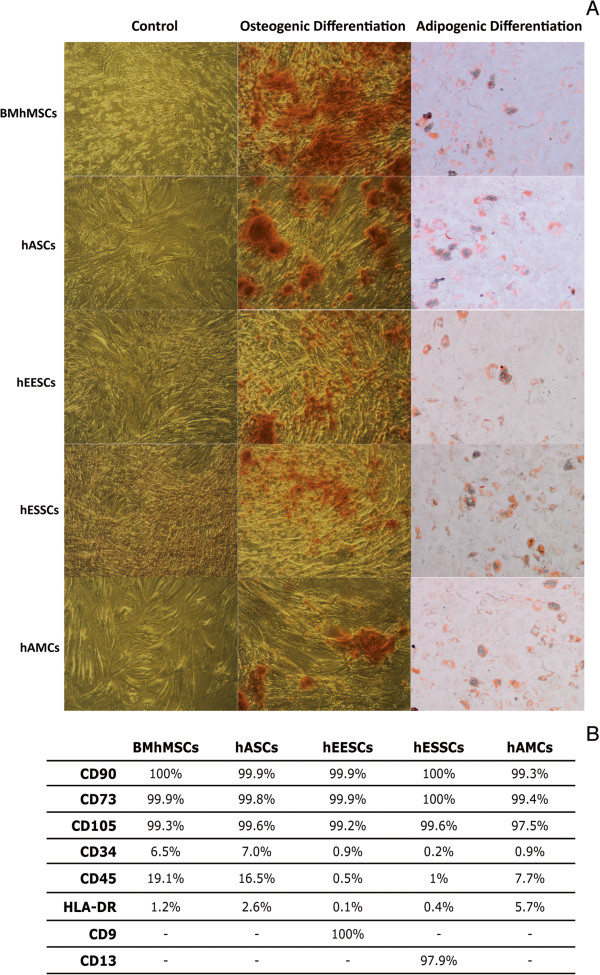
Mesenchymal stem cells (MSCs) have been promoted as an attractive option to use as cellular delivery vehicles to carry anti-tumor agents, owing to their ability to home into tumor sites and secrete cytokines. Multiple isolated populations have been described as MSCs, but despite extensive in vitro characterization, little is known about their in vivo behavior.The aim of this study was to investigate the efficacy and efficiency of different MSC lineages derived from five different sources (bone marrow, adipose tissue, epithelial endometrium, stroma endometrium, and amniotic membrane), in order to assess their adequacy for cell-based anti-tumor therapies. Our study shows the crucial importance of understanding the interaction between MSCs and tumor cells, and provides both information and a methodological approach, which could be used to develop safer and more accurate targeted therapeutic applications.
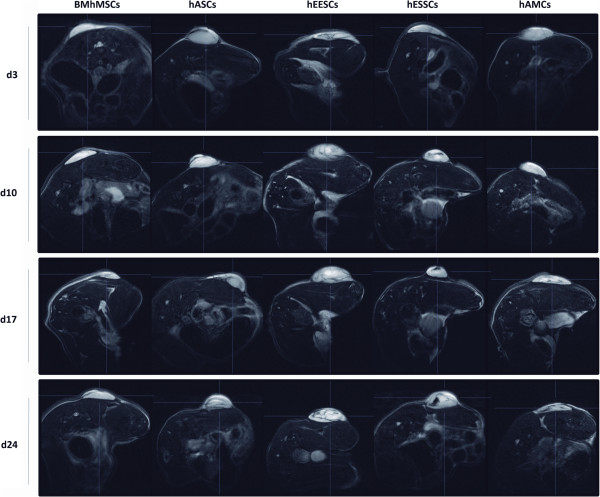
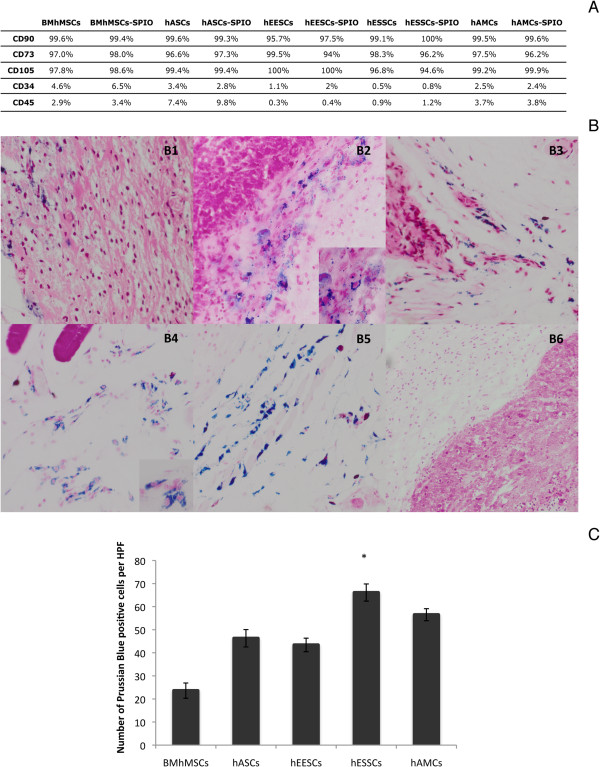
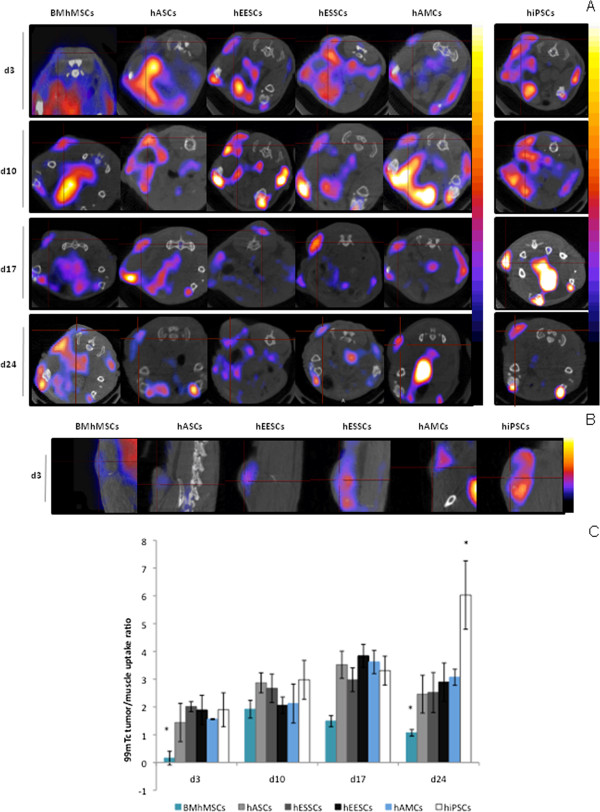
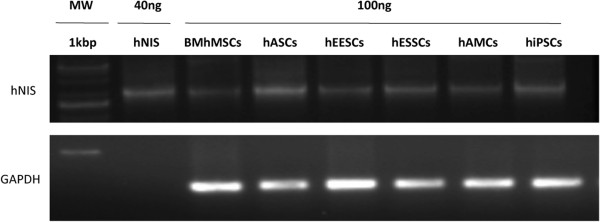
We first measured the in vivo migration capacity and effect on tumor growth of the different MSCs using two imaging techniques: (i) single-photon emission computed tomography combined with computed tomography (SPECT-CT), using the human sodium iodine symporter gene (hNIS) and (ii) magnetic resonance imaging using superparamagnetic iron oxide. We then sought correlations between these parameters and expression of pluripotency-related or migration-related genes.
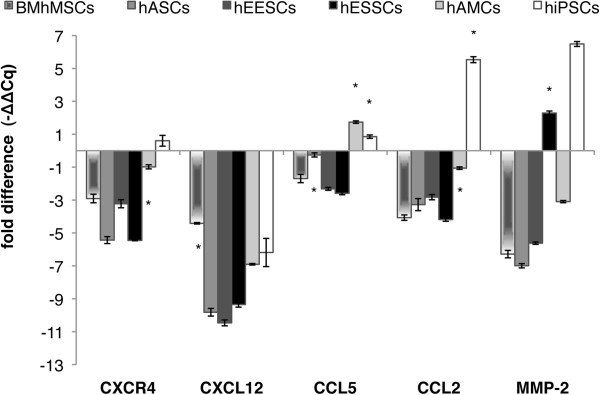
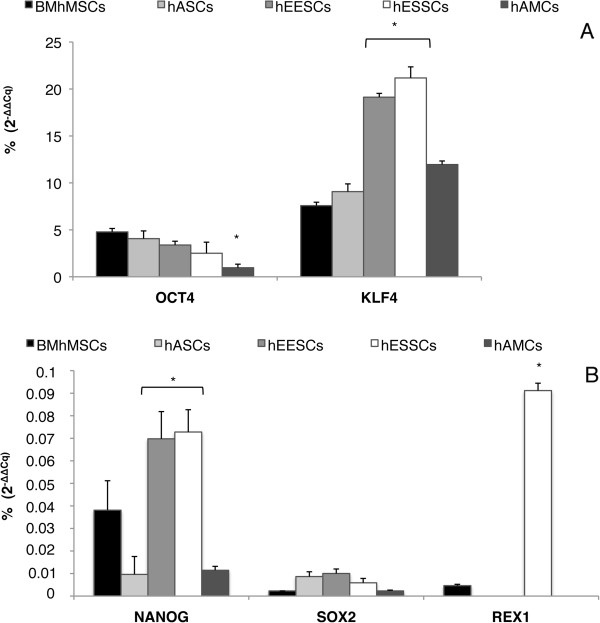
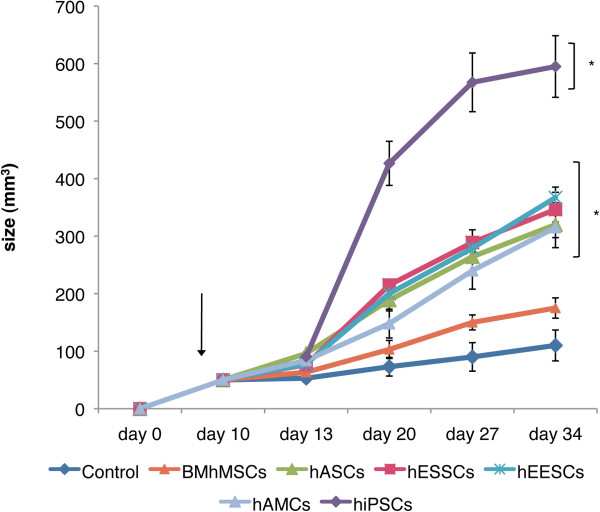
Our results show that migration of human bone marrow-derived MSCs was significantly reduced and slower than that obtained with the other MSCs assayed and also with human induced pluripotent stem cells (hiPSCs). The qPCR data clearly show that MSCs and hiPSCs exert a very different pluripotency pattern, which correlates with the differences observed in their engraftment capacity and with their effects on tumor growth.
This study reveals differences in MSC recruitment/migration toward the tumor site and the corresponding effects on tumor growth. Three observations stand out: 1) tracking of the stem cell is essential to check the safety and efficacy of cell therapies; 2) the MSC lineage to be used in the cell therapy needs to be carefully chosen to balance efficacy and safety for a particular tumor type; and 3) different pluripotency and mobility patterns can be linked to the engraftment capacity of the MSCs, and should be checked as part of the clinical characterization of the lineage.
间充质干细胞(MSCs)因其能够归巢至肿瘤部位并分泌细胞因子而被视为一种有吸引力的选择,可作为细胞递药载体来携带抗肿瘤药物。已经描述了多种分离的群体作为 MSCs,但尽管进行了广泛的体外表征,对其体内行为知之甚少。本研究旨在探讨源自五个不同来源(骨髓、脂肪组织、上皮子宫内膜、基质子宫内膜和羊膜)的不同 MSC 谱系的功效和效率,以评估它们用于基于细胞的抗肿瘤治疗的适当性。我们的研究表明,了解 MSCs 与肿瘤细胞之间的相互作用至关重要,并提供了信息和方法学方法,可用于开发更安全、更准确的靶向治疗应用。
我们首先使用两种成像技术(i)单光子发射计算机断层扫描与计算机断层扫描(SPECT-CT)结合,使用人碘钠同向转运体基因(hNIS)和(ii)磁共振成像使用超顺磁性氧化铁,测量不同 MSC 的体内迁移能力和对肿瘤生长的影响。然后,我们寻求这些参数与多能性相关或迁移相关基因表达之间的相关性。
我们的结果表明,人骨髓来源的 MSC 的迁移明显减少且速度较慢,比检测到的其他 MSC 和人诱导多能干细胞(hiPSC)都慢。qPCR 数据清楚地表明,MSC 和 hiPSC 表现出非常不同的多能性模式,这与它们的植入能力和对肿瘤生长的影响观察到的差异相关。
这项研究揭示了 MSC 向肿瘤部位募集/迁移的差异及其对肿瘤生长的相应影响。有三个观察结果:1)追踪干细胞对于检查细胞治疗的安全性和功效至关重要;2)在细胞治疗中使用的 MSC 谱系需要仔细选择,以平衡特定肿瘤类型的功效和安全性;3)不同的多能性和迁移模式可以与 MSC 的植入能力相关联,并且应该作为谱系临床表征的一部分进行检查。