Department of Tissue Engineering, School of Advanced Technologies in Medicine, Tehran University of Medical Sciences, Tehran, Iran.
Craniomaxillofacial Research Center, Tehran University of Medical Sciences, Tehran, Iran.
Asian Pac J Cancer Prev. 2023 Feb 1;24(2):649-658. doi: 10.31557/APJCP.2023.24.2.649.
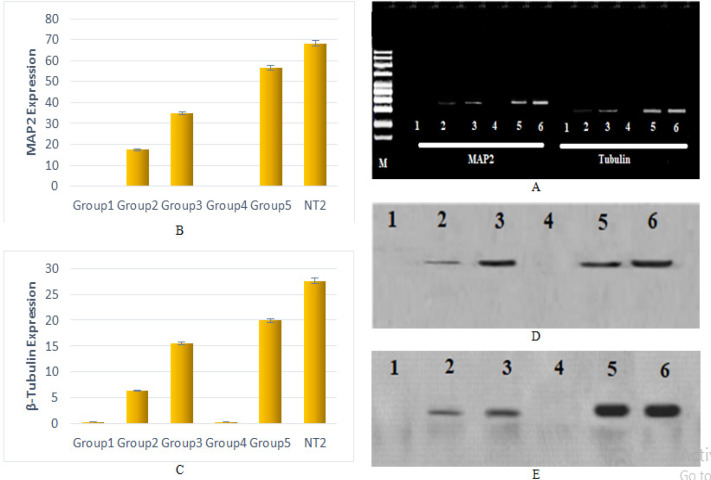
The human third molar's follicle is one of the sources of stem cells with high differentiation capacities which can be used in nervous system cancer treatment particularly in nerve damge. The purpose of this research was to identify the effects of the aqueous extract of Salvia chloroleuca on the differentiation of the human dental follicle-derived mesenchymal stem cells to neural cells for treti. In this experimental study, the method of culture of digested tissue fragments was used to isolate stem cells from three samples of the extracted wisdom teeth follicles. The nano-hyaluronic acid scaffold has been synthesized by the sol-gel method as a porous composite and the S. chloroleuca extract has been loaded into it. The scaffold was analyzed in terms of mechanical properties, drug release and toxicity. Afterwards, the cells were seeded onto the scaffold using the immersion method. After 21 days, cell differentiation was investigated by morphological confirmation methods and confirming the expression of β-tubulin and MAP2 genes at mRNA and protein levels. Morphological assessment revealed neural differentiation in the cells of the groups of nano-hyaluronic acid scaffold with S. chloroleuca extract and nano-hyaluronic acid scaffold with S. chloroleuca extract + 10% retinoic acid. Furthermore, the expression of MAP2 and β-tubulin in these groups was confirmed by RT-PCR, real time PCR and western blot assays. The results of this research showed that the follicle of the third molar contains stem cells with a high capacity for differentiation. Moreover, the extract of S. chloroleuca, could lead to induction of neural differentiation in stem cells.
人类第三磨牙的滤泡是具有高分化能力的干细胞来源之一,可用于神经系统癌症治疗,特别是在神经损伤方面。本研究的目的是鉴定唇形科鼠尾草水提物对人牙滤泡间充质干细胞向神经细胞分化的影响。在这项实验研究中,采用消化组织碎片的培养方法,从三个提取的智齿滤泡样本中分离干细胞。采用溶胶-凝胶法合成纳米透明质酸支架作为多孔复合材料,并将 S. chloroleuca 提取物加载到其中。对支架进行了机械性能、药物释放和毒性分析。然后,采用浸泡法将细胞接种到支架上。21 天后,通过形态学确认方法和β-微管蛋白和 MAP2 基因在 mRNA 和蛋白质水平上的表达来研究细胞分化。形态学评估显示,纳米透明质酸支架加 S. chloroleuca 提取物组和纳米透明质酸支架加 S. chloroleuca 提取物+10%维甲酸组的细胞发生了神经分化。此外,通过 RT-PCR、实时 PCR 和 Western blot 分析证实了这些组中 MAP2 和 β-微管蛋白的表达。本研究结果表明,第三磨牙滤泡中含有具有高分化能力的干细胞。此外,S. chloroleuca 提取物可诱导干细胞向神经分化。