Grupo de Ortodoncia, Facultad de Odontología. Universidad de Sevilla, Barcelona, Spain.
Med Oral Patol Oral Cir Bucal. 2013 Jul 1;18(4):e721-4. doi: 10.4317/medoral.19073.
NiTi spring coils were used to obtain large deformation under a constant force. The device consists on a NiTi coil spring, superelastic at body temperature, in order to have a stress plateau during the austenitic retransformation during the unloading. The temperature variations induced changes in the spring force.
The aim of this study is to investigate the effect of the temperature variations in the spring forces and corrosion behaviour simulating the ingestion hot/cold drinks and food.
The springs were subjected to a tensile force using universal testing machine MTS-Adamel (100 N load cell). All tests were performed in artificial saliva maintained at different temperatures. The corrosion tests were performed according to the ISO-standard 10993-15:2000.
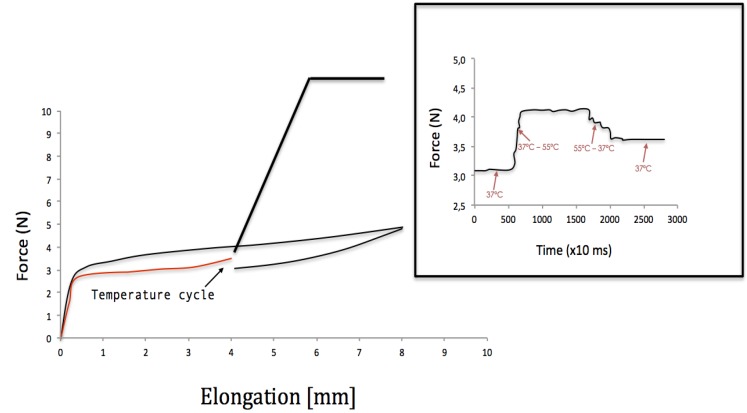
The increase in temperature of 18 °C induced an increase in the spring force of 30%. However, when the temperature returns to 37 °C the distraction force recovers near the initial level. After cooling down the spring to 15 °C, the force decreased by 46%. This investigation show as the temperature increase, the corrosion potential shifts towards negative values and the corrosion density is rising.
The changes of the temperatures do not modify the superelastic behaviour of the NiTi closed-coil springs. The corrosion potential of NiTi in artificial saliva is decreasing by the rise of the temperatures.
镍钛合金弹簧线圈在恒力作用下产生大变形。该装置由镍钛合金螺旋弹簧组成,在体温下超弹性,以便在卸载过程中奥氏体相变时产生应力平台。温度变化引起弹簧力的变化。
本研究旨在探讨温度变化对弹簧力的影响以及模拟摄入热/冷饮和食物的腐蚀行为。
使用万能试验机 MTS-Adamel(100 N 载荷单元)对弹簧施加拉力。所有测试均在不同温度的人工唾液中进行。腐蚀测试根据 ISO 标准 10993-15:2000 进行。
温度升高 18°C 会导致弹簧力增加 30%。然而,当温度恢复到 37°C 时,伸展力会恢复到接近初始水平。将弹簧冷却至 15°C 后,力下降了 46%。这项研究表明,随着温度的升高,腐蚀电位向负值移动,腐蚀密度上升。
温度变化不会改变镍钛封闭线圈弹簧的超弹性行为。镍钛在人工唾液中的腐蚀电位随着温度的升高而降低。