Department of Biomedical Engineering, W.J. Kolff Institute, University Medical Center Groningen and University of Groningen, Groningen, The Netherlands.
PLoS One. 2013 May 27;8(5):e63750. doi: 10.1371/journal.pone.0063750. Print 2013.
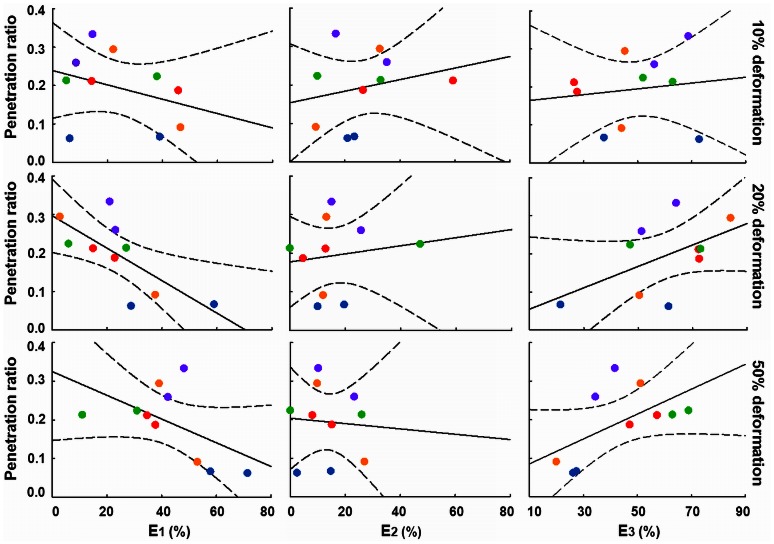
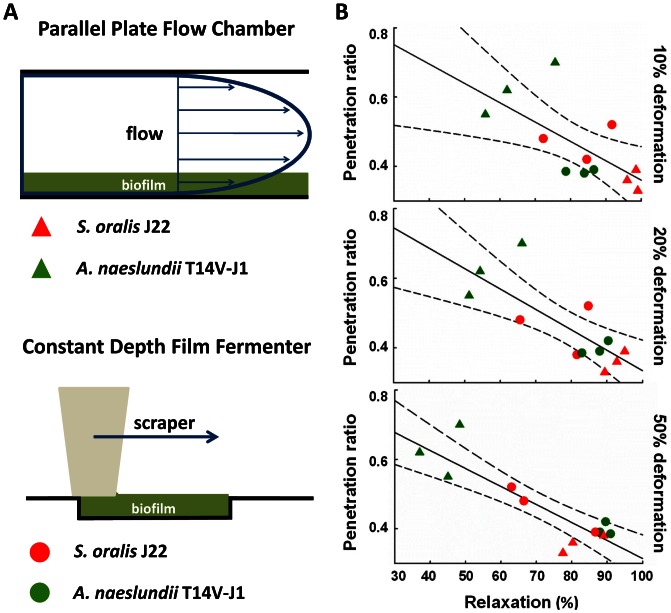
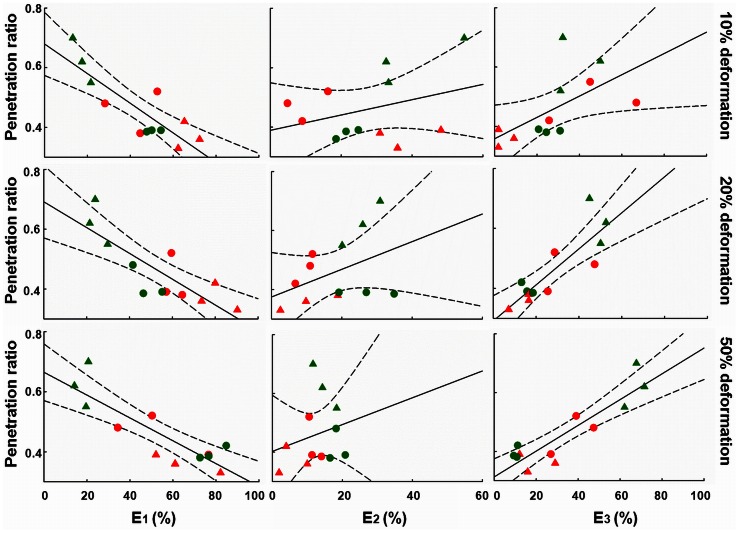
Biofilm-related infections can develop everywhere in the human body and are rarely cleared by the host immune system. Moreover, biofilms are often tolerant to antimicrobials, due to a combination of inherent properties of bacteria in their adhering, biofilm mode of growth and poor physical penetration of antimicrobials through biofilms. Current understanding of biofilm recalcitrance toward antimicrobial penetration is based on qualitative descriptions of biofilms. Here we hypothesize that stress relaxation of biofilms will relate with antimicrobial penetration. Stress relaxation analysis of single-species oral biofilms grown in vitro identified a fast, intermediate and slow response to an induced deformation, corresponding with outflow of water and extracellular polymeric substances, and bacterial re-arrangement, respectively. Penetration of chlorhexidine into these biofilms increased with increasing relative importance of the slow and decreasing importance of the fast relaxation element. Involvement of slow relaxation elements suggests that biofilm structures allowing extensive bacterial re-arrangement after deformation are more open, allowing better antimicrobial penetration. Involvement of fast relaxation elements suggests that water dilutes the antimicrobial upon penetration to an ineffective concentration in deeper layers of the biofilm. Next, we collected biofilms formed in intra-oral collection devices bonded to the buccal surfaces of the maxillary first molars of human volunteers. Ex situ chlorhexidine penetration into two weeks old in vivo formed biofilms followed a similar dependence on the importance of the fast and slow relaxation elements as observed for in vitro formed biofilms. This study demonstrates that biofilm properties can be derived that quantitatively explain antimicrobial penetration into a biofilm.
生物膜相关感染可以在人体的任何部位发生,并且很少被宿主免疫系统清除。此外,生物膜通常对抗生素具有耐受性,这是由于细菌在附着时的固有特性、生物膜生长方式以及抗生素通过生物膜的物理渗透不良的综合作用。目前对抗生素渗透生物膜抗性的理解是基于对生物膜的定性描述。在这里,我们假设生物膜的应力松弛与抗生素渗透有关。体外培养的单种口腔生物膜的单分子松弛分析确定了对诱导变形的快速、中间和缓慢响应,分别对应于水和细胞外聚合物的流出以及细菌的重新排列。氯己定渗透到这些生物膜中,随着缓慢松弛元素的相对重要性增加和快速松弛元素的重要性降低而增加。缓慢松弛元素的参与表明,在变形后允许细菌进行广泛重排的生物膜结构更加开放,允许更好的抗生素渗透。快速松弛元素的参与表明,水在渗透过程中会将抗生素稀释到生物膜深层的无效浓度。接下来,我们收集了在人的上颌第一磨牙颊面黏附的口腔内收集装置中形成的生物膜。体外氯己定渗透到两周龄的体内形成的生物膜,其依赖于快速和缓慢松弛元素的重要性与体外形成的生物膜相似。这项研究表明,可以得出定量解释抗生素渗透到生物膜的生物膜特性。