Department of Pathology, Anatomy and Cell Biology, Thomas Jefferson University, Philadelphia, Pennsylvania, United States of America.
PLoS One. 2013 May 28;8(5):e63794. doi: 10.1371/journal.pone.0063794. Print 2013.
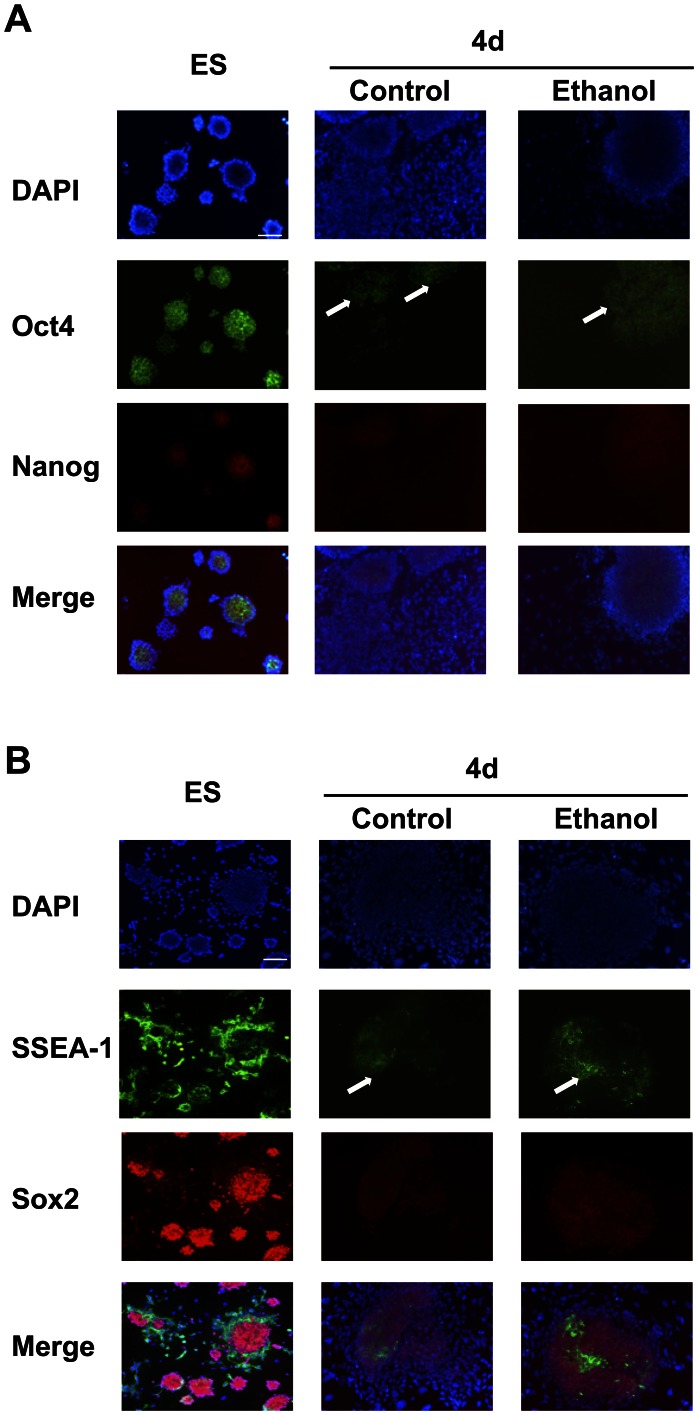
Ethanol is a toxin responsible for the neurodevelopmental deficits of Fetal Alcohol Spectrum Disorders (FASD). Recent evidence suggests that ethanol modulates the protein expression of lineage specifier transcription factors Oct4 (Pou5f1) and Sox2 in early stages of mouse embryonic stem (ES) cell differentiation. We hypothesized that ethanol induced an imbalance in the expression of Oct4 and Sox2 in early differentiation, that dysregulated the expression of associated and target genes and signaling molecules and diverted cells from neuroectodermal (NE) formation.
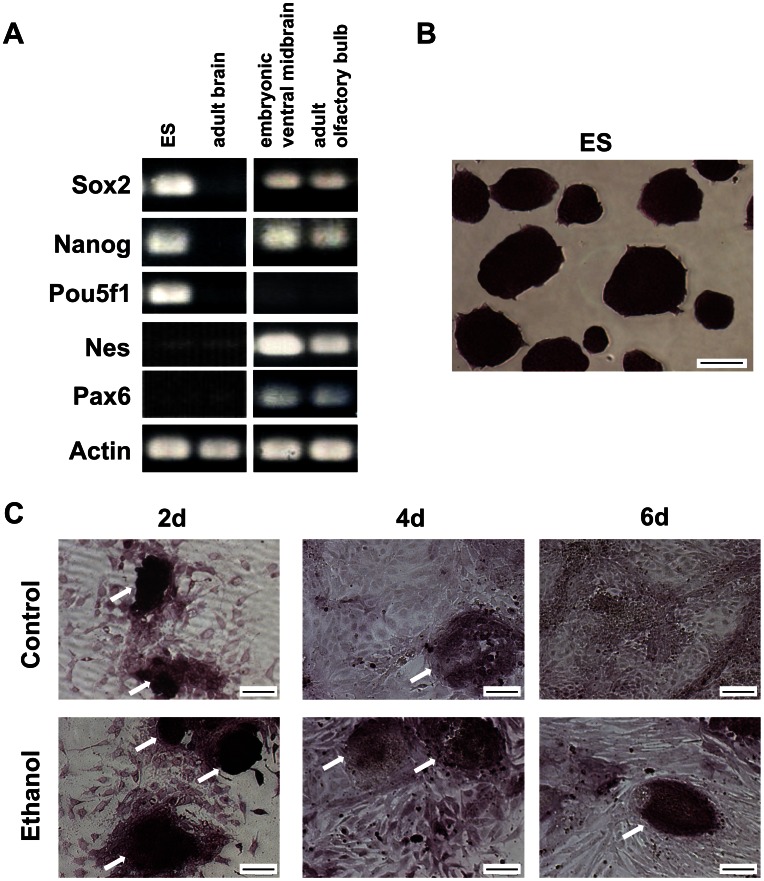
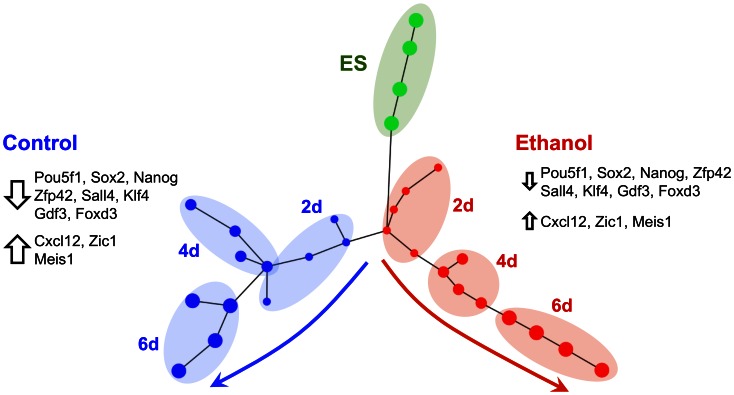
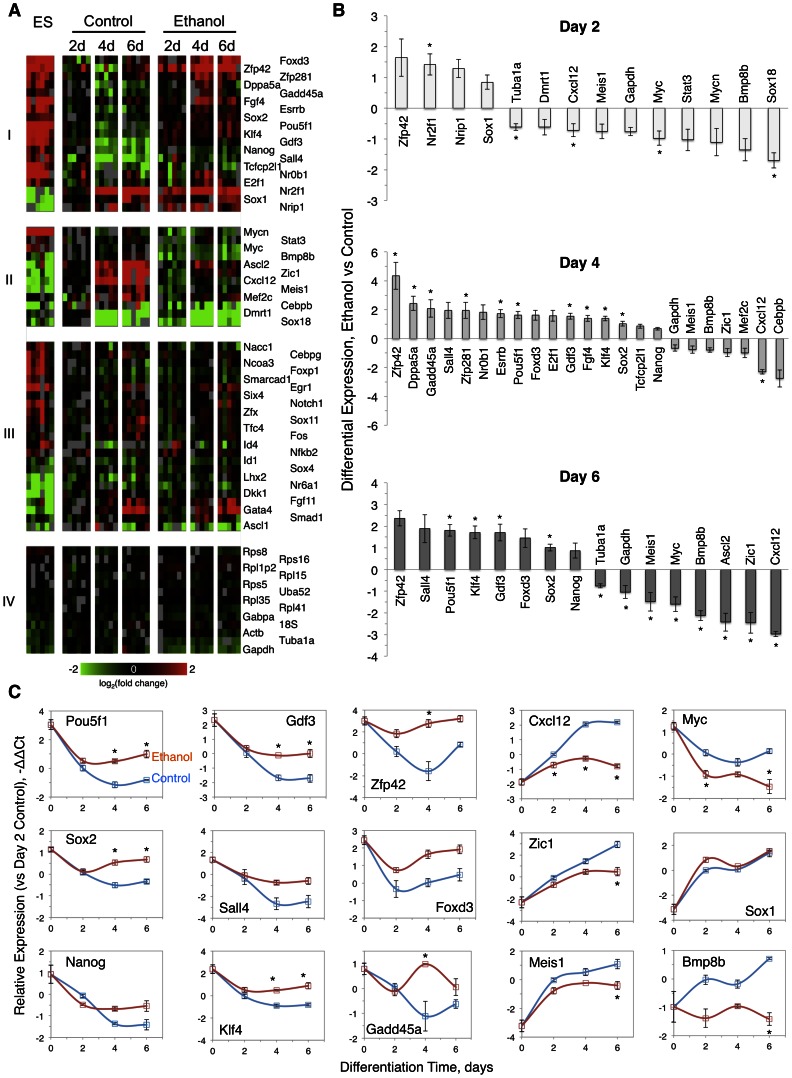
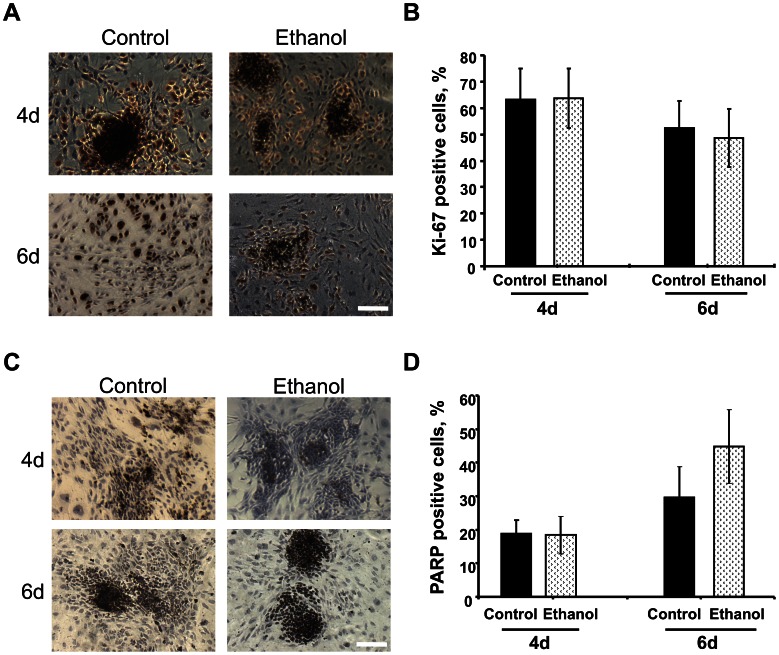
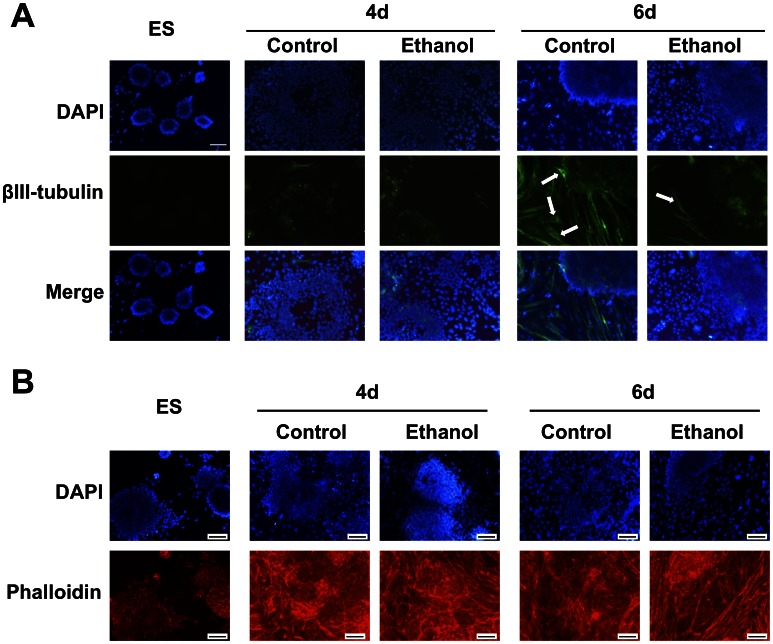
METHODOLOGY/PRINCIPAL FINDINGS: We showed modulation by ethanol of 33 genes during ES cell differentiation, using high throughput microfluidic dynamic array chips measuring 2,304 real time quantitative PCR assays. Based on the overall gene expression dynamics, ethanol drove cells along a differentiation trajectory away from NE fate. These ethanol-induced gene expression changes were observed as early as within 2 days of differentiation, and were independent of cell proliferation or apoptosis. Gene expression changes were correlated with fewer βIII-tubulin positive cells of an immature neural progenitor phenotype, as well as a disrupted actin cytoskeleton were observed. Moreover, Tuba1a and Gapdh housekeeping genes were modulated by ethanol during differentiation and were replaced by a set of ribosomal genes with stable expression.
CONCLUSIONS/SIGNIFICANCE: These findings provided an ethanol-response gene signature and pointed to the transcriptional dynamics underlying lineage imbalance that may be relevant to FASD phenotype.
乙醇是导致胎儿酒精谱系障碍(FASD)神经发育缺陷的毒素。最近的证据表明,乙醇在早期小鼠胚胎干细胞(ES)细胞分化过程中调节谱系决定转录因子 Oct4(Pou5f1)和 Sox2 的蛋白表达。我们假设乙醇在早期分化过程中引起了 Oct4 和 Sox2 表达的失衡,失调了相关和靶基因的表达以及信号分子,使细胞偏离神经外胚层(NE)形成。
方法/主要发现:我们使用高通量微流控动态阵列芯片测量了 2304 个实时定量 PCR 检测,证明了乙醇在 ES 细胞分化过程中对 33 个基因的调节。基于整体基因表达动态,乙醇驱动细胞沿着远离 NE 命运的分化轨迹前进。这些乙醇诱导的基因表达变化早在分化的 2 天内就观察到了,并且与细胞增殖或凋亡无关。基因表达变化与较少的βIII-微管蛋白阳性细胞(不成熟神经前体细胞表型)以及观察到的肌动蛋白细胞骨架破坏有关。此外,乙醇在分化过程中调节了 Tuba1a 和 Gapdh 管家基因,并用一组具有稳定表达的核糖体基因取代。
结论/意义:这些发现提供了一个乙醇反应基因特征,并指出了与谱系失衡相关的转录动态,这可能与 FASD 表型有关。