Department of Pathology and Immunology, Baylor College of Medicine, Houston, Tex.
Graduate School of Medical Science and Engineering, KAIST, Daejeon, Korea.
J Allergy Clin Immunol. 2014 Jan;133(1):189-97.e1-8. doi: 10.1016/j.jaci.2013.03.049. Epub 2013 May 29.
TH2-dependent diseases vary in severity according to genotype, but relevant gene polymorphisms remain largely unknown. The integrin CD11a is a critical determinant of allergic responses, and allelic variants of this gene might influence allergic phenotypes.
We sought to determine major CD11a allelic variants in mice and human subjects and their importance to allergic disease expression.
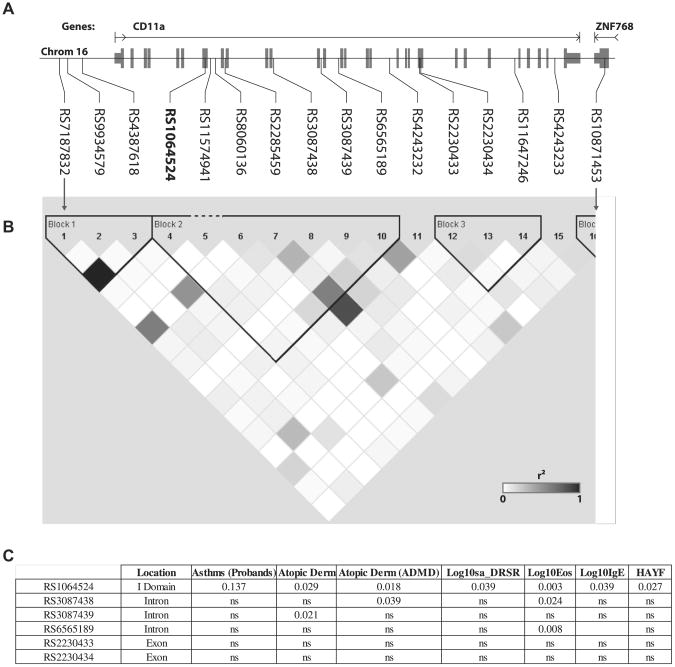
We sequenced mouse CD11a alleles from C57BL/6 and BALB/c strains to identify major polymorphisms; human CD11a single nucleotide polymorphisms were compared with allergic disease phenotypes as part of the international HapMap project. Mice on a BALB/c or C57BL/6 background and congenic for the other strain's CD11a allele were created to determine the importance of mouse CD11a polymorphisms in vivo and in vitro.
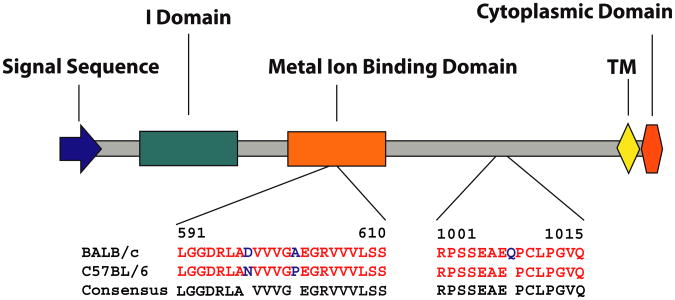
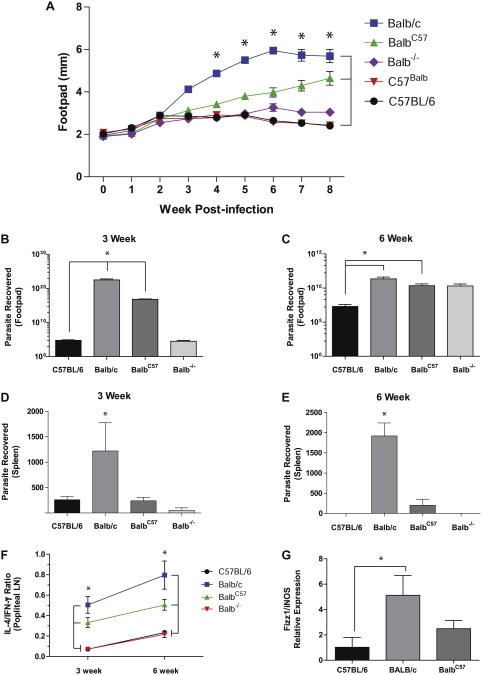
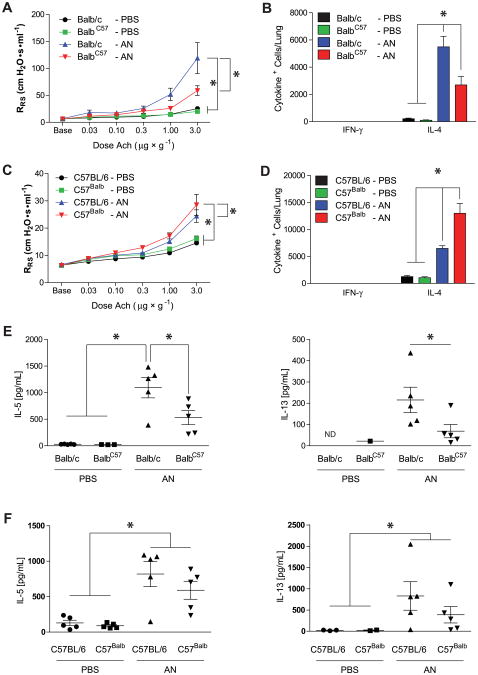
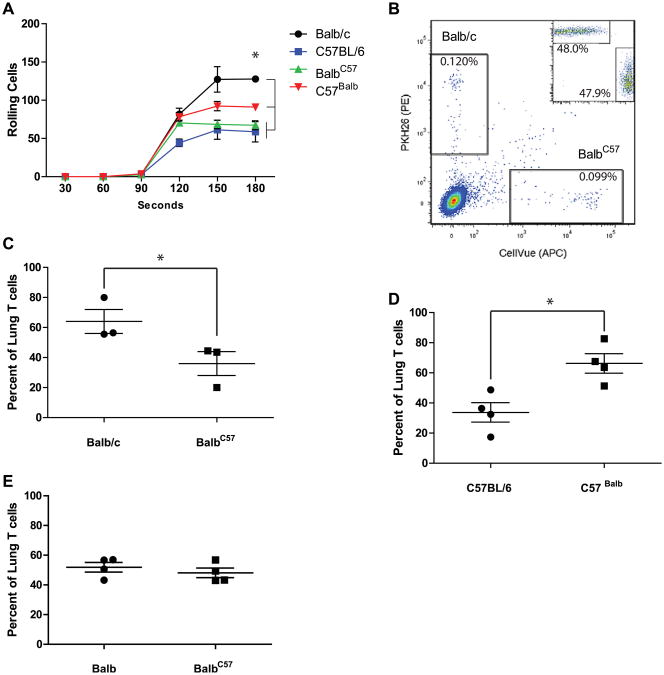
Compared with the C57BL/6 allele, the BALB/c CD11a allele contained a nonsynonymous change from asparagine to aspartic acid within the metal ion binding domain. In general, the BALB/c CD11a allele enhanced and the C57BL/6 CD11a allele suppressed TH2 cell-dependent disease caused by the parasite Leishmania major and allergic lung disease caused by the fungus Aspergillus niger. Relative to the C57BL/6 CD11a allele, the BALB/c CD11a allele conferred both greater T-cell adhesion to CD54 in vitro and enhanced TH2 cell homing to lungs in vivo. We further identified a human CD11a polymorphism that significantly associated with atopic disease and relevant allergic indices.
Polymorphisms in CD11a critically influence TH2 cell homing and diverse TH2-dependent immunopathologic states in mice and potentially influence the expression of human allergic disease.
TH2 依赖性疾病的严重程度因基因型而异,但相关基因多态性仍知之甚少。整合素 CD11a 是过敏反应的关键决定因素,该基因的等位基因变异可能影响过敏表型。
我们旨在确定小鼠和人类受试者中主要的 CD11a 等位基因变异及其对过敏性疾病表达的重要性。
我们对 C57BL/6 和 BALB/c 品系的小鼠 CD11a 等位基因进行测序,以确定主要的多态性;作为国际 HapMap 项目的一部分,将人类 CD11a 单核苷酸多态性与过敏疾病表型进行比较。在 BALB/c 或 C57BL/6 背景下创建了对另一个品系 CD11a 等位基因具有同基因的小鼠,以确定小鼠 CD11a 多态性在体内和体外的重要性。
与 C57BL/6 等位基因相比,BALB/c CD11a 等位基因在金属离子结合域内从天冬酰胺到天冬氨酸发生了非同义突变。一般来说,BALB/c CD11a 等位基因增强了寄生虫利什曼原虫引起的 TH2 细胞依赖性疾病和真菌黑曲霉引起的过敏肺疾病,而 C57BL/6 CD11a 等位基因则抑制了这些疾病。与 C57BL/6 CD11a 等位基因相比,BALB/c CD11a 等位基因在体外赋予 T 细胞与 CD54 的更强粘附性,并增强了 TH2 细胞向肺部的归巢。我们进一步鉴定了一个与人过敏病相关的显著相关的 CD11a 多态性和相关过敏指数。
CD11a 中的多态性严重影响了 TH2 细胞的归巢和小鼠中多种 TH2 依赖性免疫病理状态,并可能影响人类过敏病的表达。