MRC Centre for Regenerative Medicine, University of Edinburgh, Edinburgh BioQuarter, 5 Little France Drive, Edinburgh EH16 4UU, UK.
Nature. 2013 Jul 4;499(7456):88-91. doi: 10.1038/nature12243. Epub 2013 Jun 2.
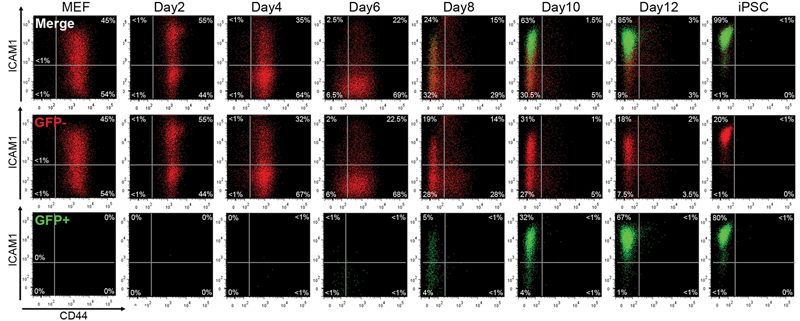
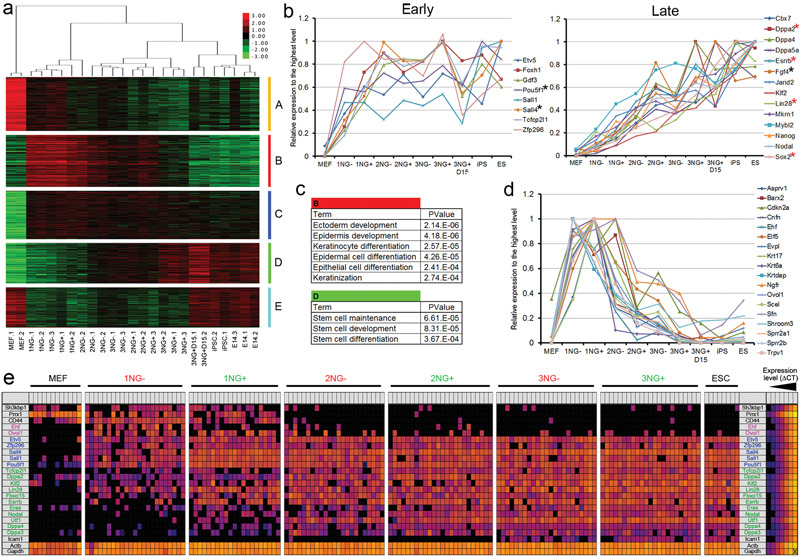
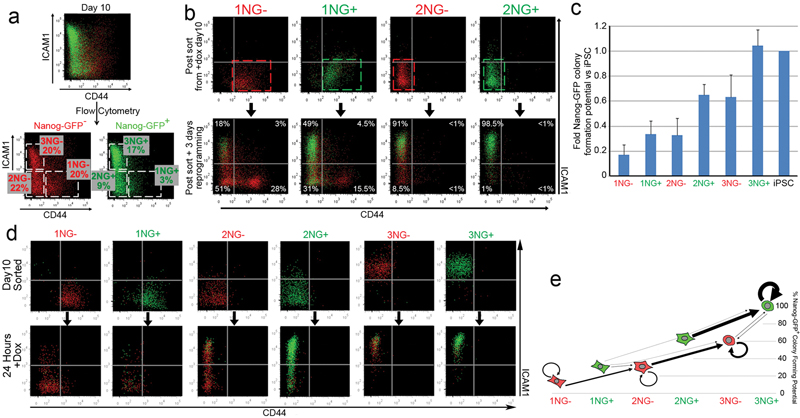
The generation of induced pluripotent stem (iPS) cells presents a challenge to normal developmental processes. The low efficiency and heterogeneity of most methods have hindered understanding of the precise molecular mechanisms promoting, and roadblocks preventing, efficient reprogramming. Although several intermediate populations have been described, it has proved difficult to characterize the rare, asynchronous transition from these intermediate stages to iPS cells. The rapid expansion of minor reprogrammed cells in the heterogeneous population can also obscure investigation of relevant transition processes. Understanding the biological mechanisms essential for successful iPS cell generation requires both accurate capture of cells undergoing the reprogramming process and identification of the associated global gene expression changes. Here we demonstrate that in mouse embryonic fibroblasts, reprogramming follows an orderly sequence of stage transitions, marked by changes in the cell-surface markers CD44 and ICAM1, and a Nanog-enhanced green fluorescent protein (Nanog-eGFP) reporter. RNA-sequencing analysis of these populations demonstrates two waves of pluripotency gene upregulation, and unexpectedly, transient upregulation of several epidermis-related genes, demonstrating that reprogramming is not simply the reversal of the normal developmental processes. This novel high-resolution analysis enables the construction of a detailed reprogramming route map, and the improved understanding of the reprogramming process will lead to new reprogramming strategies.
诱导多能干细胞(iPS)的产生对正常的发育过程提出了挑战。大多数方法的效率低和异质性阻碍了对促进有效重编程的精确分子机制的理解,以及对阻止有效重编程的障碍的理解。尽管已经描述了几个中间群体,但很难描述这些中间阶段向 iPS 细胞的罕见、异步转变。异质群体中少数重编程细胞的快速扩增也会掩盖对相关转变过程的研究。要理解成功产生 iPS 细胞的生物学机制,既需要准确捕获正在经历重编程过程的细胞,也需要识别相关的全局基因表达变化。在这里,我们证明在小鼠胚胎成纤维细胞中,重编程遵循有序的阶段转变顺序,其特征是细胞表面标记物 CD44 和 ICAM1 的变化,以及 Nanog 增强型绿色荧光蛋白(Nanog-eGFP)报告基因。对这些群体的 RNA 测序分析表明,出现了两波多能性基因的上调,出人意料的是,一些表皮相关基因也出现了短暂的上调,这表明重编程不仅仅是正常发育过程的逆转。这种新的高分辨率分析能够构建一个详细的重编程路线图,对重编程过程的深入理解将导致新的重编程策略。