Monden Satoshi, Hasegawa Atsushi, Hio Naohiro, Taki Masanori, Noguchi Hideo
Kiryu Orthopedic Surgery Hospital, 284-1 Hirosawacho-Ainoshima, Kiryu, Gunma, 376-0014, Japan,
J Orthop Sci. 2013 Sep;18(5):733-9. doi: 10.1007/s00776-013-0412-3. Epub 2013 Jun 1.
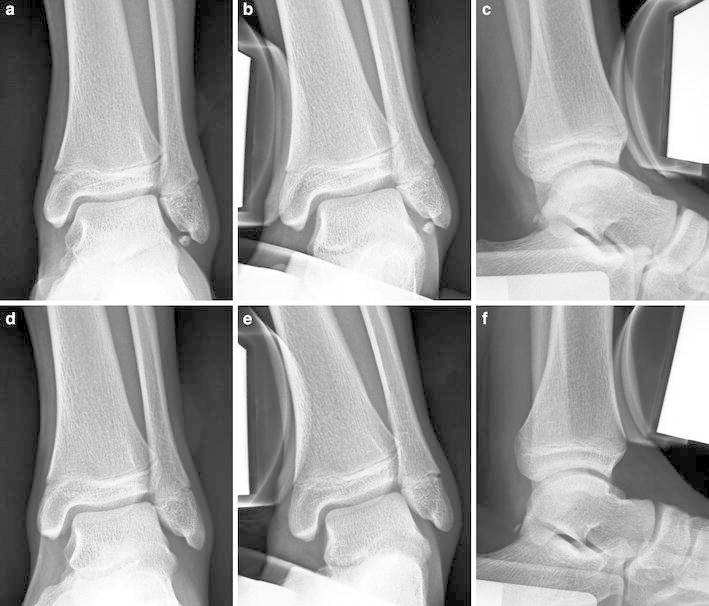
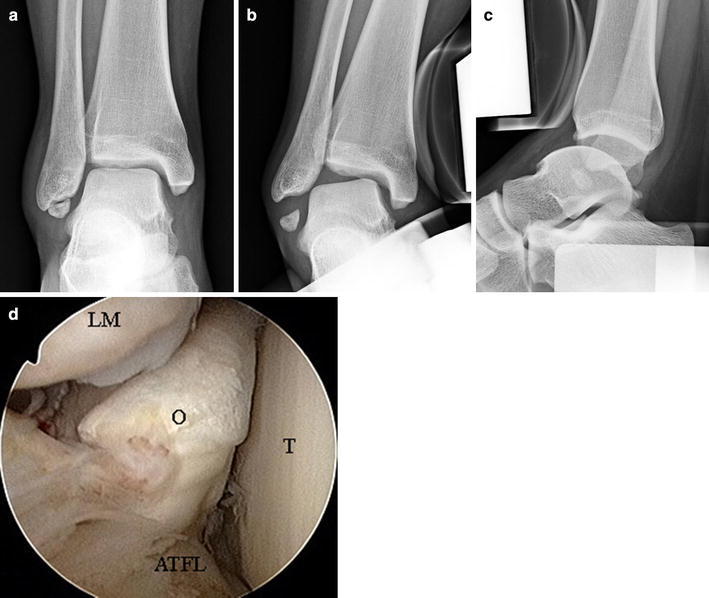
We have conducted a retrospective review of 19 patients for whom 20 separated ossicles of the lateral malleolus were excised arthroscopically. We examined the operating methods, findings, and overall results.
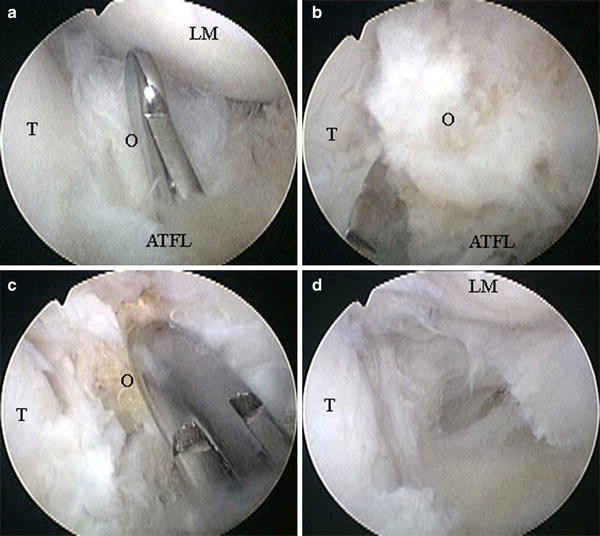
The patients' indications for this procedure were as follows. The main complaints were pain alone; ossicle sizes were small and ankle instability was minimal. There were 12 ankles of 12 males and eight ankles of seven females. The patients' average age was 17.6 years. A 2.7-mm, 30° arthroscope was inserted into the ankle joint through the anterolateral portal. Instruments were inserted through the accessory anterolateral portal, and ossicles were removed piece by piece. Talar tilt angles and anterior displacements were examined and compared before and after surgery by use of stress radiographs. Japanese Society for Surgery of the Foot (JSSF) ankle/hindfoot scales were assessed pre and postoperatively.
All patients recovered their original levels of activity. The mean talar tilt angle changed from 6.1° ± 2.4° preoperatively to 6.0° ± 1.8° postoperatively (p = 0.93), and the mean anterior displacement changed from 5.9 ± 1.7 mm preoperatively to 6.1 ± 2.0 mm postoperatively (p = 0.42). Average JSSF ankle/hindfoot scale improved from 77.6 ± 2.6 points preoperatively to 97.2 ± 5.2 points postoperatively (p < 0.01).
Arthroscopic excision of separated ossicles of the lateral malleolus achieved good results with minimum incisions, and relatively early resumption of daily and sports activity was possible. However, when the ossicles were embedded within the fibers of the anterior talofibular ligament, it was impossible to avoid cutting of ligament fibers. To reduce the possibility of ligament dysfunction, we believe postoperative treatment should conform to the accepted method for treatment of acute ankle sprains.
我们对19例患者进行了回顾性研究,这些患者的20块分离的外踝小骨通过关节镜切除。我们检查了手术方法、发现结果及总体疗效。
患者接受该手术的指征如下。主要症状仅为疼痛;小骨尺寸较小且踝关节不稳定程度轻微。其中男性12例共12个踝关节,女性7例共8个踝关节。患者平均年龄为17.6岁。通过前外侧入路将2.7毫米、30°的关节镜插入踝关节。器械通过辅助前外侧入路插入,小骨被逐块取出。术前和术后通过应力X线片检查并比较距骨倾斜角和前移情况。术前和术后评估日本足外科学会(JSSF)踝关节/后足评分标准。
所有患者均恢复至原来的活动水平。平均距骨倾斜角术前为6.1°±2.4°,术后变为6.0°±1.8°(p = 0.93);平均前移术前为5.9±1.7毫米,术后变为6.1±2.0毫米(p = 0.42)。JSSF踝关节/后足评分标准平均得分术前为77.6±2.6分,术后提高至97.2±5.2分(p < 0.01)。
关节镜下切除分离的外踝小骨切口最小,效果良好,且患者相对能够较早恢复日常活动和体育活动。然而,当小骨嵌入距腓前韧带纤维内时,无法避免切断韧带纤维。为降低韧带功能障碍的可能性,我们认为术后治疗应遵循公认的急性踝关节扭伤治疗方法。