Seok Hyo Hyun, Park Ji Ung, Kwon Sung Tack
Department of Plastic and Reconstructive Surgery, Seoul National University College of Medicine, Seoul, Korea.
Arch Plast Surg. 2013 May;40(3):232-7. doi: 10.5999/aps.2013.40.3.232. Epub 2013 May 16.
Polydactyly of the foot is one of the most frequent anomalies of the limbs. However, most classification systems are based solely on morphology and tend to be inaccurate and less relevant to surgical methods and results. The purpose of this study is to present our new classification of polydactyly of the foot, which can serve as a predictor of treatment and prognosis.
To find a correlation between the various morphologic traits of polydactyly of the foot and the treatment plan and outcomes, we reviewed 532 cases of polydactyly of the foot in 431 patients treated in our hospital, expanding on our previous study that described polydactyly based on the importance of metatarsal bone status and varus deformity. The records of patients were evaluated and compared with previous studies at other centers.
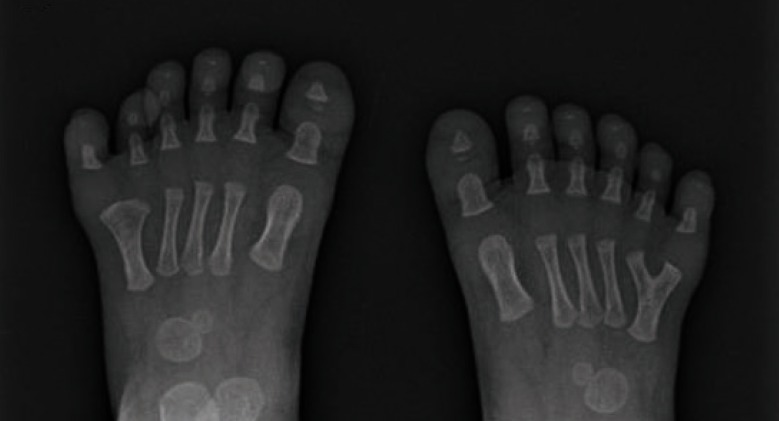
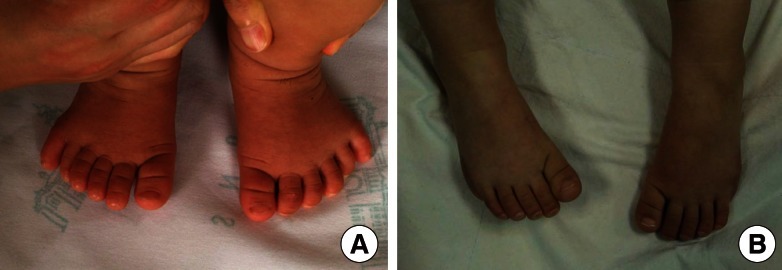
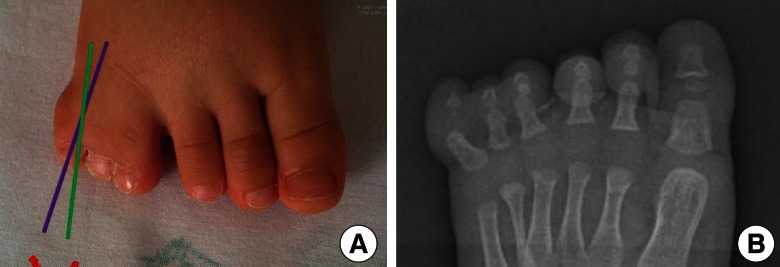
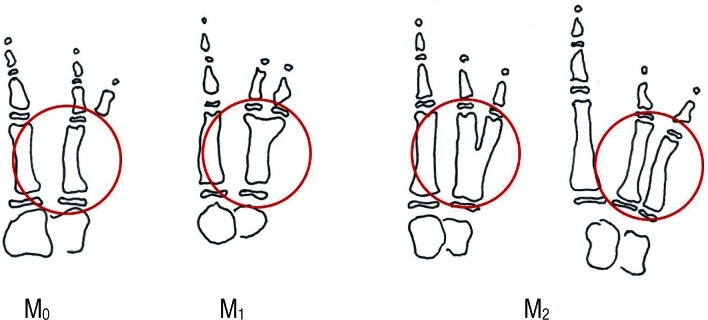
Unsatisfactory results were seen in 36 cases, which included 5 cases of incomplete separation due to syndactylism, 23 cases of axis deviation, and 8 cases of remnants of extra-digit metatarsal bones. The locus of the polydactyly, or the digit which was involved, did not seem to affect the final postoperative outcomes in our study. Three factors-syndactylism, axis deviation, and metatarsal extension-are the major factors related to treatment strategy and prognosis. Therefore, we developed a new classification system using three characters (S, A, M) followed by three groups (0, 1, 2), to describe the complexity of polydactyly of the foot, such as S1A2M2.
Our new classification could provide a communicable description to help determine the surgical plan and predict outcomes.
足部多指畸形是四肢最常见的畸形之一。然而,大多数分类系统仅基于形态学,往往不准确且与手术方法及结果的相关性较低。本研究的目的是提出一种新的足部多指畸形分类方法,该方法可作为治疗和预后的预测指标。
为了找出足部多指畸形的各种形态学特征与治疗方案及结果之间的相关性,我们回顾了我院治疗的431例患者的532例足部多指畸形病例,扩展了我们之前基于跖骨状态和内翻畸形重要性描述多指畸形的研究。对患者的记录进行了评估,并与其他中心之前的研究进行了比较。
36例结果不理想,其中包括5例因并指导致的分离不完全、23例轴偏差以及8例多余趾跖骨残留。在我们的研究中,多指畸形的位置或受累的趾似乎并未影响最终的术后结果。并指、轴偏差和跖骨延长这三个因素是与治疗策略和预后相关的主要因素。因此,我们开发了一种新的分类系统,用三个字符(S、A、M)后跟三组(0、1、2)来描述足部多指畸形的复杂性,如S1A2M2。
我们的新分类方法可以提供一种可交流的描述,有助于确定手术方案并预测结果。