Yan Run-Tao, Li Xiumei, Huang Jian, Guidry Clyde, Wang Shu-Zhen
Department of Ophthalmology, University of Alabama at Birmingham School of Medicine, Alabama, USA.
Mol Vis. 2013 May 30;19:1178-87. Print 2013.
Previous studies showed that chick retinal pigment epithelium (RPE) cells can be reprogrammed by a specific gene to take on the path of photoreceptor differentiation. In this study, we tested whether this reprogramming scheme could be applied to mammalian RPE cells.
Human RPE cell lines ARPE-19, a spontaneously transformed line of RPE cells derived from a 19-year-old person, and hTERT-RPE1, a telomerase-immortalized RPE cell line derived from a 1-year-old person, were commercially obtained and cultured as recommended. Primary RPE cell cultures were established using RPE isolated from 3- to 6-month-old pig and postnatal day 5 mouse. Cultured cells were transduced with a virus expressing neuroD, neurogenin1 (ngn1), or ngn3, basic helix-loop-helix (bHLH) genes previously identified as capable of inducing RPE-to-photoreceptor reprogramming in the chick system. Alternatively, cells in the culture were transfected chemically or physically through electroporation with vector DNA expressing one of the three genes. The cultures were then analyzed for RPE-to-photoreceptor reprogramming with in situ hybridization and/or immunostaining for photoreceptor gene expression.
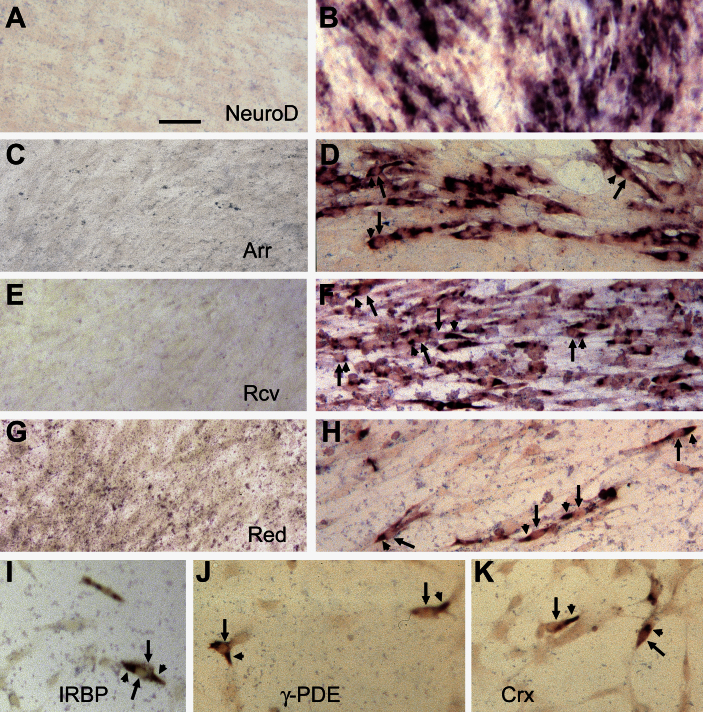
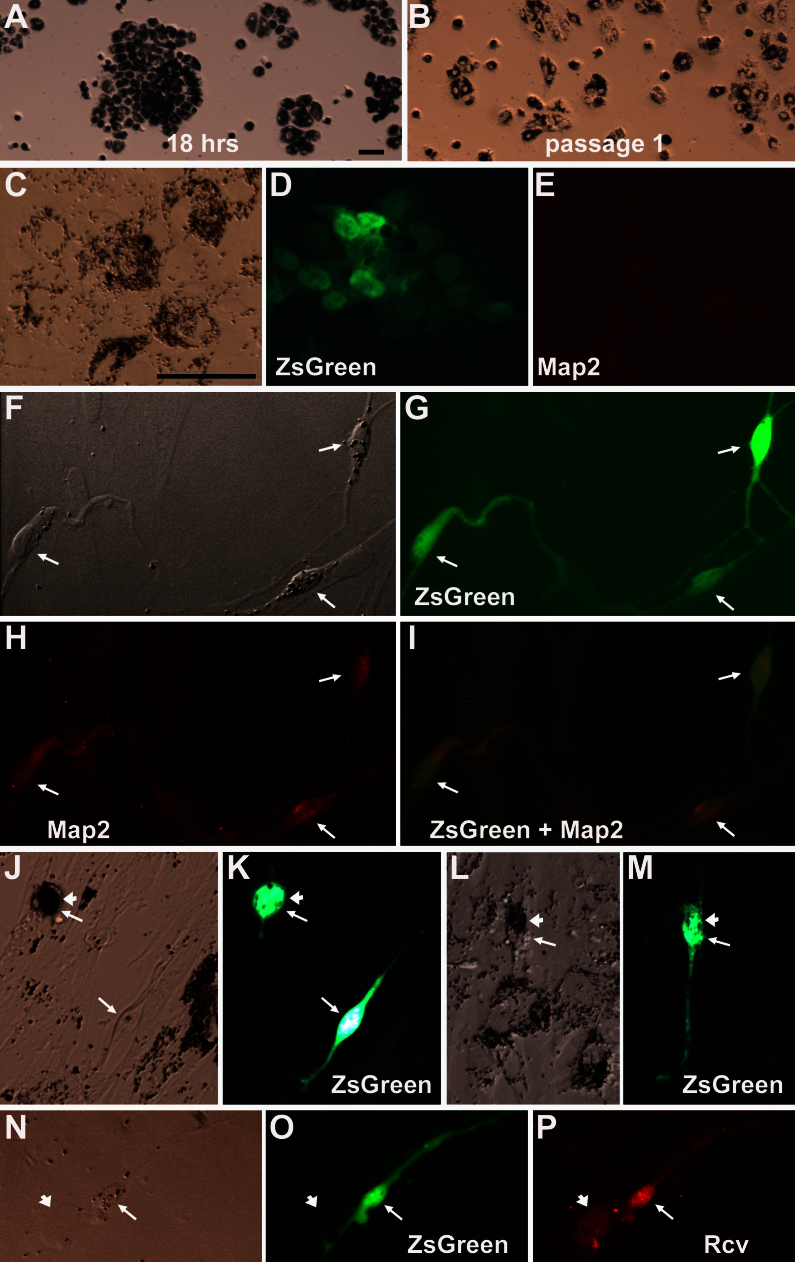
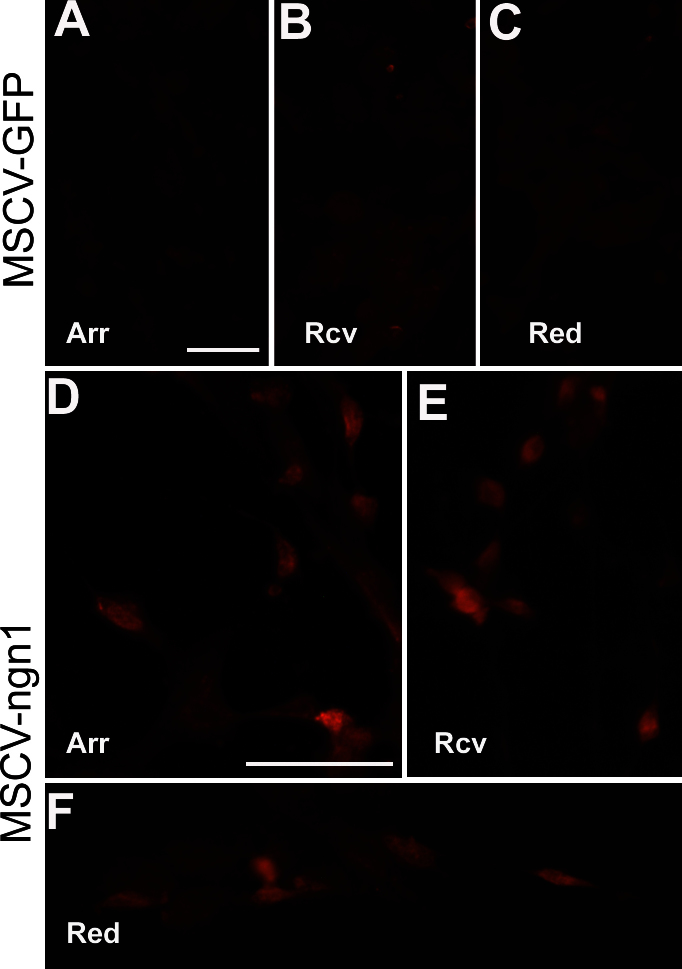
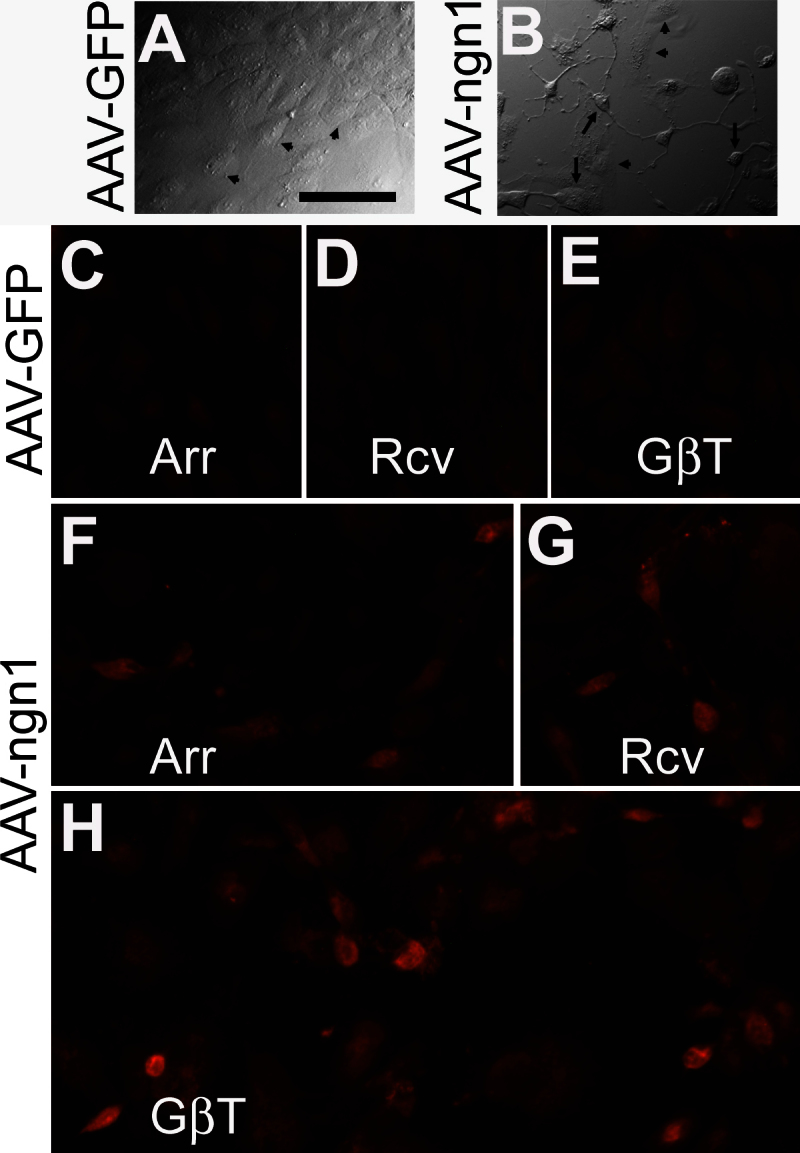
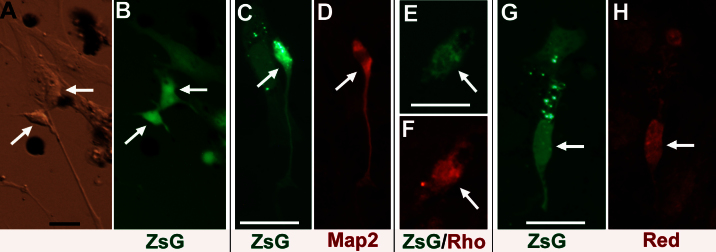
Both hTERT-RPE1 and ARPE-19 cultures gave rise to cells bearing markers of photoreceptors after transduction or transfection with vehicles expressing neuroD or ngn1. The new cells expressed genes encoding photoreceptor proteins, including interphotoreceptor retinoid-binding protein IRBP), recoverin, retinal cone arrestin 3, transducin α-subunit, Cone-rod homeobox protein (Crx), and red opsin. They displayed morphologies resembling differentiating photoreceptor cells. In primary porcine and mouse RPE cell cultures, transduction with lenti virus (Lvx-IRES-ZsGreen1) expressing ngn1 or ngn3 resulted in the emergence of ZsGreen1+ cells that exhibited morphologies reminiscent of differentiating photoreceptor cells. Immunochemistry showed that some ZsGreen1+ cells were positive for neural marker microtubule-associated protein 2 (Map2) and photoreceptor hallmark proteins red opsin and rhodopsin.
The results suggest that cells in human RPE cell lines and in primary cultures of porcine and mouse RPE respond to gene-induced reprogramming by giving rise to photoreceptor-like cells. The responsiveness of primary RPE cells, especially those from porcine cells, enhances the biologic feasibility of exploring RPE-to-photoreceptor reprogramming for in situ mammalian photoreceptor replacement without cell transplantation.
先前的研究表明,鸡视网膜色素上皮(RPE)细胞可通过特定基因重编程,走上光感受器分化的道路。在本研究中,我们测试了这种重编程方案是否可应用于哺乳动物RPE细胞。
从商业渠道获得人RPE细胞系ARPE-19(源自一名19岁个体的自发转化的RPE细胞系)和hTERT-RPE1(源自一名1岁个体的端粒酶永生化RPE细胞系),并按照推荐方法进行培养。使用从3至6个月大的猪和出生后第5天的小鼠分离的RPE建立原代RPE细胞培养物。用表达NeuroD、神经生成素1(ngn1)或ngn3的病毒转导培养的细胞,NeuroD、神经生成素1(ngn1)或ngn3是先前已确定能够在鸡系统中诱导RPE向光感受器重编程的碱性螺旋-环-螺旋(bHLH)基因。或者,通过电穿孔用表达这三个基因之一的载体DNA对培养物中的细胞进行化学转染或物理转染。然后通过原位杂交和/或免疫染色分析培养物中RPE向光感受器的重编程情况,以检测光感受器基因表达。
在用表达NeuroD或ngn1的载体转导或转染后,hTERT-RPE1和ARPE-19培养物均产生了带有光感受器标记物的细胞。这些新细胞表达编码光感受器蛋白的基因,包括光感受器间类视黄醇结合蛋白(IRBP)、恢复蛋白、视锥细胞抑制蛋白3、转导素α亚基、视锥-视杆同源盒蛋白(Crx)和红色视蛋白。它们呈现出类似于分化中的光感受器细胞的形态。在原代猪和小鼠RPE细胞培养物中,用表达ngn1或ngn3的慢病毒(Lvx-IRES-ZsGreen1)转导导致出现ZsGreen1+细胞,这些细胞呈现出类似于分化中的光感受器细胞的形态。免疫化学显示,一些ZsGreen1+细胞对神经标记物微管相关蛋白2(Map2)以及光感受器标志性蛋白红色视蛋白和视紫红质呈阳性。
结果表明,人RPE细胞系以及猪和小鼠RPE原代培养物中的细胞通过产生类光感受器细胞对基因诱导的重编程作出反应。原代RPE细胞,尤其是猪细胞来源的原代RPE细胞的反应性,增强了探索RPE向光感受器重编程以在哺乳动物原位进行光感受器替代而无需细胞移植的生物学可行性。