G. N. Ramachandran Knowledge Center for Genome Informatics, Institute of Genomics and Integrative Biology (Council of Scientific and Industrial Research), Delhi, India.
PLoS One. 2013 May 29;8(5):e64893. doi: 10.1371/journal.pone.0064893. Print 2013.
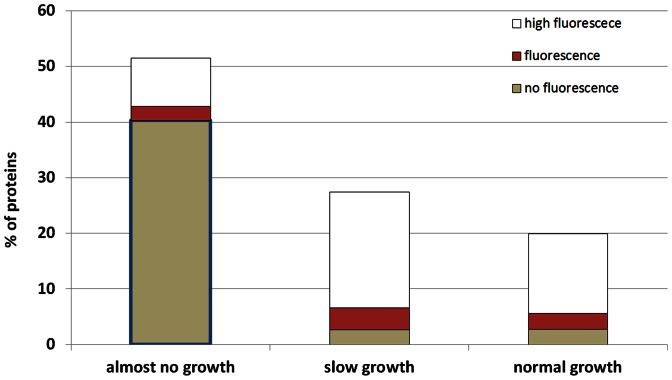
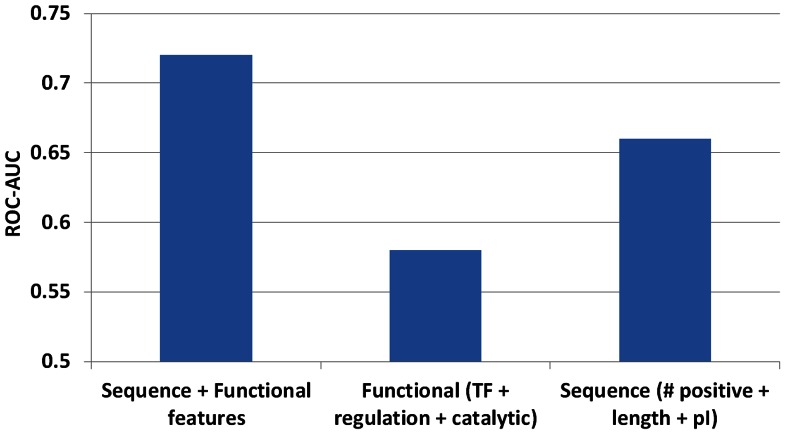
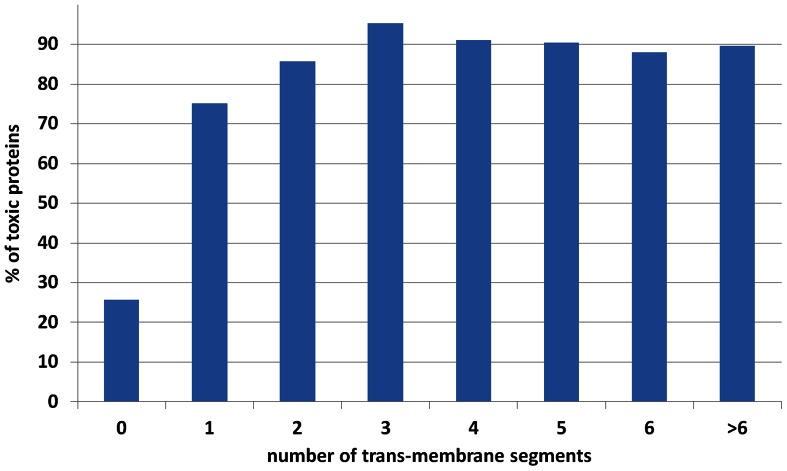
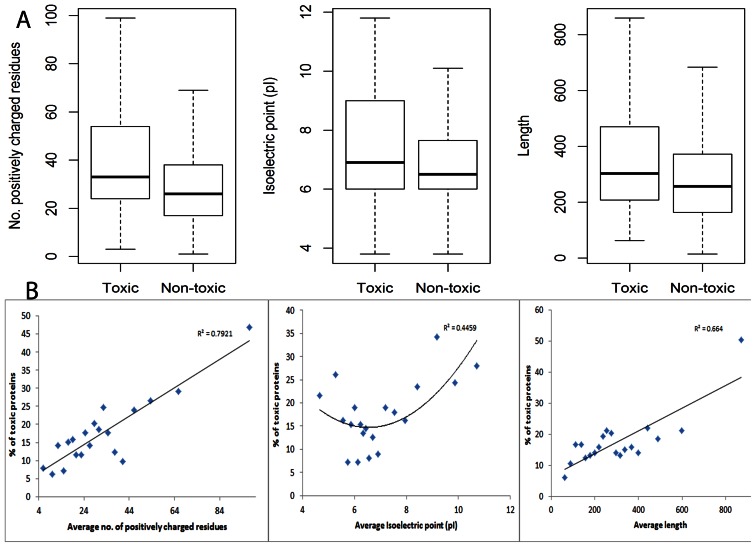
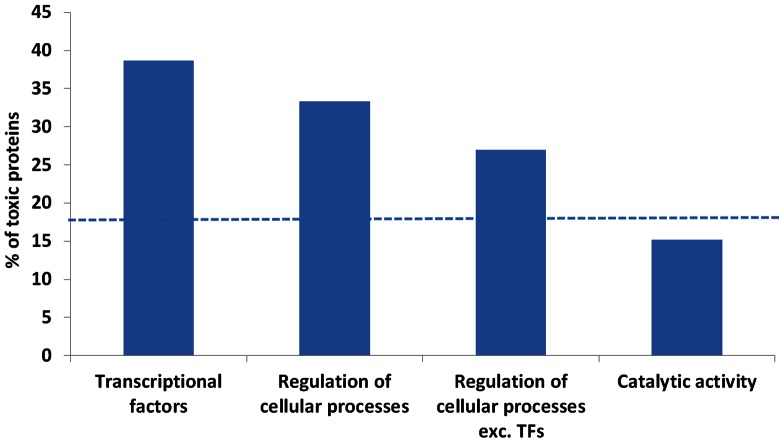
A majority of E. coli proteins when overexpressed inhibit its growth, but the reasons behind overexpression toxicity of proteins remain unknown. Understanding the mechanism of overexpression toxicity is important from evolutionary, biotechnological and possibly clinical perspectives. Here we study sequence and functional features of cytosolic proteins of E. coli associated with overexpression toxicity to understand its mechanism. We find that number of positively charged residues is significantly higher in proteins showing overexpression toxicity. Very long proteins also show high overexpression toxicity. Among the functional classes, transcription factors and regulatory proteins are enriched in toxic proteins, while catalytic proteins are depleted. Overexpression toxicity could be predicted with reasonable accuracy using these few properties. The importance of charged residues in overexpression toxicity indicates that nonspecific electrostatic interactions resulting from protein overexpression cause toxicity of these proteins and suggests ways to improve the expression level of native and foreign proteins in E. coli for basic research and biotechnology. These results might also be applicable to other bacterial species.
大多数大肠杆菌蛋白质在过量表达时会抑制其生长,但蛋白质过量表达毒性的原因尚不清楚。从进化、生物技术和可能的临床角度来看,了解过量表达毒性的机制很重要。在这里,我们研究了与大肠杆菌过量表达毒性相关的细胞质蛋白的序列和功能特征,以了解其机制。我们发现,表现出过量表达毒性的蛋白质中的正电荷残基数显著较高。非常长的蛋白质也表现出高的过量表达毒性。在功能类别中,转录因子和调节蛋白在毒性蛋白中富集,而催化蛋白则减少。使用这些少数特性可以相当准确地预测过量表达毒性。带电残基在过量表达毒性中的重要性表明,由于蛋白质过量表达而导致的非特异性静电相互作用导致这些蛋白质的毒性,并为提高大肠杆菌中原核和外源蛋白质的表达水平提供了思路,以用于基础研究和生物技术。这些结果可能也适用于其他细菌物种。