Botanical Society of the British Isles, Botany Department , The Natural History Museum , London , UK.
PeerJ. 2013 May 28;1:e77. doi: 10.7717/peerj.77. Print 2013.
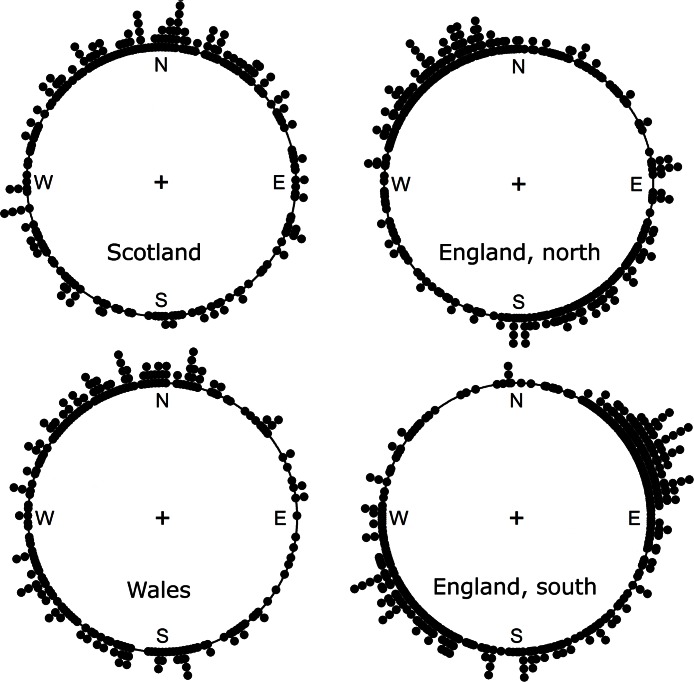
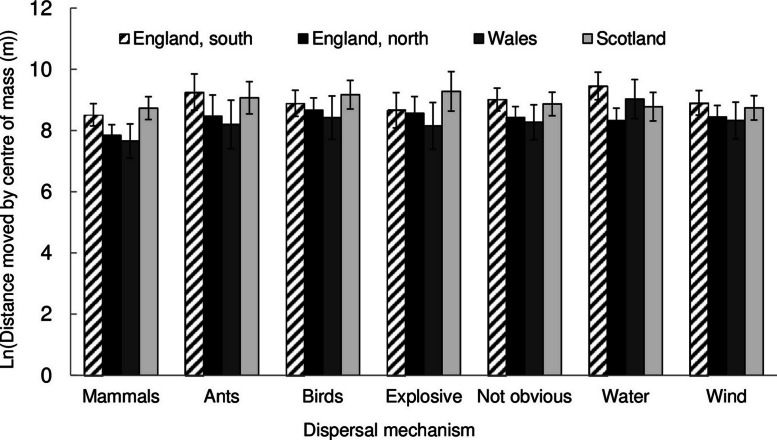
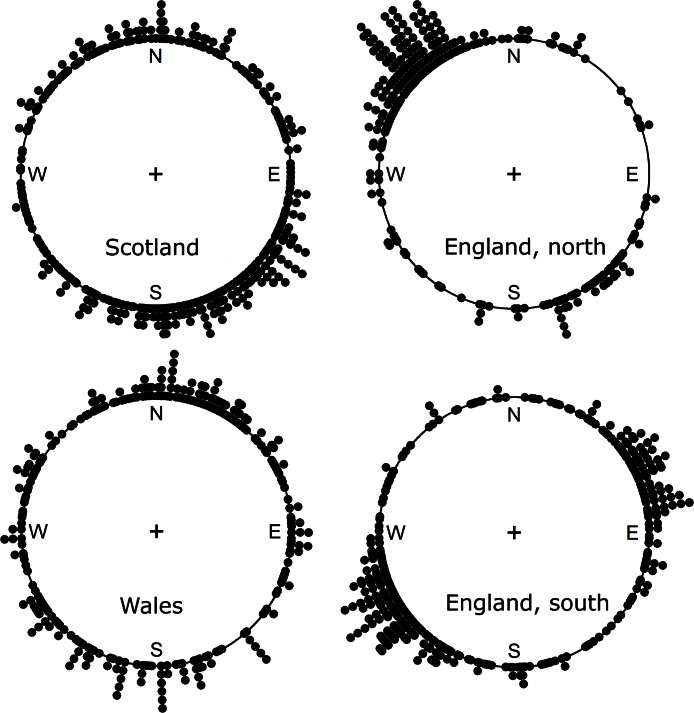
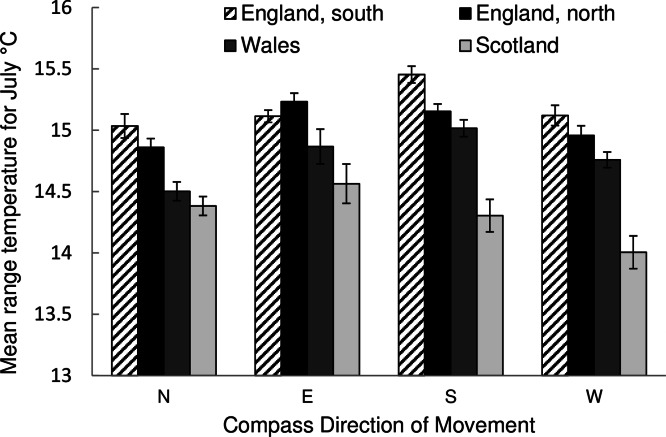
Recent upperward migration of plants and animals along altitudinal gradients and poleward movement of animal range boundaries have been confirmed by many studies. This phenomenon is considered to be part of the fingerprint of recent climate change on the biosphere. Here I examine whether poleward movement is occurring in the vascular plants of Great Britain. The ranges of plants were determined from detection/non-detection data in two periods, 1978 to 1994 and 1995 to 2011. From these, the centre of mass of the population was calculated and the magnitude and direction of range shifts were determined from movements of the centre of mass. A small, but significant, northward movement could be detected in plants with expanding ranges, but not among declining species. Species from warmer ranges were not more likely to be moving northward, nor was dispersal syndrome a predictor of migration success. It is concluded that simply looking at northward movement of species is not an effective way to identify the effect of climate change on plant migration and that other anthropogenic changes obscure the effect of climate.
最近的研究已经证实,动植物在海拔梯度上的向上迁移以及动物分布范围边界的向北移动是普遍存在的现象。这种现象被认为是近期气候变化对生物圈影响的特征之一。在这里,我将探讨英国维管植物是否存在向北移动的现象。通过在两个时期(1978 年至 1994 年和 1995 年至 2011 年)的检测/未检测数据中确定植物的分布范围,计算种群的质心,并根据质心的移动来确定分布范围的迁移幅度和方向。可以检测到扩展分布范围的植物有微小但显著的向北移动,但在衰退物种中则没有。来自温暖地区的物种向北移动的可能性并不高,扩散综合征也不是迁移成功的预测指标。因此,可以得出结论,仅仅观察物种的向北移动并不是识别气候变化对植物迁移影响的有效方法,而且其他人为因素的变化掩盖了气候的影响。