Department of Immunology, School of Medicine, Trinity College Dublin, Dublin 8, Ireland.
J Immunol. 2013 Jul 1;191(1):30-4. doi: 10.4049/jimmunol.1300121. Epub 2013 Jun 5.
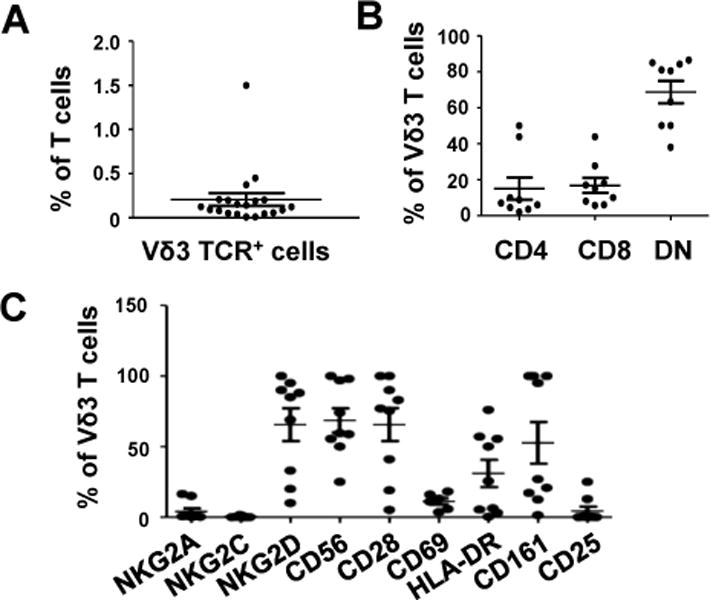
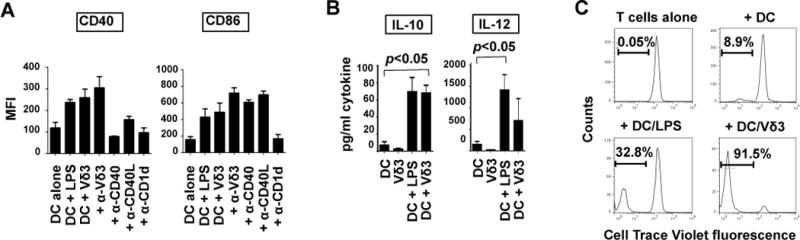
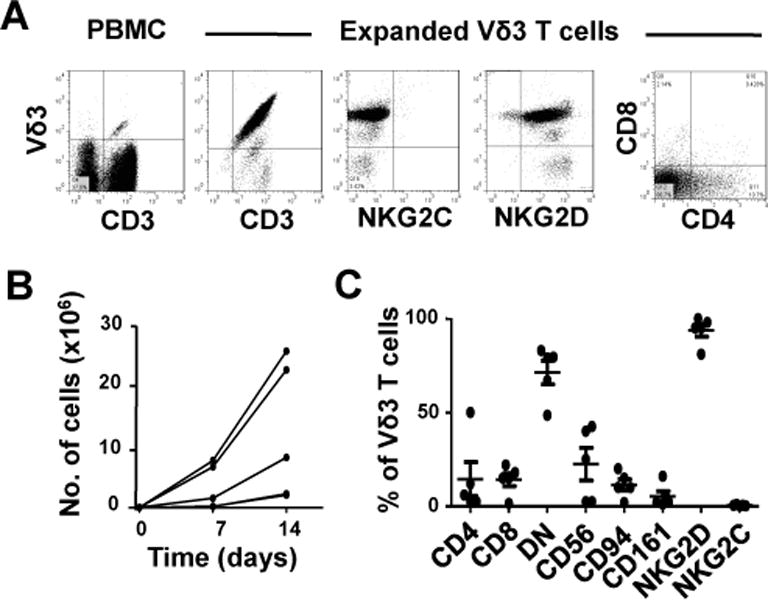
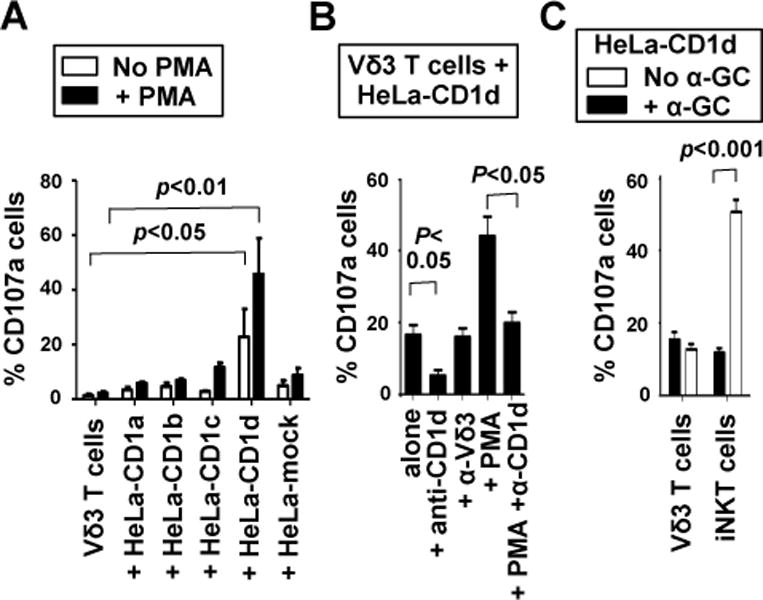
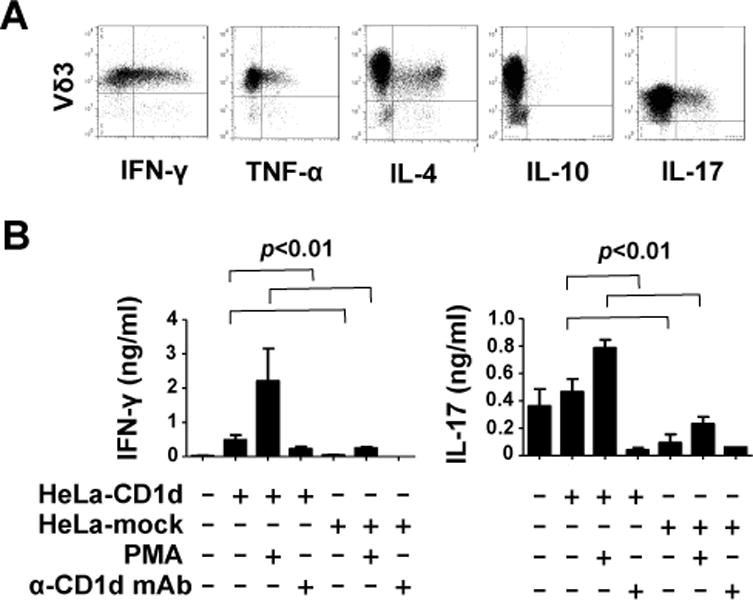
Human γδ T cells expressing the Vδ3 TCR make up a minor lymphocyte subset in blood but are enriched in liver and in patients with some chronic viral infections and leukemias. We analyzed the frequencies, phenotypes, restriction elements, and functions of fresh and expanded peripheral blood Vδ3 T cells. Vδ3 T cells accounted for ~0.2% of circulating T cells, included CD4(+), CD8(+), and CD4(-)CD8(-) subsets, and variably expressed CD56, CD161, HLA-DR, and NKG2D but neither NKG2A nor NKG2C. Vδ3 T cells were sorted and expanded by mitogen stimulation in the presence of IL-2. Expanded Vδ3 T cells recognized CD1d but not CD1a, CD1b, or CD1c. Upon activation, they killed CD1d(+) target cells, released Th1, Th2, and Th17 cytokines, and induced maturation of dendritic cells into APCs. Thus, Vδ3 T cells are glycolipid-reactive T cells with distinct Ag specificities but functional similarities to NKT cells.
人 γδ T 细胞表达 Vδ3 TCR,在血液中构成了一个小的淋巴细胞亚群,但在肝脏中丰富,并在一些慢性病毒感染和白血病患者中富集。我们分析了新鲜和扩增的外周血 Vδ3 T 细胞的频率、表型、限制元件和功能。Vδ3 T 细胞占循环 T 细胞的~0.2%,包括 CD4(+)、CD8(+)和 CD4(-)CD8(-)亚群,并且可变地表达 CD56、CD161、HLA-DR 和 NKG2D,但不表达 NKG2A 或 NKG2C。Vδ3 T 细胞通过在 IL-2 存在下的有丝分裂原刺激进行分选和扩增。扩增的 Vδ3 T 细胞识别 CD1d,但不识别 CD1a、CD1b 或 CD1c。激活后,它们可以杀死 CD1d(+)靶细胞,释放 Th1、Th2 和 Th17 细胞因子,并诱导树突状细胞成熟为 APC。因此,Vδ3 T 细胞是糖脂反应性 T 细胞,具有独特的抗原特异性,但与 NKT 细胞具有相似的功能。