Kumar Ashish, Srinivas Vinjamuri, Sahu Barada P
Department of Neurosurgery, Nizam's Institute of Medical Sciences, Hyderabad, India.
J Craniovertebr Junction Spine. 2012 Jan;3(1):3-6. doi: 10.4103/0974-8237.110116.
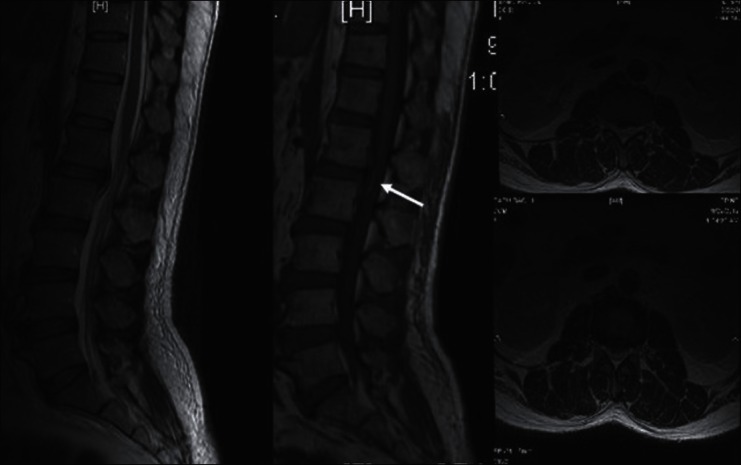
Keraunoparalysis or transient weakness in limbs following a lightning strike has been well described in literature. Many times, neurosurgeons encounter patients with paraparesis secondary to trauma in the setting of a lightning strike. In these cases, it becomes imperative to find out the true cause behind such weakness in lower limbs because the prognosis differs significantly depending on the etiology. We report a case of keraunoparalysis affecting both lower limbs in a 50-year-old male, where he recovered within 48 hours of the impact. As far as our knowledge is concerned, this is the first case of keraunoparalysis reported from India. We also review the available literature and discuss the physics of lightning, its mechanism, other clinical presentations, and management strategy in the light of our case. These patients must be investigated for other possible causes of paraparesis secondary to trauma and keraunoparalysis should rather be a diagnosis of exclusion, only to be confirmed on imageology. Awareness regarding similar cases will make neurosurgeons notice this entity early, avoiding unnecessary investigation, and hence they will be able to prognosticate in the most efficient manner.
雷击后出现的闪电麻痹或肢体短暂无力在文献中已有充分描述。神经外科医生多次遇到因雷击创伤继发双下肢轻瘫的患者。在这些情况下,查明下肢此类无力的真正原因变得至关重要,因为预后会因病因不同而有显著差异。我们报告一例50岁男性双下肢受闪电麻痹的病例,其在受雷击后48小时内康复。就我们所知,这是印度报道的首例闪电麻痹病例。我们还回顾了现有文献,并结合我们的病例讨论了闪电的物理学原理、其机制、其他临床表现及治疗策略。对于这些患者,必须排查继发于创伤的双下肢轻瘫的其他可能原因,闪电麻痹应是一种排除性诊断,只能通过影像学检查来确诊。对类似病例的认识将使神经外科医生尽早注意到这一病症,避免不必要的检查,从而能够以最有效的方式进行预后判断。