MRC Centre for Regenerative Medicine, Institute for Stem Cell Research, School of Biological Sciences, University of Edinburgh, 5 Little France Drive, EH16 4UU Edinburgh, UK.
Cell Rep. 2013 Jun 27;3(6):1945-57. doi: 10.1016/j.celrep.2013.04.034. Epub 2013 Jun 6.
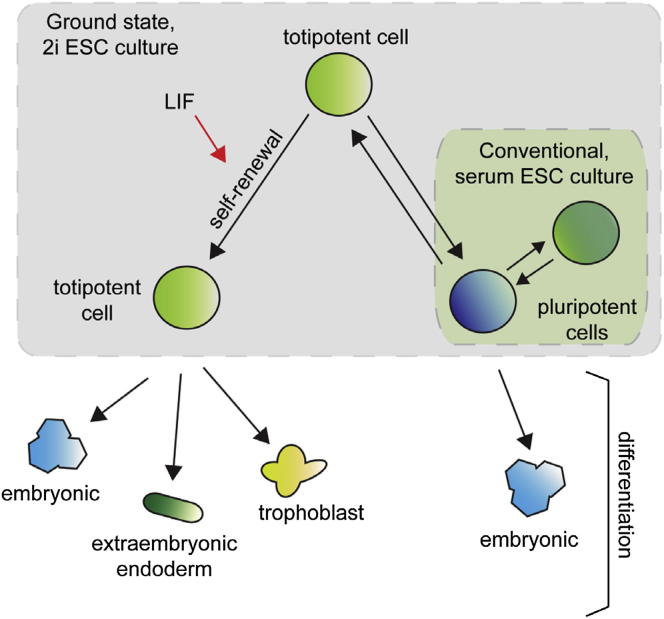
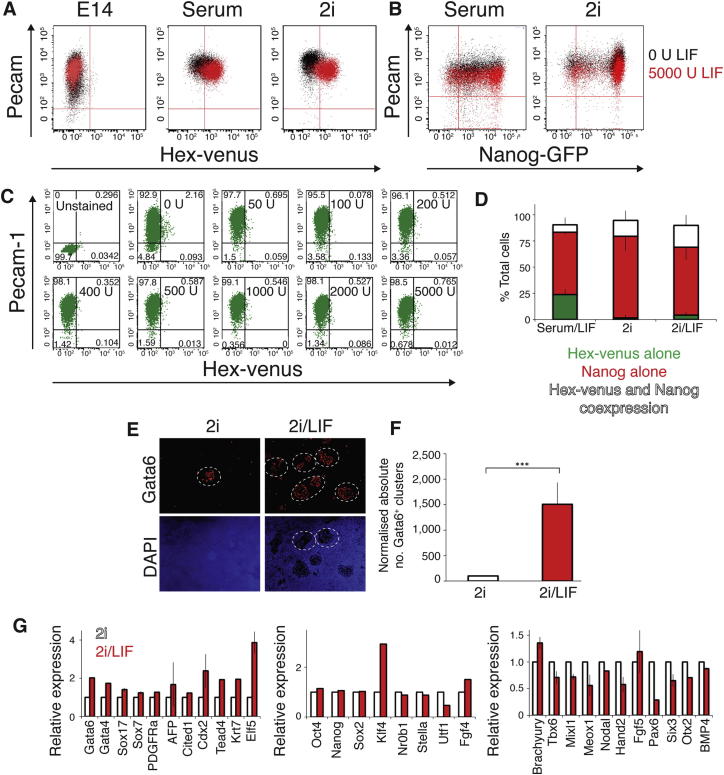
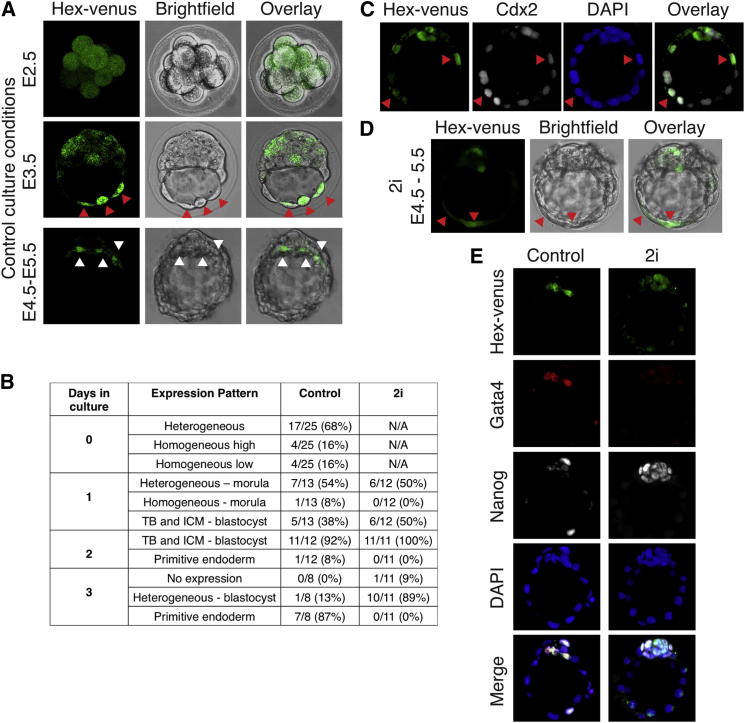
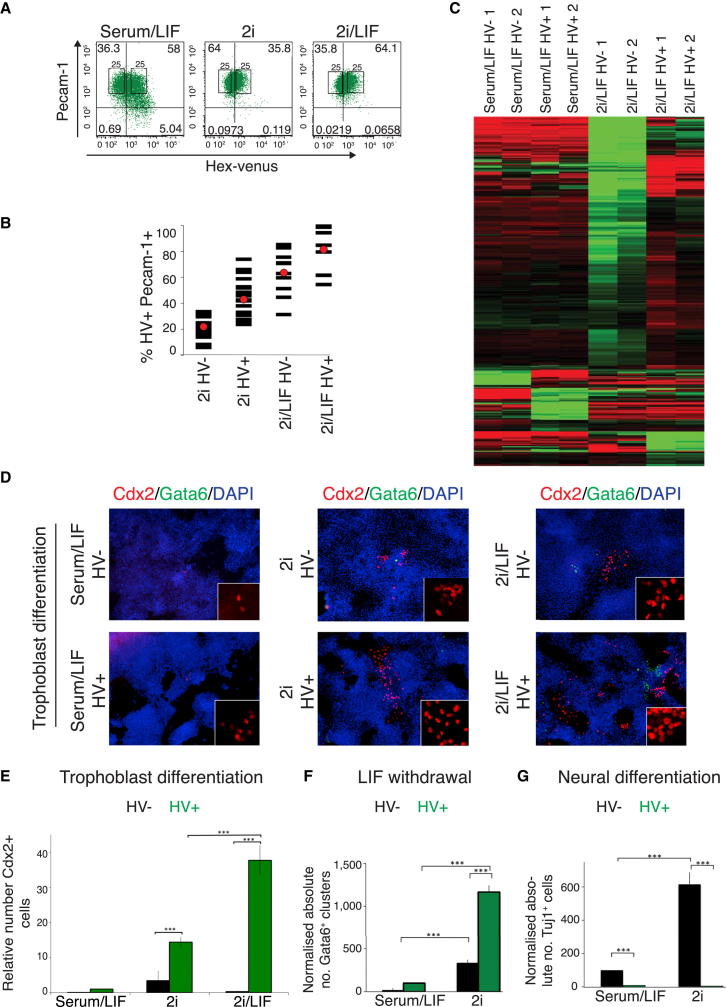
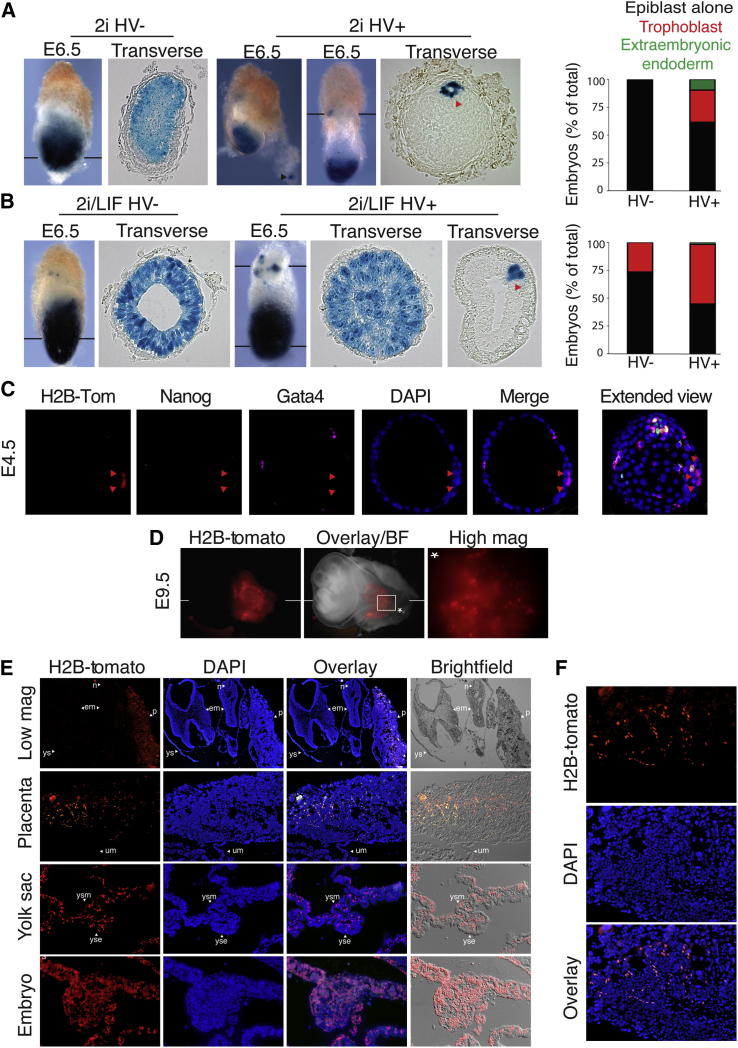
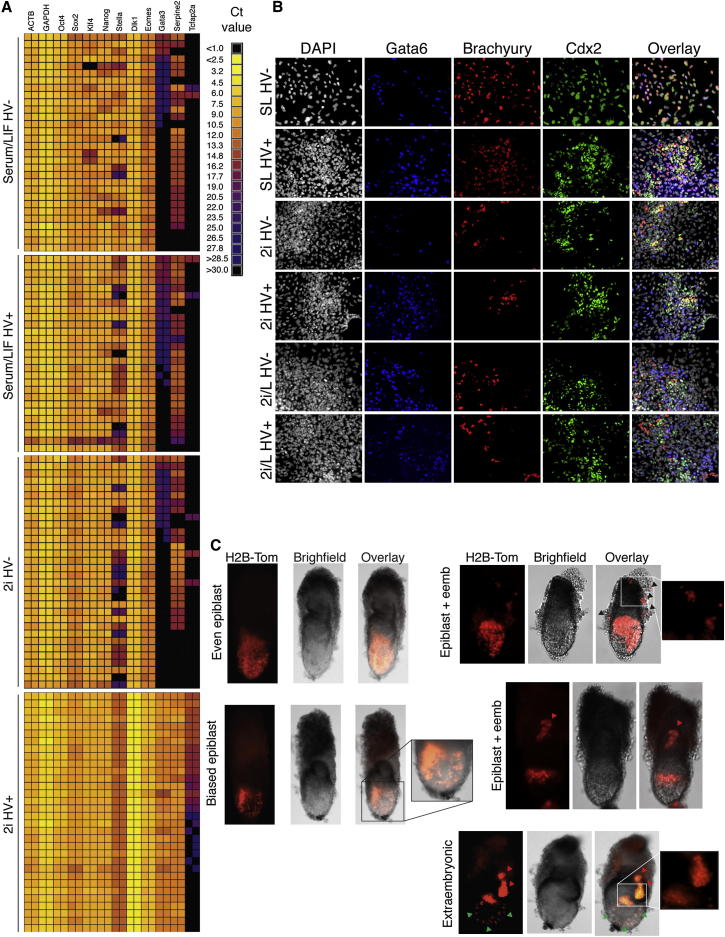
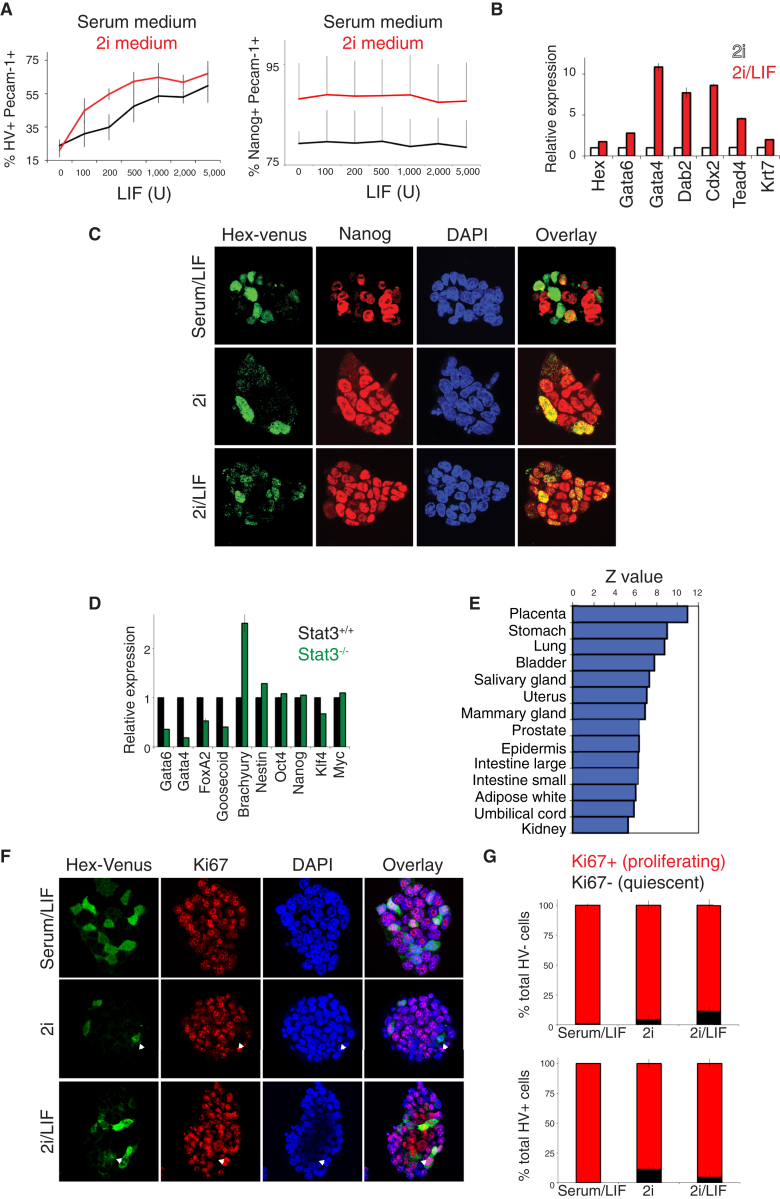
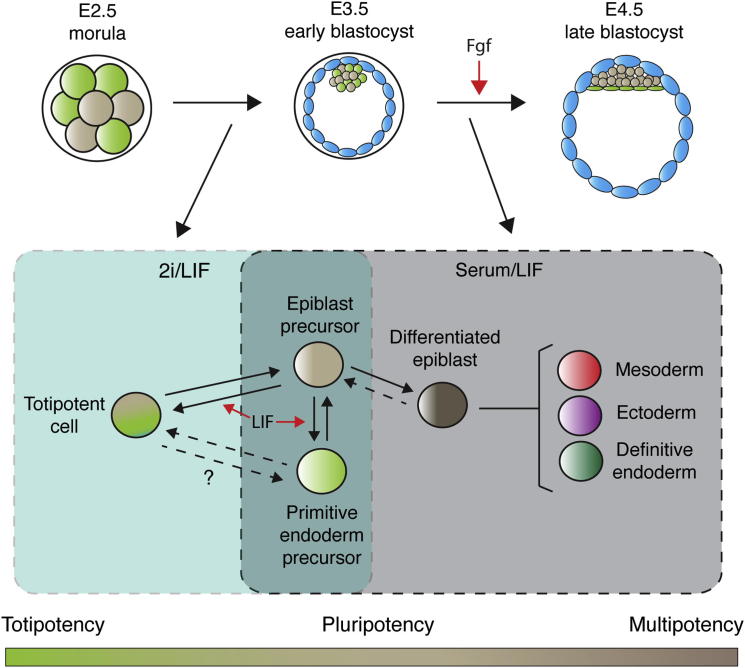
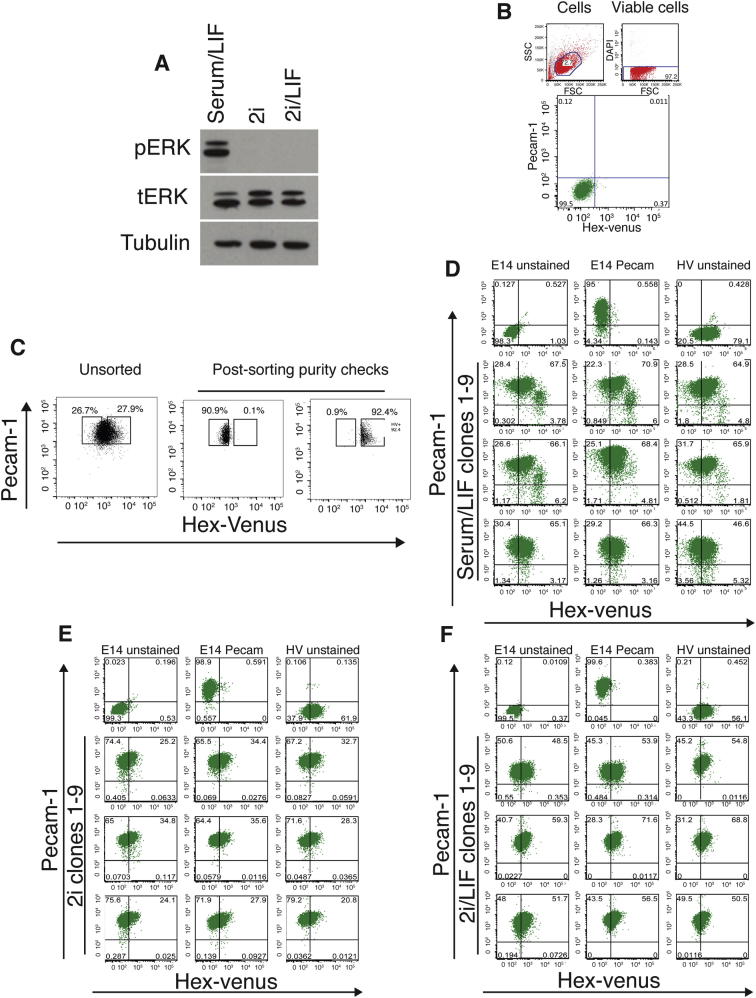
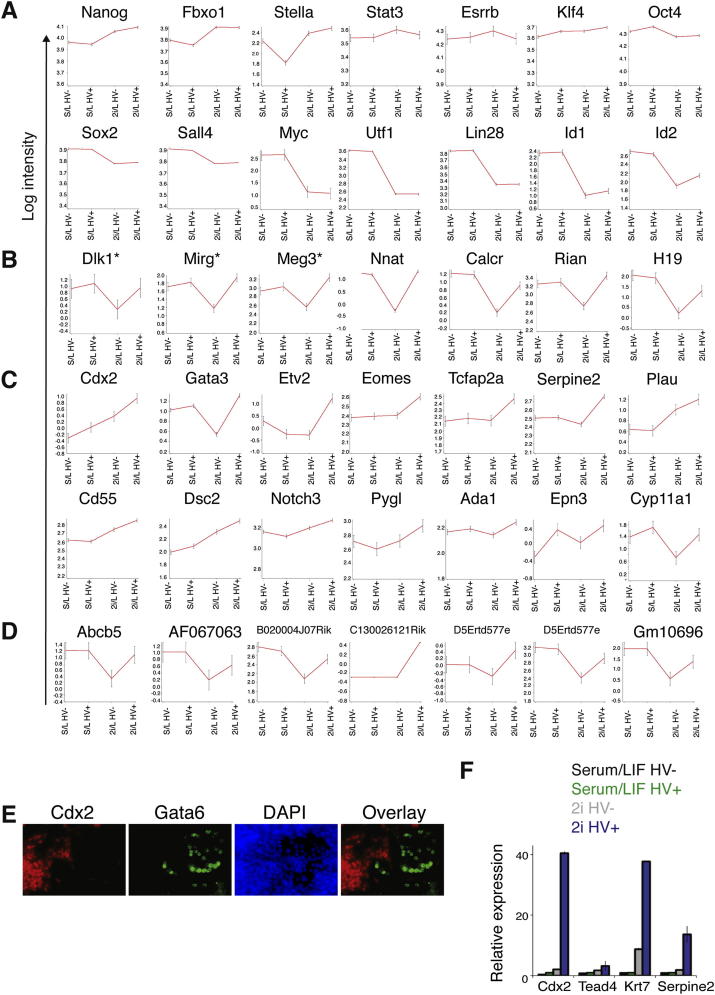
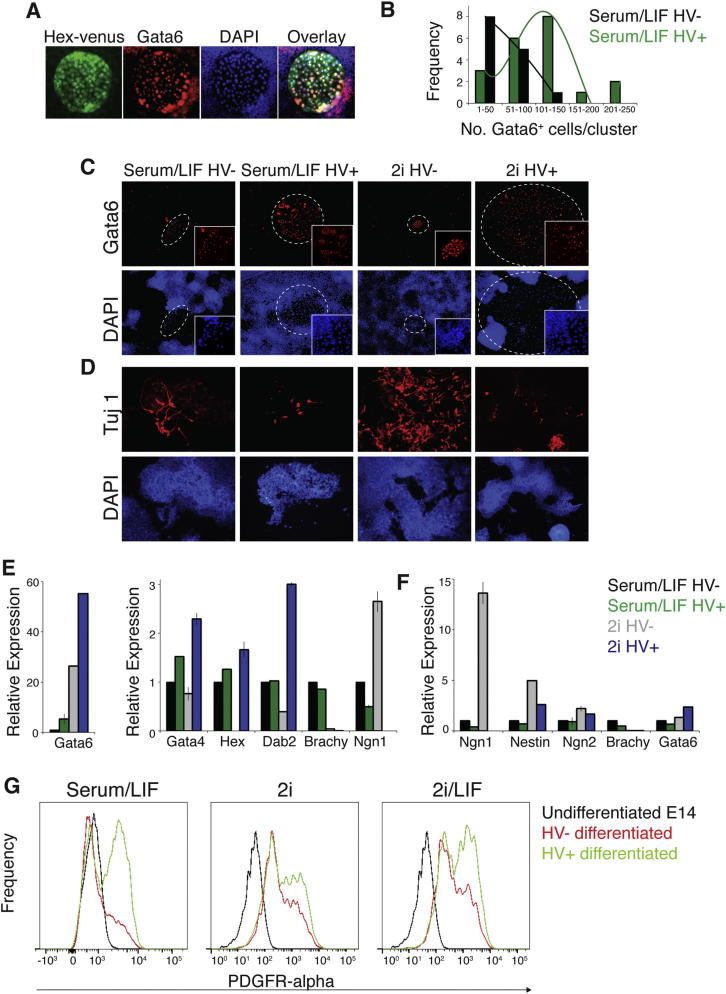
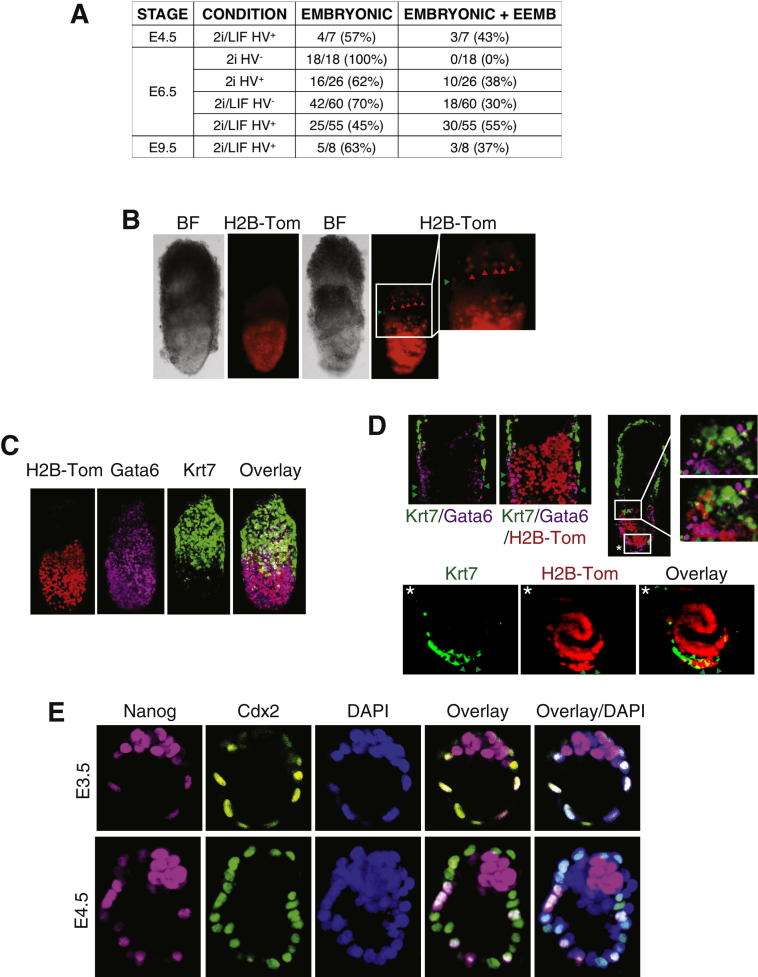
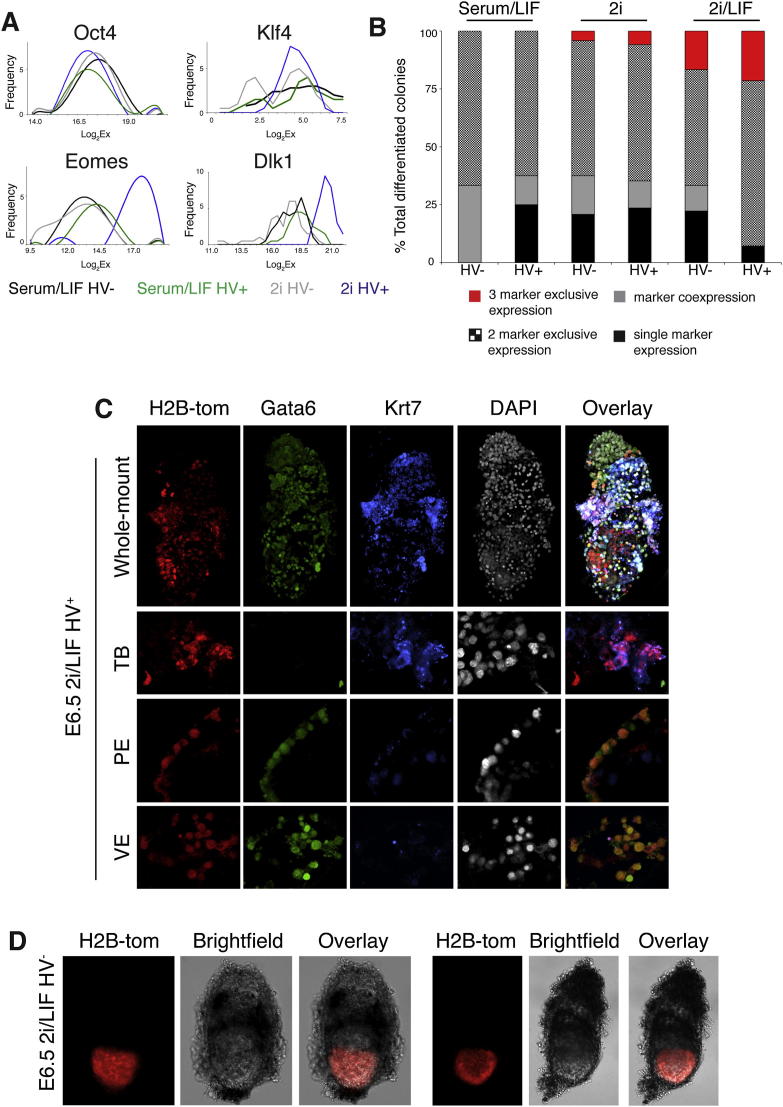
Embryonic stem cells (ESCs) are derived from mammalian embryos during the transition from totipotency, when individual blastomeres can make all lineages, to pluripotency, when they are competent to make only embryonic lineages. ESCs maintained with inhibitors of MEK and GSK3 (2i) are thought to represent an embryonically restricted ground state. However, we observed heterogeneous expression of the extraembryonic endoderm marker Hex in 2i-cultured embryos, suggesting that 2i blocked development prior to epiblast commitment. Similarly, 2i ESC cultures were heterogeneous and contained a Hex-positive fraction primed to differentiate into trophoblast and extraembryonic endoderm. Single Hex-positive ESCs coexpressed epiblast and extraembryonic genes and contributed to all lineages in chimeras. The cytokine LIF, necessary for ESC self-renewal, supported the expansion of this population but did not directly support Nanog-positive epiblast-like ESCs. Thus, 2i and LIF support a totipotent state comparable to early embryonic cells that coexpress embryonic and extraembryonic determinants.
胚胎干细胞(ESCs)来源于哺乳动物胚胎,在从全能性(单个卵裂球可以形成所有谱系)到多能性(它们能够形成仅胚胎谱系)的转变过程中。用 MEK 和 GSK3 抑制剂(2i)维持的 ESCs 被认为代表了胚胎受限的基础状态。然而,我们观察到 2i 培养的胚胎中存在外胚层内胚层标记物 Hex 的异质性表达,这表明 2i 在胚胎外胚层承诺之前阻止了发育。同样,2i ESC 培养物是异质的,包含一个处于分化为滋养层和外胚层内胚层的预备状态的 Hex 阳性部分。单个 Hex 阳性 ESC 共表达外胚层和外胚层内胚层基因,并在嵌合体中贡献所有谱系。细胞因子 LIF 对于 ESC 的自我更新是必需的,它支持了这个群体的扩增,但不能直接支持 Nanog 阳性的类胚胎外胚层 ESC。因此,2i 和 LIF 支持与早期胚胎细胞相当的全能状态,这些细胞共同表达胚胎和外胚层决定因素。