CNR Institute of Neuroscience, Department of Biomedical Sciences and Venetian Institute of Molecular Medicine, University of Padova, 35121 Padova, Italy.
Molecular Biotechnology Centre, Department of Genetics, Biology and Biochemistry, University of Torino, 10125 Torino, Italy.
Cell Metab. 2013 Jun 4;17(6):988-999. doi: 10.1016/j.cmet.2013.04.019.
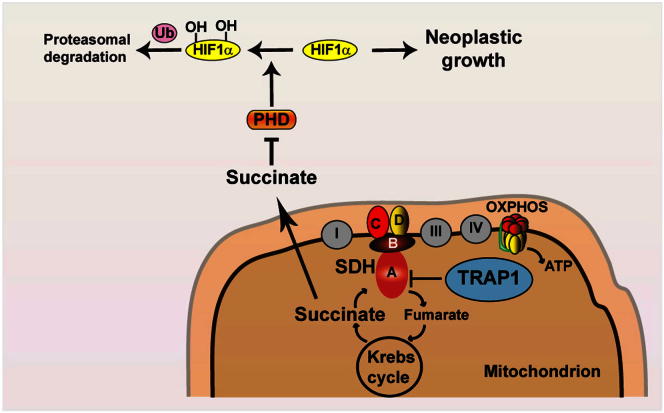
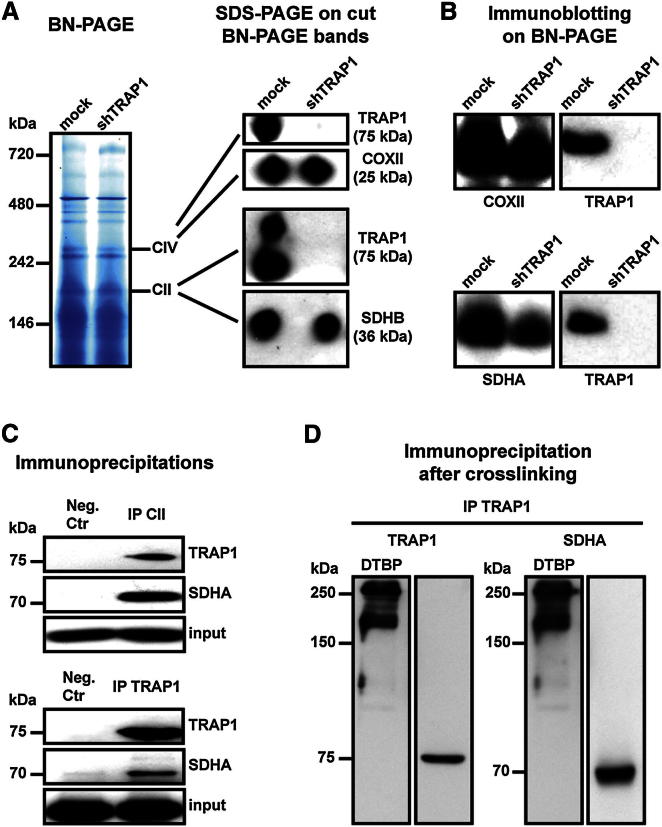
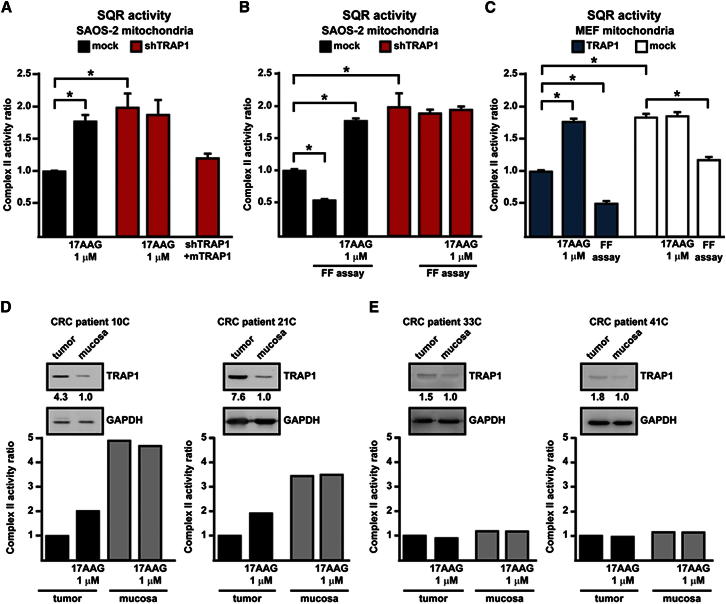
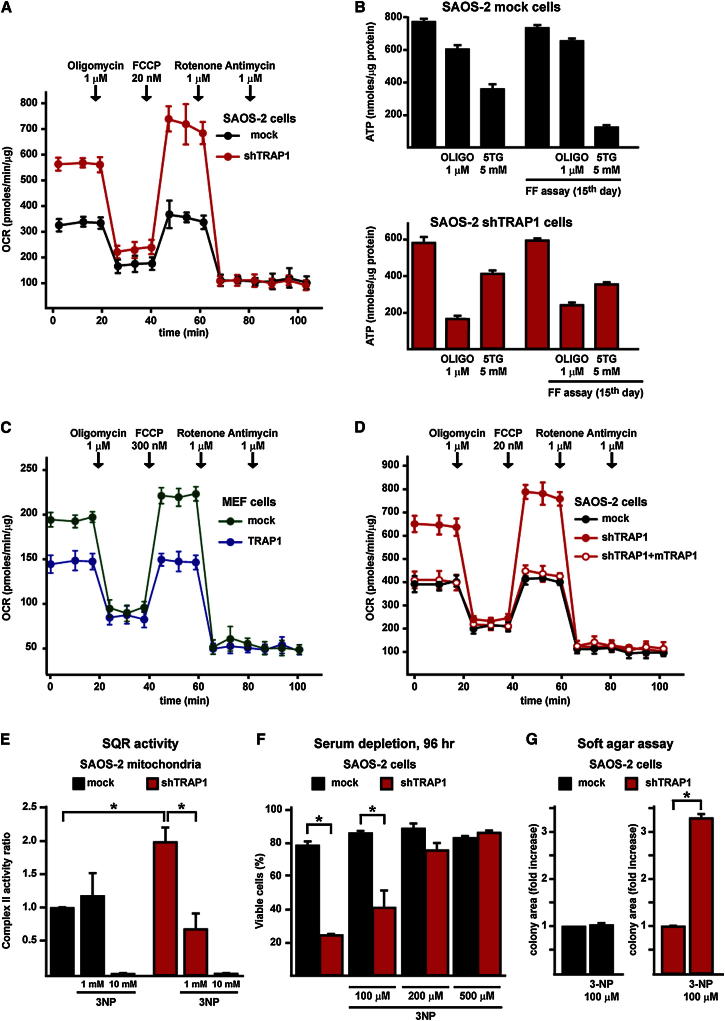
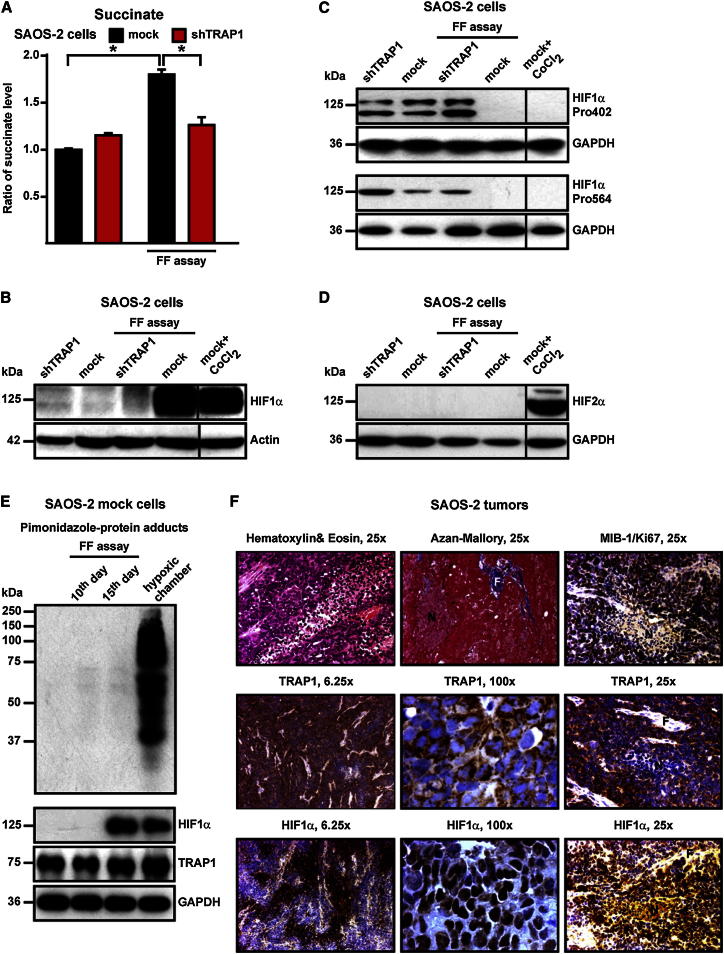
We report that the mitochondrial chaperone TRAP1, which is induced in most tumor types, is required for neoplastic growth and confers transforming potential to noncancerous cells. TRAP1 binds to and inhibits succinate dehydrogenase (SDH), the complex II of the respiratory chain. The respiratory downregulation elicited by TRAP1 interaction with SDH promotes tumorigenesis by priming the succinate-dependent stabilization of the proneoplastic transcription factor HIF1α independently of hypoxic conditions. These findings provide a mechanistic clue to explain the switch to aerobic glycolysis of tumors and identify TRAP1 as a promising antineoplastic target.
我们报告称,线粒体伴侣蛋白 TRAP1 在大多数肿瘤类型中被诱导表达,它是肿瘤生长所必需的,并赋予非癌细胞转化潜能。TRAP1 与琥珀酸脱氢酶(SDH)结合并抑制其活性,SDH 是呼吸链复合物 II。TRAP1 与 SDH 相互作用引起的呼吸下调通过启动依赖琥珀酸盐的致癌转录因子 HIF1α 的稳定,促进肿瘤发生,而与缺氧条件无关。这些发现为解释肿瘤向有氧糖酵解的转变提供了一个机制线索,并将 TRAP1 鉴定为有前途的抗肿瘤靶点。